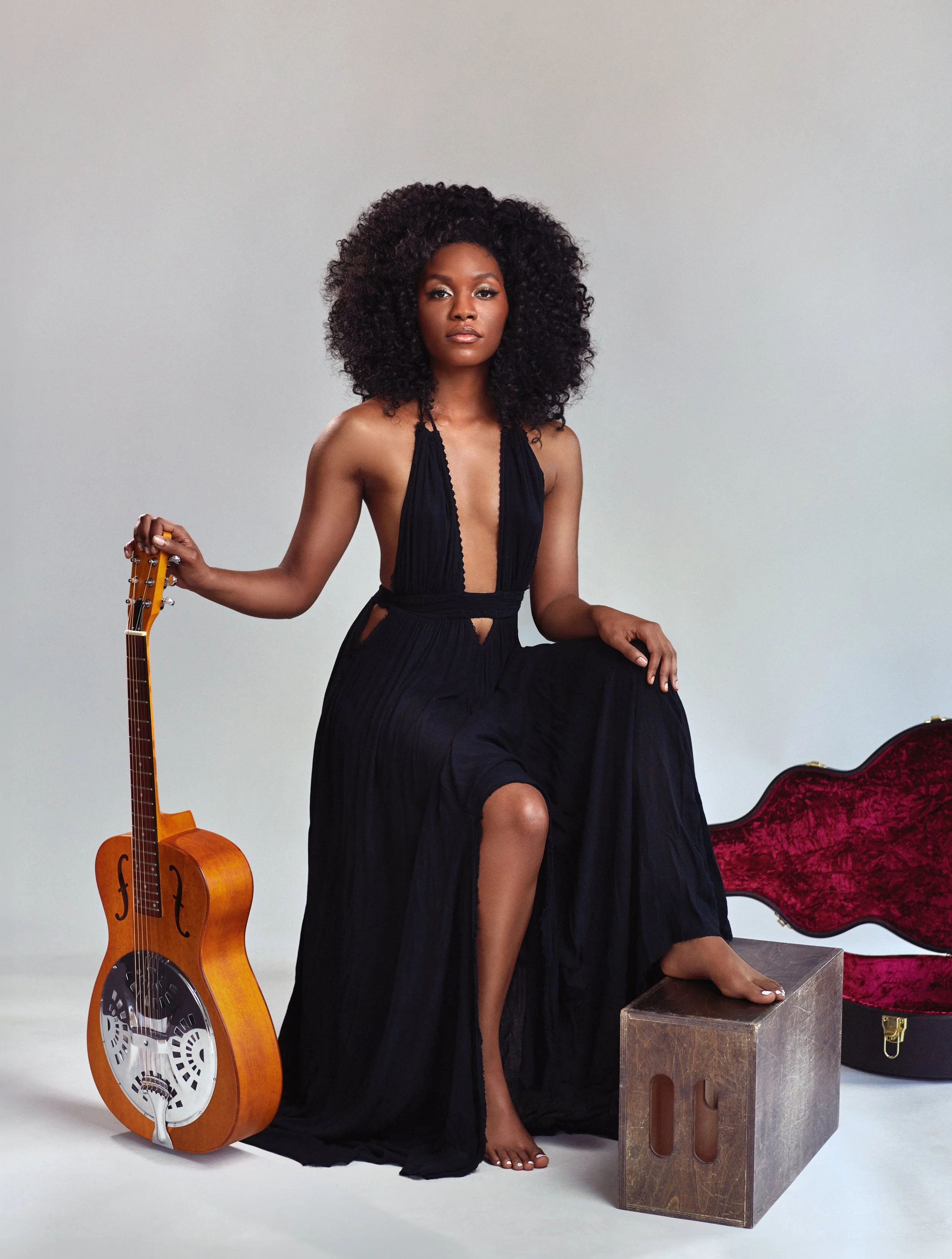
An interview by: Kyle Thompson
Introduction
Black women are an important fixture to the expression of blues as an art form. Black women were the first to record the blues. Mamie Smith’s “Crazy Blues”, released in 1920, sold over 75,000 copies, making it a landmark recording of the time. Other blues vocalists like Ma Rainey and Bessie Smith performed to immense acclaim, entertaining black and white audiences and transcending rural and urban audiences. Across the lifespan of common folk in America, Black people have found solace in communicating the realities of their time through honesty, passion, and humor. Fundamentally, the ability to transmute life’s experiences into entertainment and art is a fundamental aspect of the human condition. In my conversation with Evan Nicole Bell, I spoke with someone from Gen Z – my generation, uplifting a genre that is decades old. As two educated, young black people, we come from a reality light years in difference from the forefathers and foremothers of blues, gospel, and early black popular culture. We reflect a growing interest in Black people and youth across America, spanning beyond class, race, and age. It is therefore important to situate Evan Nicole Bell as an important facet of the genre, as a black woman playing guitar and a vocalist singing a deeply American genre.
The success of early Blues women faced a unique blend of gendered expectations and socially defying expression that in some cases broke barriers and in other cases hindered careers. Blues musician Valerie Turner states “…Let’s be honest—role models for contemporary women playing blues guitar are few and far between. This isn’t because they’re not out there; it’s simply because they aren’t well recognized.” (para. 1). This interview is important as it introduces younger readers to a young black woman role model who is keeping the blues alive. That woman’s name is Evan Nicole Bell.
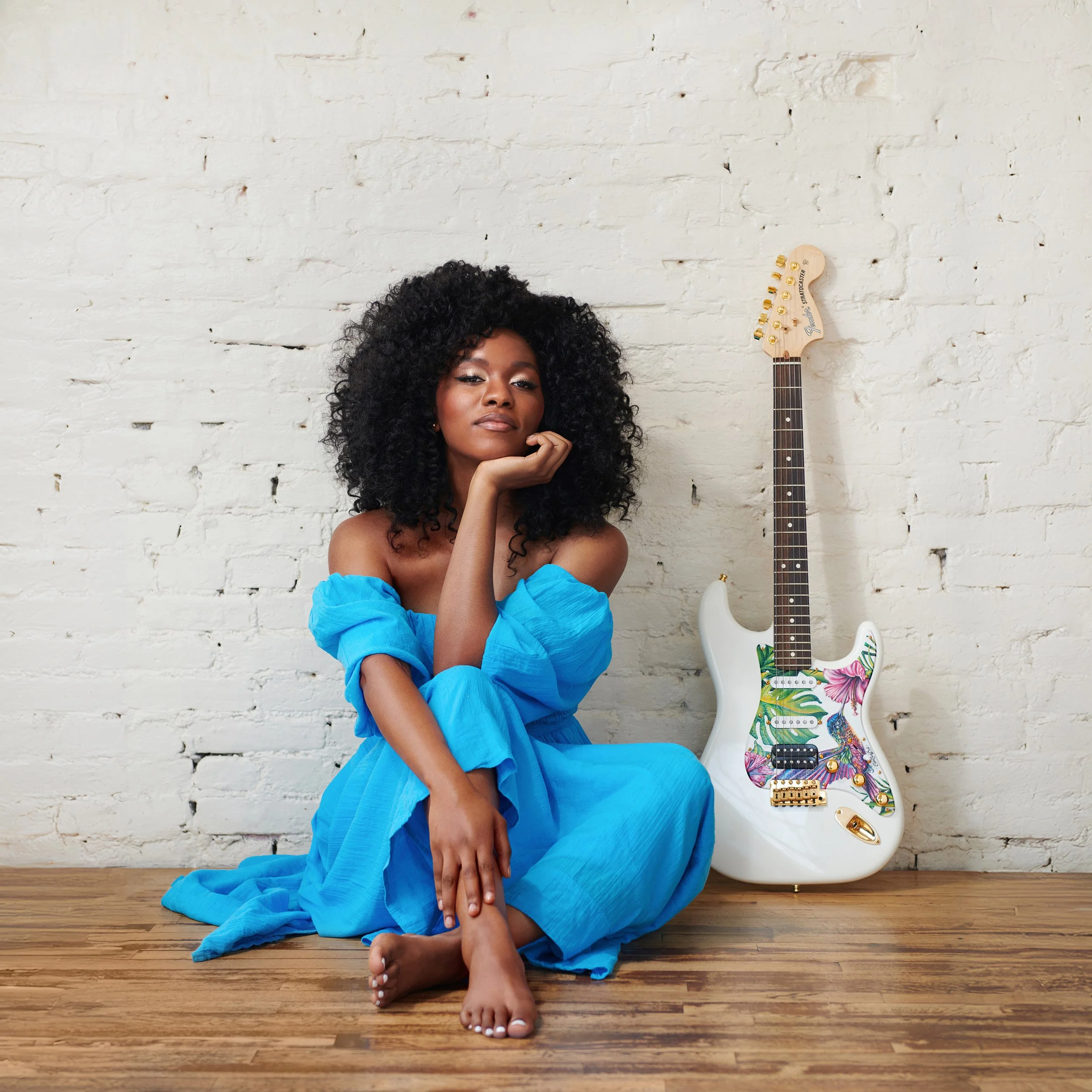
Q: How did you become exposed to the blues?
A: I didn't grow up listening to the blues, but I did grow up in a household that loved music. I was surrounded by whatever my parents were playing–gospel, R&B, Motown–and I also loved pop. The blues didn’t really enter my life until I was 21, when my mom surprised me with an electric guitar for Christmas.
By then, I’d already been playing guitar for about eight years. Mainly classical and acoustic guitar–fingerstyle folk and classical repertoire from composers like Fernando Sor and Francisco Tárrega. So picking up an electric guitar was a completely different sound and feel. I went back to the guitar instructor I’d studied with when I was younger, and we started meeting weekly so I could really learn the instrument from the ground up.
He chose to introduce me to the instrument through the blues, which, at the time, I didn’t fully understand, but in hindsight makes so much sense–the genre and the instrument are inextricably linked. Every week, we’d meet and study the repertoire of a different blues musician. I learned about the pentatonic and blues scales, Dorian mode, micro-bends, and all of the little nuances and motifs that give blues guitar its iconic sound. In about a year’s time, I studied and learned work from more than twenty different blues guitarists, including the Three Kings (B.B., Albert, and Freddie), Buddy Guy, Sister Rosetta Tharpe, Matt “Guitar” Murphy, Lightnin’ Hopkins, Magic Sam, and Sonny Boy Williamson II.
Immersing myself in the blues, studying it, performing it, and understanding it–that changed everything for me. It felt like connecting with an element of my lineage and history that I’d never really known. Black history education is often taught through the lens of social justice movements, which is obviously incredibly important. But it’s just as important to learn about the musicians who shaped all of modern music. Most people know the name B.B. King, but far fewer know Albert King. A lot of people don’t know about Sister Rosetta Tharpe or the influence she had on artists like Little Richard and Elvis. And most people don’t know that Big Mama Thornton was the first artist to record “Hound Dog,” years before Elvis.
Soul-wise, learning electric blues filled something in me that I’d been searching for after I felt like I’d taken acoustic guitar as far as I could at the time. Once I learned blues, I started composing my own songs, rather than interpreting another composer’s work. What I love most about blues guitar is how it can serve as a duet partner. Blues guitar really talks. It’s almost like having somebody singing with me.
Q: What was it like to sit down and learn from these musicians? Was there a difference between when you learned about someone like Mississippi John Hurt or a Sister Rosetta Tharpe?
A: It was eye-opening to see how many different ways the blues can exist. It’s such a free form of music compared to what I grew up learning. I came up studying folk fingerpicking and classical guitar, and with classical music, the goal is to replicate what’s on the page as accurately as possible. Of course, there’s room for interpretation, but you’re still very much coloring inside the lines.
The blues is the opposite of that. There’s so much room for personality. No two blues musicians sound alike. You can hear it immediately when you compare someone like Lightnin’ Hopkins or T-Bone Walker’s Texas style to Muddy Waters or Buddy Guy’s Chicago blues. Even among the Three Kings, they’re all completely distinct. B.B. King’s vibrato, Albert King’s pentatonic approach, Freddie King’s aggressive, overdriven tone. You always know exactly who you’re listening to.
I was able to directly apply this sentiment to my own practice by realizing that I could cultivate my own style of singing and playing the blues, and that’s encouraged. I could play the guitar upside down and strung backwards, Hendrix-style. Nothing is right or wrong. It's one of those things where you learn the rules, and then you learn how to break them.
Q: Why is it important, especially for women, to be part of Blues?
A: Historically, there’s been this expectation for women to sing in high, smooth soprano voices. If you look at classical and operatic traditions, that sound is pretty much the ideal. Then, here comes Koko Taylor with her deep, gritty, growling mezzo-soprano voice. It hits you immediately, but it’s still completely feminine. It’s just a different expression of femininity.
No one would ever call Koko Taylor masculine. She’s incredibly feminine, it’s just that her power comes through in a way that wasn’t traditionally encouraged. Etta James is another example. These are women who don’t shy away from their power. They’re not shying away from their lower register. They’re not shying away from getting a little ugly with it.
In my own practice, even if a vocal take isn’t technically perfect, but it has the groove, the feel, the grit, I’m choosing that every time. Nobody listens to music thinking, “Oh my gosh, did she hit that note perfectly? Or was she a little flat?” I know I don’t. I’m not listening for polite and smooth; I’m listening for something to hit me. And the blues make room for that.
It’s important for women to be a part of blues because we are the blues. In our rawness, our fearlessness, our expressiveness, women truly are the living embodiment of the blues.
Q: What blues musician do you think represents the genre well?
A: To me, Lightnin’ Hopkins is the epitome of a bluesman. The authenticity and ease in his singing, songwriting, and guitar playing really encompass what the blues is all about. It’s about honesty, and that’s what comes across when you listen to him. I aim to channel a similar energy into my songwriting practice and the way I perform. At the root of it all, the blues is all about connection with other people and being so authentic that they can see themselves reflected back in your music.
Q: What other projects are you working on?
A: My debut album, Shades of Blue, was released in January 2025, and I’ve already started working on the next one. I handle every part of the process myself, from songwriting and playing every instrument to engineering and production, which allows me to shape my projects really intentionally. I’ve finished writing, so I’m in the production stage now. A couple of the songs on the album are 12-bar blues, and all of the music is blues-influenced.
Q: What advice do you have for future generations who are interested in blues?
A: Anyone who enjoys music should listen to the blues. No matter what genres you like–rap, pop, punk, Americana–almost every genre has been touched by it in some way. The blues is the foundation of what we’re listening to today. It’s the great-grandfather of modern music.
Even if you don’t think you’re interested in the blues specifically, if you care about music or music theory, you’ll eventually find your way there. There’s some incredible blues music out there that I think people sometimes shy away from because it isn’t mastered super loud, or it’s mixed in mono, or it has that older, vintage sound. But that doesn’t make it any less powerful.
I always tell people not to dismiss a song or a genre just because it’s considered “old.” Music, like fashion, moves in cycles, and things once discarded often come back around. I really believe there’s a renaissance coming. A blues renaissance. It’s on its way.
About the Artist:
Evan Nicole Bell is a dynamic vocalist, guitarist, multi-instrumentalist, and composer whose work has captured an international audience. After breaking out online with electrifying covers of Jimi Hendrix’s Catfish Blues (originally written by Robert Petway in 1941) and Albert King’s Crosscut Saw, Bell built a devoted fanbase drawn to her passionate fingerpicking, “Hendrixian” electric guitar work, and mezzo-soprano voice. Her music sits at the intersection of electric blues, soulful Americana, and cinematic storytelling, blending blues, rock, folk, and roots traditions. A true multi-hyphenate, Bell is the sole songwriter, instrumentalist, and producer of her songs, with videos surpassing 15 million views across social platforms. Her debut album, Shades of Blue (2025), released via Hummingbird Records, was praised as
“nothing short of superb” by Blues in Britain and “Like Prince meets Lightnin’ Hopkins” by Todd Snider. The album reached No. 1 on Roots Music Report’s Top Singer/Songwriter Albums Chart, earned placements on the iTunes Top 100, Americana Music Association’s Top Albums, and the Big Blues Chart, and sold out its vinyl and CD run, reaching listeners in over 22 countries. In tribute to the late Hill Country Blues legend R.L. Boyce, Bell was tapped by GRAMMY®-nominated artist G. Love & Special Sauce to co-write and perform “Feel Me Better,” the lead single from his 2025 record, Ode to R.L. Boyce. She is the recipient of the 2025 Baker Artist Award in Music from the Greater Baltimore Cultural Alliance and is currently at work on her sophomore album, slated for release in 2026.