Boots On The Ground: The Viral Black Line Dance Movement Seen & Heard ‘Round The World
Written By: Johnae De Felicis
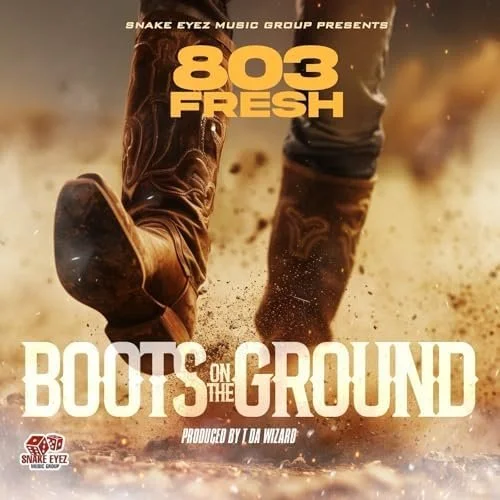
Record Cover
On December 20, 2024, Black America got an early holiday gift with the release of viral hit, “Boots on the Ground.” The trail-ride inspired song was the brainchild of 803Fresh, a South Carolina native and Southern soul singer who grows on me by the day.
I remember my first time hearing the catchy track like it was yesterday. Black cowboys and cowgirls started sliding into my social media feeds, dancing to the song’s accompanying choreography. I was overjoyed to witness Black America reclaim a piece of our culture that others have merely cosplayed as their original invention: the line dance.
Atlanta resident Tre Little brought the sensational “Boots on the Ground” dance routine to life, conceiving the idea at work during a lunch break. The rhythmic choreography, a 32-count line dance paired with the clacking of folding fans, became an instant online success.
After posting the video, Little took a nap and later woke up to 100K+ views. Since then, there’s been a growing demand for professional dancers to teach the choreography through YouTube tutorials and line dance classes, often populated with Black Americans eager to learn it for themselves. Little’s influence has greatly increased since sharing his talents with the world, receiving requests for more dances and routines.
“Boots on the Ground” features a country-infused hip-hop beat set to a feet-tapping tempo. It’s the epitome of Southern Soul. The song’s inaugural line, “Where Them Fans At?” is symbolic of a war cry for Black Americans seeking to stomp their worries away and leave them on the dance floor. The saying, “Boots on the Ground,” is nothing new in the line dancing community either, though 803Fresh has given it a redefined meaning. Unsurprisingly, the viral hit reached No. 1 on Billboard’s adult R&B airplay and R&B digital song sales charts.
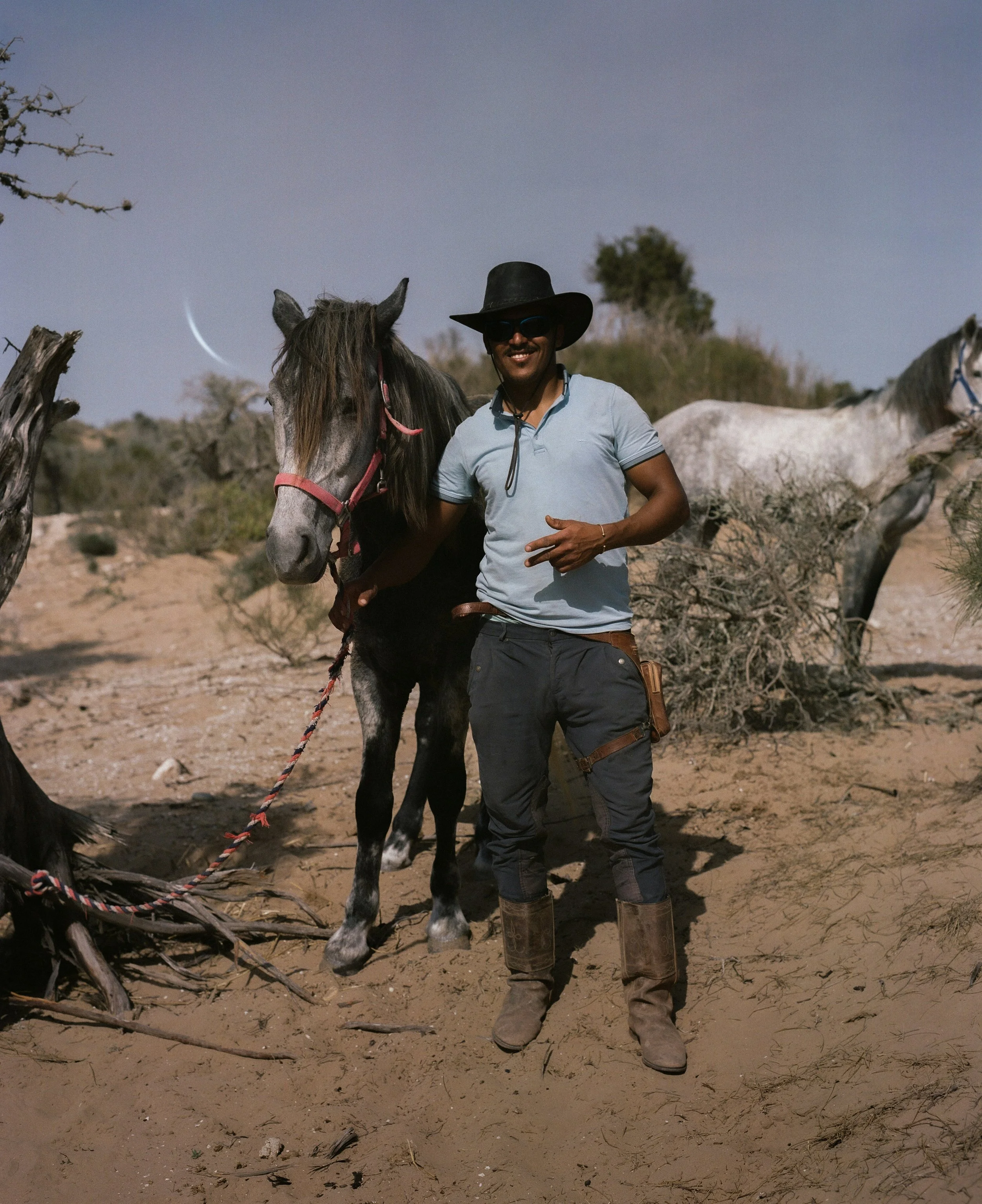
Photo Credit: Jesse Plum
The resurgence of Black cowboy joy has been long overdue, from celebrities like Shaquille O’Neal giving a nod to the “Boots on the Ground” movement to Beyoncé’s Cowboy Carter winning the Grammy album of the year award. I have yet to attend a line dance party or rodeo this year, but I have my cowboy hat and boots ready for when I do get around to it. I often wondered why Black cowboy representation was so scarce in the media, especially since I’ve experienced it myself, living in the South. Perhaps we can attribute the lack of awareness to the whitewashing of our culture. Colonization within the music industry has led the masses to believe that our musical contributions are limited to hip-hop and R&B, when that’s simply not the case.
We didn’t just step into the country music arena—we are country. Charley Pride, Linda Martell, and other Black blues and country legends paved the way for all country music artists to make the genre what it is today. And this may come as a shock to some, but our people never stopped line dancing. We’ve been performing routines at weddings, family gatherings, and school PE classes, featuring songs like the “Cupid Shuffle” by Cupid and the “Cha Cha Slide” by DJ Casper, who is no longer with us. The tracks may have an urbanized spin, but they still count as line dance music.
The lines are a bit blurred regarding line dancing’s origins, but historians believe that it was born from a gumbo pot of different cultures. From Indigenous tribal dances (e.g., the stomp dance) and Black American rituals (e.g., the ring shout) to traditional European folk dances, all played a role in the inception of this global phenomenon of a dance style.
There’s nothing more empowering than us moving as one, whether that’s on the dance floor or in how we approach circumstances that affect our community as a whole. There’s nothing more liberating than choosing joy over fear, sadness, and defeat. Gathering to perform these synchronized routines is a way for us to not only have a grand ole’ time, but also strengthen the ancestral connection on these lands and widen our pathway to collective healing.
I was born into two lineages with Southern roots. My mom’s parents hailed from South Carolina, and my dad and his parents are from North Carolina. As someone who has traveled a lot and resided in multiple states throughout the U.S., Black Southern culture’s influence on the entire nation—and the world—has been too evident to ignore.
Living in California opened my eyes to the impact in an unsettling way. Witnessing outside groups appropriate our culture without giving credit where credit was due irked me to no end. And don’t even get me started on the South. Watching country artists deliberately try to exclude and shut out Black country artists from achieving mainstream success is pure comedy to me. Little do they know that we’re not new to this—we’re true to this.
On one end, we have a group of people who outwardly hate us because they ain’t us. On the other hand, we’ve got culture vultures just along for the ride so that they themselves can benefit from our likeness. Nonetheless, it’s our right and responsibility to preserve the culture that we created in its entirety. My mission is to do just that through my musical and creative endeavors.
I am undeniably proud of 803Fresh’s modern twist to this niche music genre. The global attention on Black line dancing has reintroduced marginalized communities to a different way to protest in light of racial tensions, social injustice, and the sour political climate. Instead of marching in the streets, many are marching in formation to the sound of feel-good and uplifting music—not giving any attention to those seeking to elicit a reaction out of us. This time around, we’ve traded our picket signs for colorful fans. The “Boots on the Ground” movement has simply reminded Black Americans that we can still rest in joy despite the world being on fire.