
arts & culture
Honoring Expression Rooted in Memory and Movement
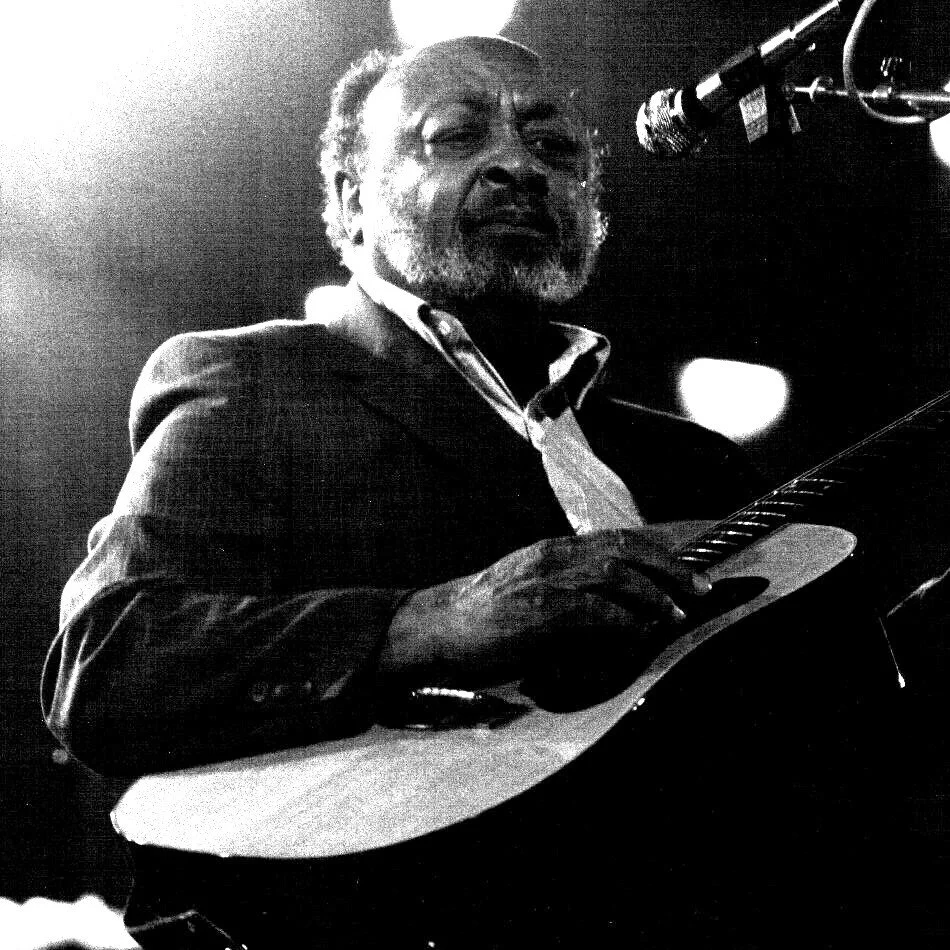
Bob and B: One Song, Two Legacies
In 1996, Robert Lockwood Jr. stepped into the recording studio to record what would later be his Grammy nominated album, “I Got to Find Me a Woman”. Backing him were members of the legendary Robert Lockwood Jr. All-Stars and special guests, B.B. King and Joe Louis Walker.
Written By: Kyle Thompson
Please support the Robert Lockwood Jr. Legacy Group and mark your calendars for the annual festival held from March 20th-21st at the Treelawn in Cleveland, Ohio.
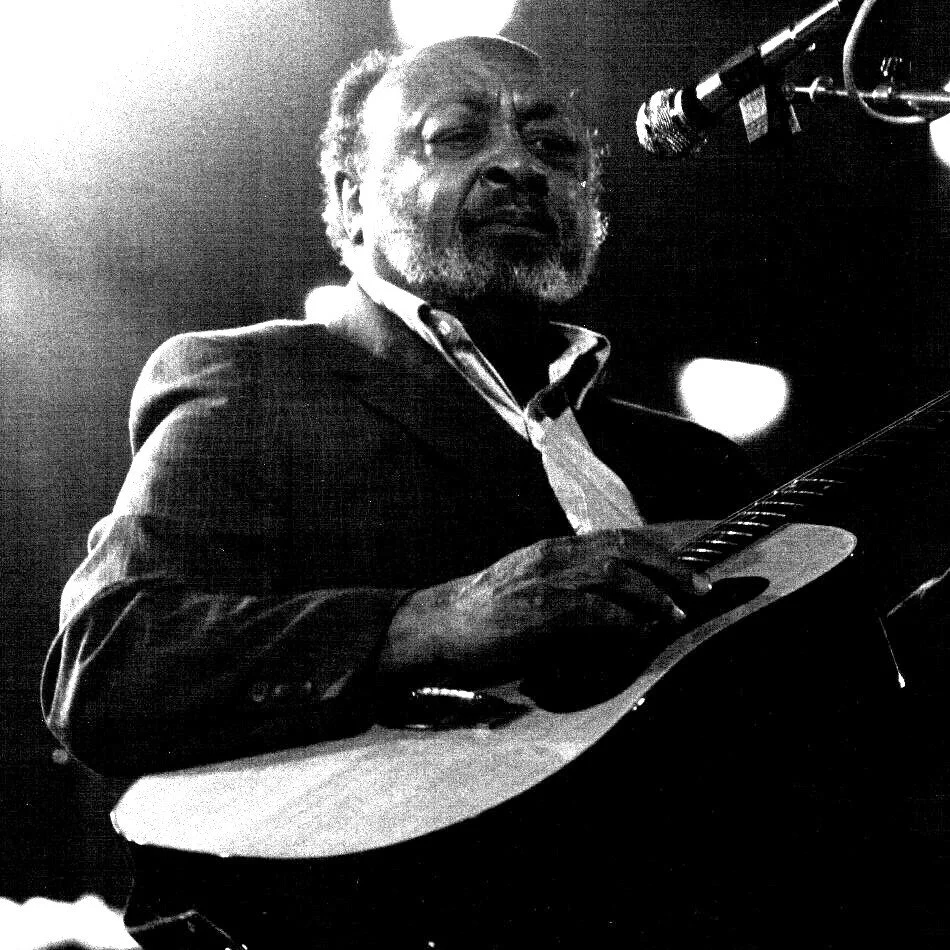
Image by: Lionel DECOSTER, PARIS, France
In 1996, Robert Lockwood Jr. stepped into the recording studio to record what would later be his Grammy nominated album, “I Got to Find Me a Woman”. Backing him were members of the legendary Robert Lockwood Jr. All-Stars and special guests, B.B. King and Joe Louis Walker. Several notable songs were cut for the album, including his standards “Little Boy Blue” and “Take a Little Walk with Me”. In addition to this, Lockwood recorded an incredible cover of Robert Johnson’s Walkin’ Blues, and the album’s titular song “I Got to Find Me a Woman”. When the album was released in 1997, Robert Lockwood Jr. was 82 years old.
The 13th track on the album, “Bob and B", stands out for its unique contribution to the broader history of the blues. The song teaches us that sometimes blues doesn’t have to have any words for it to still speak to listeners. Bob and B is a simple, 12 bar blues duet song between Robert Lockwood Jr. and B.B. King. Lockwood plays a strong, steady accompaniment to B.B. King, who plays shimmering leads over the progression of the song. The fascinating thing about the track is that it is, in a way, a metaphor for both of the musicians and their lives up to that point.
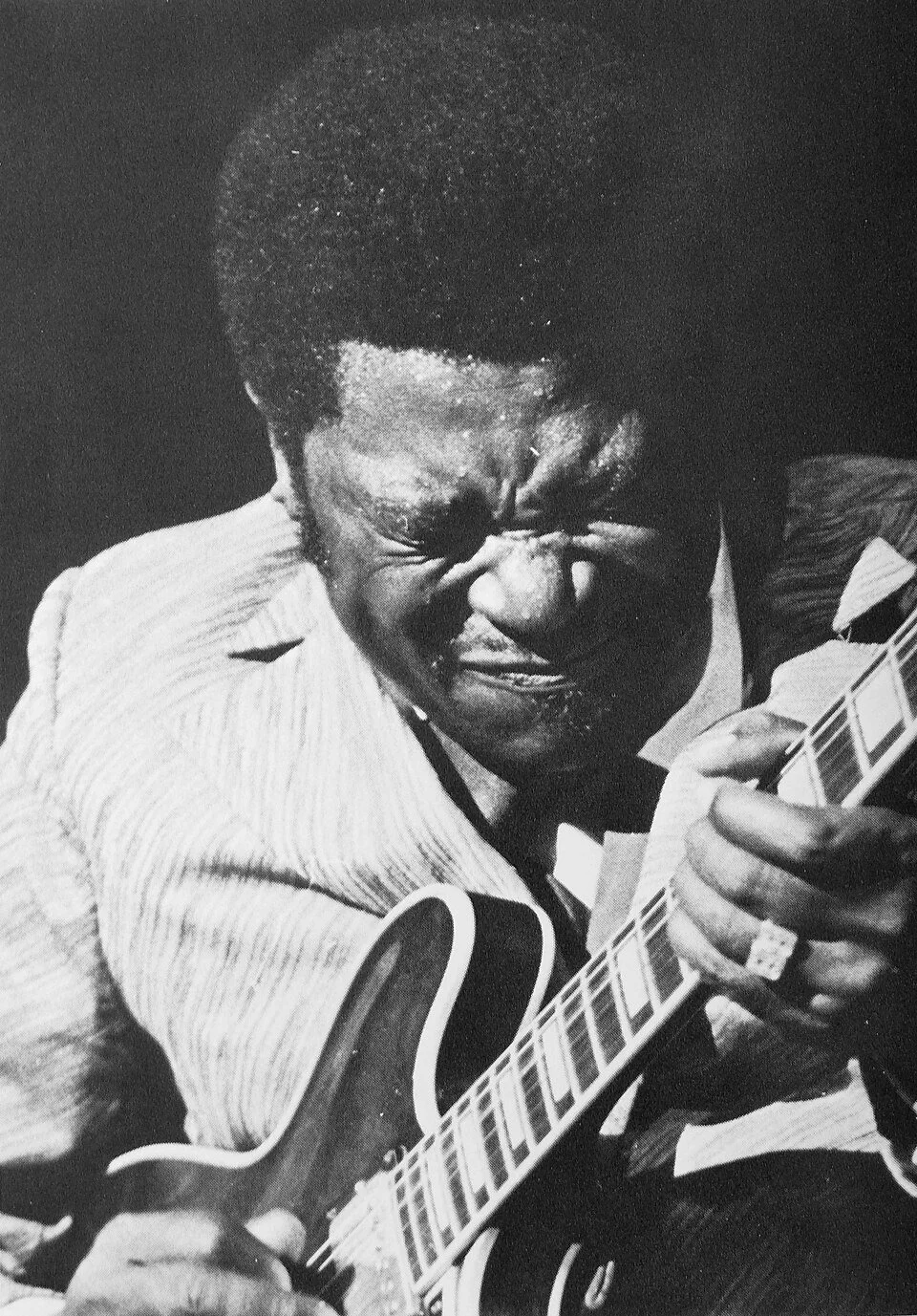
Photograph of B.B. King in Ann Arbor, c. 1972 , Unidentified (Michiganensian is the University of Michigan yearbook published by University of Michigan)
In B.B. King’s early days playing guitar, he had notoriously bad timing. Lockwood stated “After I heard how bad B.B. was sounding, I didn’t want to help him”. While in Memphis, Lockwood showed guidance to B.B. King to help him with his sound. It was Lockwood who also recommended that B.B. King played with an eight piece band to help him play with better timing. In 1957, B.B. King released his first full album titled “Singin’ the Blues” on Crown Records. On the album, he demonstrates a markedly great improvement from the initial days when he met Lockwood. The album’s success significantly boosted B.B. King’s career, and helped carry him forward to become one of the most influential musicians of the 20th Century.
Robert Lockwood Jr.,began his career studying under the legendary Robert Johnson. Johnson followed Lockwood’s mother home, and spent time with her. He took on Robert Lockwood Jr. as his protege, and taught him the fundamentals of guitar. After Johnson’s death, Lockwood went on to play with Sonny Boy Williamson on King Biscuit Time, broadcasting blues to many listeners across the south. Later, he worked as a session musician for Chess Records, appearing on legendary tracks like Little Walter’s “My Babe”. Lockwood eventually landed in Cleveland, establishing his name in the local community as a link to the Delta Blues. He innovated a jazz-tinged sound ushered in by his 12 string guitar, making him stand apart from many other musicians.
After decades of touring, both Black men came together on “Bob and B” as musicians who lived through the 20th century, communicating with just their guitars. B.B. King’s ability to hold and maintain time with Robert Lockwood Jr. is a demonstration of his growth, so to speak, while Robert Lockwood Jr. positions himself as an anchor, not just proverbially to the song, but to the blues itself as a direct connection to Robert Johnson, King of the Delta Blues. When you listen to the song, you can hear their joy, laughter, and sometimes tears as they recount their journeys together, finally concluding wistfully as good friends who had a brief but profound conversation. Listen to the song, and hear two masters at work.
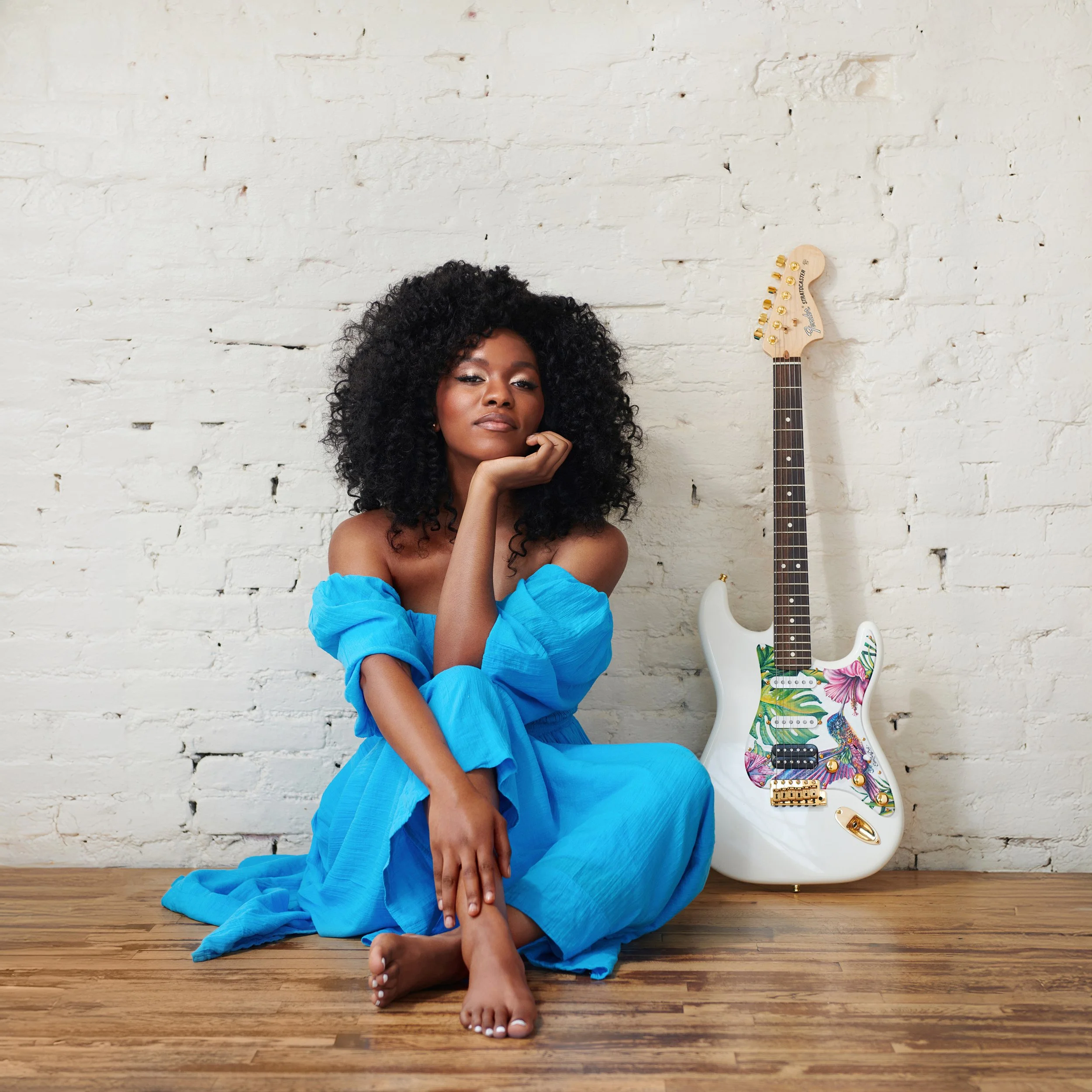
Her Guitar, Her Voice, Her Blues: Evan Nicole Bell and the Black Women Who Shaped a Genre
The success of early Blues women faced a unique blend of gendered expectations and socially defying expression that in some cases broke barriers and in other cases hindered careers. Blues musician Valerie Turner states “…Let’s be honest—role models for contemporary women playing blues guitar are few and far between. This isn’t because they’re not out there; it’s simply because they aren’t well recognized.” (para. 1). This interview is important as it introduces younger readers to a young black woman role model who is keeping the blues alive. That woman’s name is Evan Nicole Bell.
An interview by: Kyle Thompson
Introduction
Black women are an important fixture to the expression of blues as an art form. Black women were the first to record the blues. Mamie Smith’s “Crazy Blues”, released in 1920, sold over 75,000 copies, making it a landmark recording of the time. Other blues vocalists like Ma Rainey and Bessie Smith performed to immense acclaim, entertaining black and white audiences and transcending rural and urban audiences. Across the lifespan of common folk in America, Black people have found solace in communicating the realities of their time through honesty, passion, and humor. Fundamentally, the ability to transmute life’s experiences into entertainment and art is a fundamental aspect of the human condition. In my conversation with Evan Nicole Bell, I spoke with someone from Gen Z – my generation, uplifting a genre that is decades old. As two educated, young black people, we come from a reality light years in difference from the forefathers and foremothers of blues, gospel, and early black popular culture. We reflect a growing interest in Black people and youth across America, spanning beyond class, race, and age. It is therefore important to situate Evan Nicole Bell as an important facet of the genre, as a black woman playing guitar and a vocalist singing a deeply American genre.
The success of early Blues women faced a unique blend of gendered expectations and socially defying expression that in some cases broke barriers and in other cases hindered careers. Blues musician Valerie Turner states “…Let’s be honest—role models for contemporary women playing blues guitar are few and far between. This isn’t because they’re not out there; it’s simply because they aren’t well recognized.” (para. 1). This interview is important as it introduces younger readers to a young black woman role model who is keeping the blues alive. That woman’s name is Evan Nicole Bell.
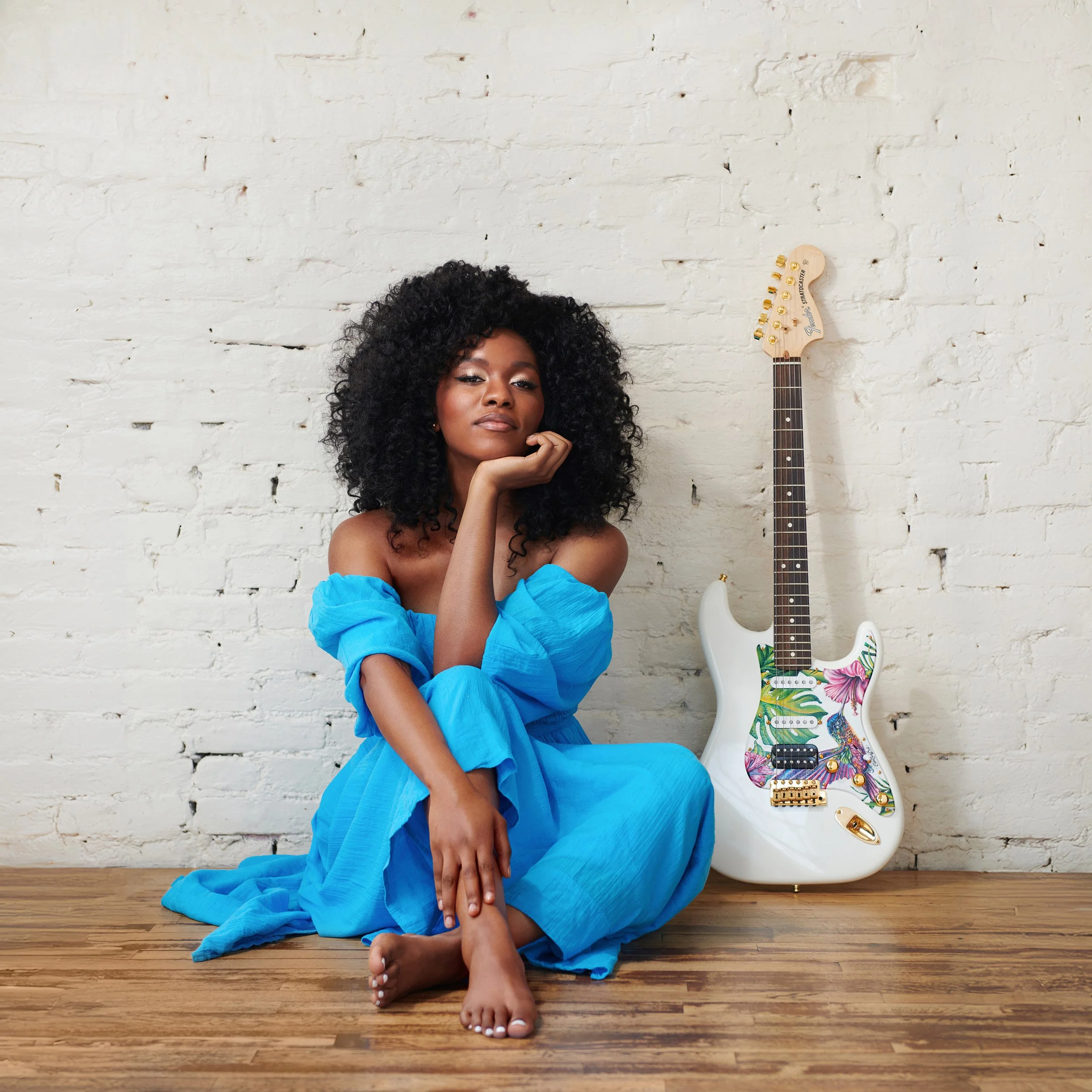
Q: How did you become exposed to the blues?
A: I didn't grow up listening to the blues, but I did grow up in a household that loved music. I was surrounded by whatever my parents were playing–gospel, R&B, Motown–and I also loved pop. The blues didn’t really enter my life until I was 21, when my mom surprised me with an electric guitar for Christmas.
By then, I’d already been playing guitar for about eight years. Mainly classical and acoustic guitar–fingerstyle folk and classical repertoire from composers like Fernando Sor and Francisco Tárrega. So picking up an electric guitar was a completely different sound and feel. I went back to the guitar instructor I’d studied with when I was younger, and we started meeting weekly so I could really learn the instrument from the ground up.
He chose to introduce me to the instrument through the blues, which, at the time, I didn’t fully understand, but in hindsight makes so much sense–the genre and the instrument are inextricably linked. Every week, we’d meet and study the repertoire of a different blues musician. I learned about the pentatonic and blues scales, Dorian mode, micro-bends, and all of the little nuances and motifs that give blues guitar its iconic sound. In about a year’s time, I studied and learned work from more than twenty different blues guitarists, including the Three Kings (B.B., Albert, and Freddie), Buddy Guy, Sister Rosetta Tharpe, Matt “Guitar” Murphy, Lightnin’ Hopkins, Magic Sam, and Sonny Boy Williamson II.
Immersing myself in the blues, studying it, performing it, and understanding it–that changed everything for me. It felt like connecting with an element of my lineage and history that I’d never really known. Black history education is often taught through the lens of social justice movements, which is obviously incredibly important. But it’s just as important to learn about the musicians who shaped all of modern music. Most people know the name B.B. King, but far fewer know Albert King. A lot of people don’t know about Sister Rosetta Tharpe or the influence she had on artists like Little Richard and Elvis. And most people don’t know that Big Mama Thornton was the first artist to record “Hound Dog,” years before Elvis.
Soul-wise, learning electric blues filled something in me that I’d been searching for after I felt like I’d taken acoustic guitar as far as I could at the time. Once I learned blues, I started composing my own songs, rather than interpreting another composer’s work. What I love most about blues guitar is how it can serve as a duet partner. Blues guitar really talks. It’s almost like having somebody singing with me.
Q: What was it like to sit down and learn from these musicians? Was there a difference between when you learned about someone like Mississippi John Hurt or a Sister Rosetta Tharpe?
A: It was eye-opening to see how many different ways the blues can exist. It’s such a free form of music compared to what I grew up learning. I came up studying folk fingerpicking and classical guitar, and with classical music, the goal is to replicate what’s on the page as accurately as possible. Of course, there’s room for interpretation, but you’re still very much coloring inside the lines.
The blues is the opposite of that. There’s so much room for personality. No two blues musicians sound alike. You can hear it immediately when you compare someone like Lightnin’ Hopkins or T-Bone Walker’s Texas style to Muddy Waters or Buddy Guy’s Chicago blues. Even among the Three Kings, they’re all completely distinct. B.B. King’s vibrato, Albert King’s pentatonic approach, Freddie King’s aggressive, overdriven tone. You always know exactly who you’re listening to.
I was able to directly apply this sentiment to my own practice by realizing that I could cultivate my own style of singing and playing the blues, and that’s encouraged. I could play the guitar upside down and strung backwards, Hendrix-style. Nothing is right or wrong. It's one of those things where you learn the rules, and then you learn how to break them.
Q: Why is it important, especially for women, to be part of Blues?
A: Historically, there’s been this expectation for women to sing in high, smooth soprano voices. If you look at classical and operatic traditions, that sound is pretty much the ideal. Then, here comes Koko Taylor with her deep, gritty, growling mezzo-soprano voice. It hits you immediately, but it’s still completely feminine. It’s just a different expression of femininity.
No one would ever call Koko Taylor masculine. She’s incredibly feminine, it’s just that her power comes through in a way that wasn’t traditionally encouraged. Etta James is another example. These are women who don’t shy away from their power. They’re not shying away from their lower register. They’re not shying away from getting a little ugly with it.
In my own practice, even if a vocal take isn’t technically perfect, but it has the groove, the feel, the grit, I’m choosing that every time. Nobody listens to music thinking, “Oh my gosh, did she hit that note perfectly? Or was she a little flat?” I know I don’t. I’m not listening for polite and smooth; I’m listening for something to hit me. And the blues make room for that.
It’s important for women to be a part of blues because we are the blues. In our rawness, our fearlessness, our expressiveness, women truly are the living embodiment of the blues.
Q: What blues musician do you think represents the genre well?
A: To me, Lightnin’ Hopkins is the epitome of a bluesman. The authenticity and ease in his singing, songwriting, and guitar playing really encompass what the blues is all about. It’s about honesty, and that’s what comes across when you listen to him. I aim to channel a similar energy into my songwriting practice and the way I perform. At the root of it all, the blues is all about connection with other people and being so authentic that they can see themselves reflected back in your music.
Q: What other projects are you working on?
A: My debut album, Shades of Blue, was released in January 2025, and I’ve already started working on the next one. I handle every part of the process myself, from songwriting and playing every instrument to engineering and production, which allows me to shape my projects really intentionally. I’ve finished writing, so I’m in the production stage now. A couple of the songs on the album are 12-bar blues, and all of the music is blues-influenced.
Q: What advice do you have for future generations who are interested in blues?
A: Anyone who enjoys music should listen to the blues. No matter what genres you like–rap, pop, punk, Americana–almost every genre has been touched by it in some way. The blues is the foundation of what we’re listening to today. It’s the great-grandfather of modern music.
Even if you don’t think you’re interested in the blues specifically, if you care about music or music theory, you’ll eventually find your way there. There’s some incredible blues music out there that I think people sometimes shy away from because it isn’t mastered super loud, or it’s mixed in mono, or it has that older, vintage sound. But that doesn’t make it any less powerful.
I always tell people not to dismiss a song or a genre just because it’s considered “old.” Music, like fashion, moves in cycles, and things once discarded often come back around. I really believe there’s a renaissance coming. A blues renaissance. It’s on its way.
About the Artist:
Evan Nicole Bell is a dynamic vocalist, guitarist, multi-instrumentalist, and composer whose work has captured an international audience. After breaking out online with electrifying covers of Jimi Hendrix’s Catfish Blues (originally written by Robert Petway in 1941) and Albert King’s Crosscut Saw, Bell built a devoted fanbase drawn to her passionate fingerpicking, “Hendrixian” electric guitar work, and mezzo-soprano voice. Her music sits at the intersection of electric blues, soulful Americana, and cinematic storytelling, blending blues, rock, folk, and roots traditions. A true multi-hyphenate, Bell is the sole songwriter, instrumentalist, and producer of her songs, with videos surpassing 15 million views across social platforms. Her debut album, Shades of Blue (2025), released via Hummingbird Records, was praised as
“nothing short of superb” by Blues in Britain and “Like Prince meets Lightnin’ Hopkins” by Todd Snider. The album reached No. 1 on Roots Music Report’s Top Singer/Songwriter Albums Chart, earned placements on the iTunes Top 100, Americana Music Association’s Top Albums, and the Big Blues Chart, and sold out its vinyl and CD run, reaching listeners in over 22 countries. In tribute to the late Hill Country Blues legend R.L. Boyce, Bell was tapped by GRAMMY®-nominated artist G. Love & Special Sauce to co-write and perform “Feel Me Better,” the lead single from his 2025 record, Ode to R.L. Boyce. She is the recipient of the 2025 Baker Artist Award in Music from the Greater Baltimore Cultural Alliance and is currently at work on her sophomore album, slated for release in 2026.
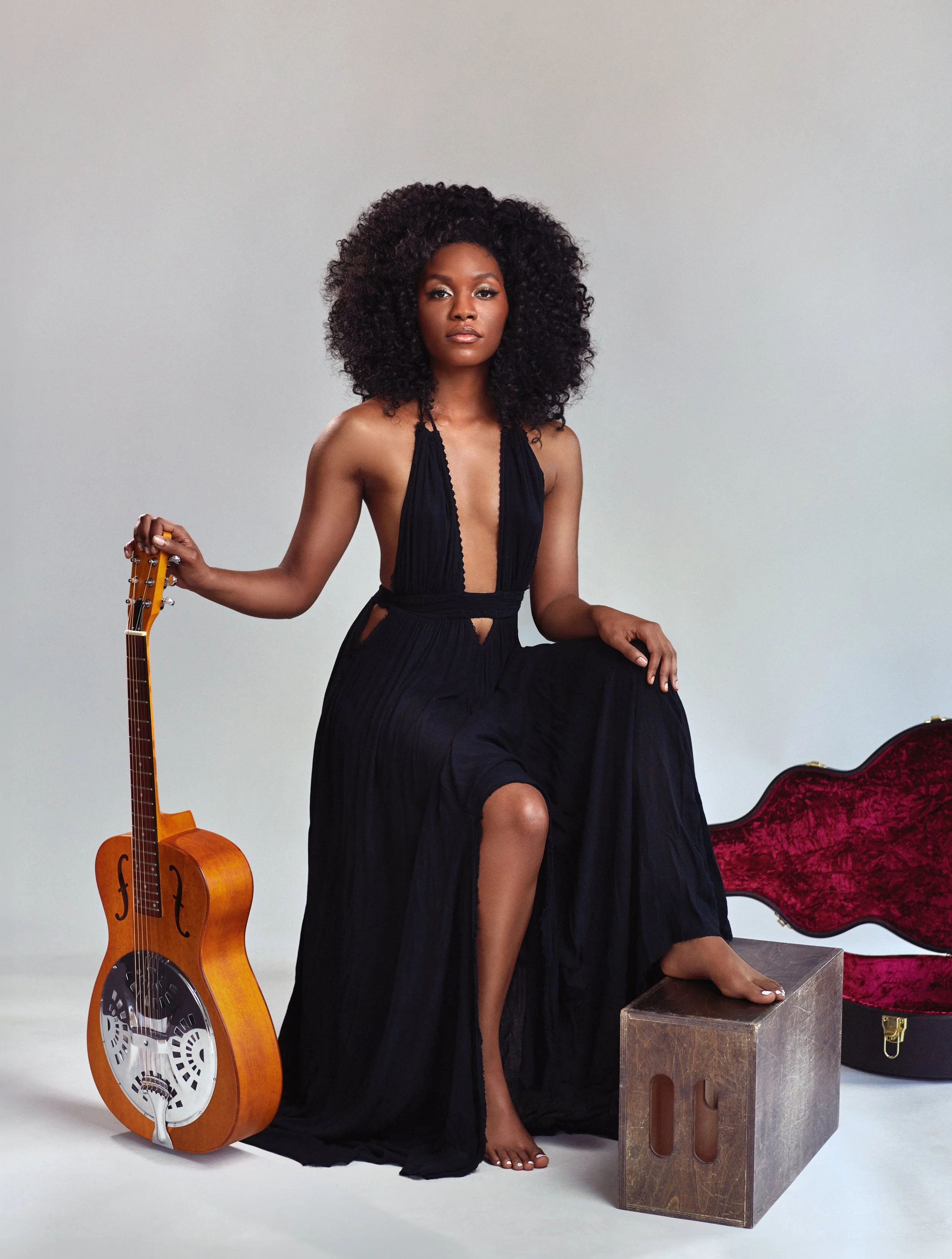

Boots On The Ground: The Viral Black Line Dance Movement Seen & Heard ‘Round The World
On December 20, 2024, Black America got an early holiday gift with the release of viral hit, “Boots on the Ground.” The trail-ride inspired song was the brainchild of 803Fresh, a South Carolina native and Southern soul singer who grows on me by the day.
Written By: Johnae De Felicis
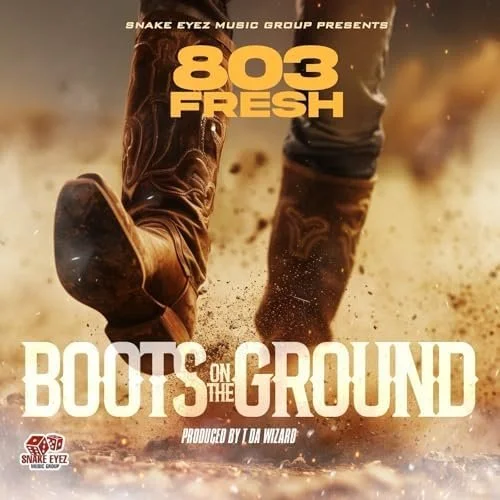
Record Cover
On December 20, 2024, Black America got an early holiday gift with the release of viral hit, “Boots on the Ground.” The trail-ride inspired song was the brainchild of 803Fresh, a South Carolina native and Southern soul singer who grows on me by the day.
I remember my first time hearing the catchy track like it was yesterday. Black cowboys and cowgirls started sliding into my social media feeds, dancing to the song’s accompanying choreography. I was overjoyed to witness Black America reclaim a piece of our culture that others have merely cosplayed as their original invention: the line dance.
Atlanta resident Tre Little brought the sensational “Boots on the Ground” dance routine to life, conceiving the idea at work during a lunch break. The rhythmic choreography, a 32-count line dance paired with the clacking of folding fans, became an instant online success.
After posting the video, Little took a nap and later woke up to 100K+ views. Since then, there’s been a growing demand for professional dancers to teach the choreography through YouTube tutorials and line dance classes, often populated with Black Americans eager to learn it for themselves. Little’s influence has greatly increased since sharing his talents with the world, receiving requests for more dances and routines.
“Boots on the Ground” features a country-infused hip-hop beat set to a feet-tapping tempo. It’s the epitome of Southern Soul. The song’s inaugural line, “Where Them Fans At?” is symbolic of a war cry for Black Americans seeking to stomp their worries away and leave them on the dance floor. The saying, “Boots on the Ground,” is nothing new in the line dancing community either, though 803Fresh has given it a redefined meaning. Unsurprisingly, the viral hit reached No. 1 on Billboard’s adult R&B airplay and R&B digital song sales charts.
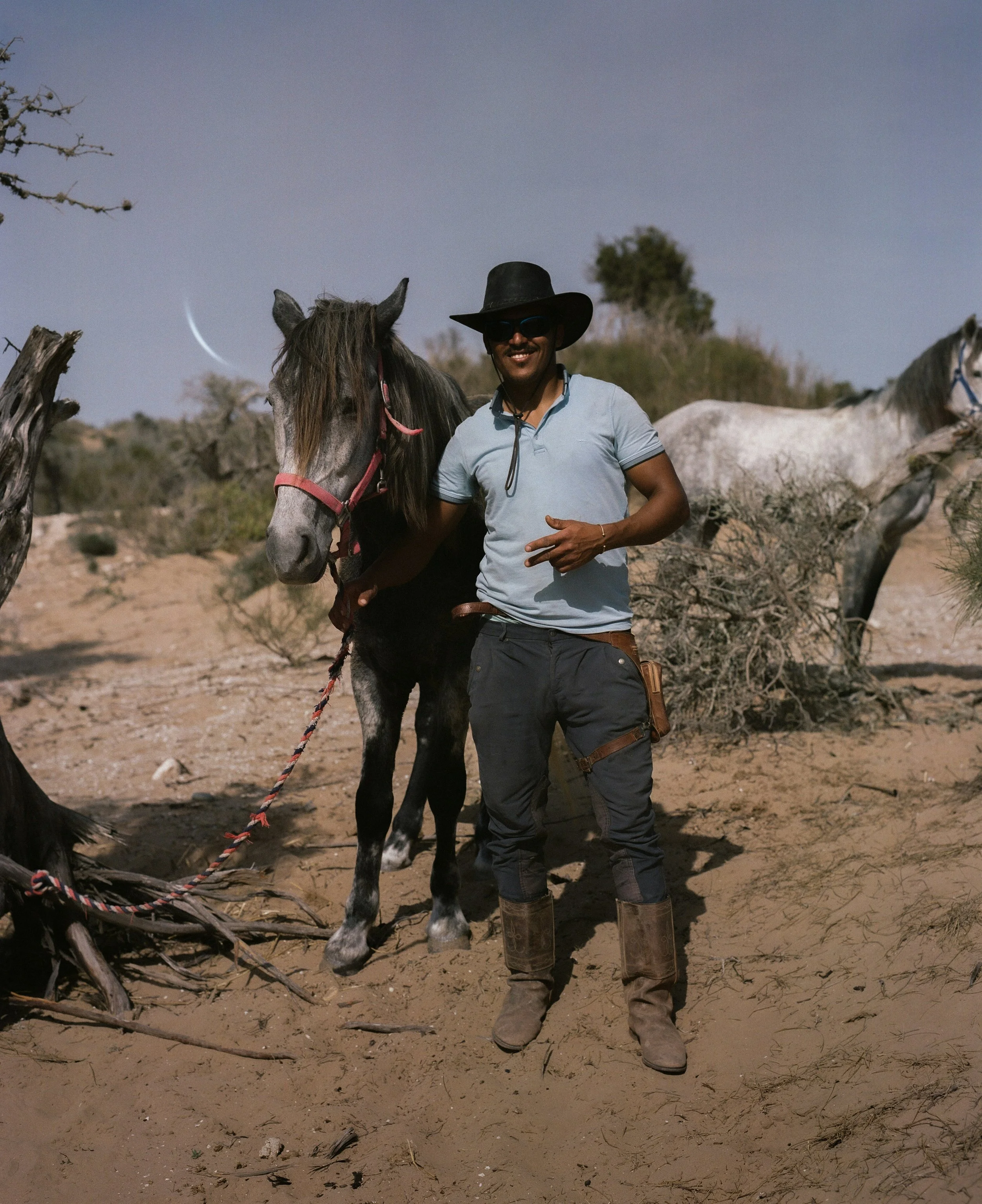
Photo Credit: Jesse Plum
The resurgence of Black cowboy joy has been long overdue, from celebrities like Shaquille O’Neal giving a nod to the “Boots on the Ground” movement to Beyoncé’s Cowboy Carter winning the Grammy album of the year award. I have yet to attend a line dance party or rodeo this year, but I have my cowboy hat and boots ready for when I do get around to it. I often wondered why Black cowboy representation was so scarce in the media, especially since I’ve experienced it myself, living in the South. Perhaps we can attribute the lack of awareness to the whitewashing of our culture. Colonization within the music industry has led the masses to believe that our musical contributions are limited to hip-hop and R&B, when that’s simply not the case.
We didn’t just step into the country music arena—we are country. Charley Pride, Linda Martell, and other Black blues and country legends paved the way for all country music artists to make the genre what it is today. And this may come as a shock to some, but our people never stopped line dancing. We’ve been performing routines at weddings, family gatherings, and school PE classes, featuring songs like the “Cupid Shuffle” by Cupid and the “Cha Cha Slide” by DJ Casper, who is no longer with us. The tracks may have an urbanized spin, but they still count as line dance music.
The lines are a bit blurred regarding line dancing’s origins, but historians believe that it was born from a gumbo pot of different cultures. From Indigenous tribal dances (e.g., the stomp dance) and Black American rituals (e.g., the ring shout) to traditional European folk dances, all played a role in the inception of this global phenomenon of a dance style.
There’s nothing more empowering than us moving as one, whether that’s on the dance floor or in how we approach circumstances that affect our community as a whole. There’s nothing more liberating than choosing joy over fear, sadness, and defeat. Gathering to perform these synchronized routines is a way for us to not only have a grand ole’ time, but also strengthen the ancestral connection on these lands and widen our pathway to collective healing.
I was born into two lineages with Southern roots. My mom’s parents hailed from South Carolina, and my dad and his parents are from North Carolina. As someone who has traveled a lot and resided in multiple states throughout the U.S., Black Southern culture’s influence on the entire nation—and the world—has been too evident to ignore.
Living in California opened my eyes to the impact in an unsettling way. Witnessing outside groups appropriate our culture without giving credit where credit was due irked me to no end. And don’t even get me started on the South. Watching country artists deliberately try to exclude and shut out Black country artists from achieving mainstream success is pure comedy to me. Little do they know that we’re not new to this—we’re true to this.
On one end, we have a group of people who outwardly hate us because they ain’t us. On the other hand, we’ve got culture vultures just along for the ride so that they themselves can benefit from our likeness. Nonetheless, it’s our right and responsibility to preserve the culture that we created in its entirety. My mission is to do just that through my musical and creative endeavors.
I am undeniably proud of 803Fresh’s modern twist to this niche music genre. The global attention on Black line dancing has reintroduced marginalized communities to a different way to protest in light of racial tensions, social injustice, and the sour political climate. Instead of marching in the streets, many are marching in formation to the sound of feel-good and uplifting music—not giving any attention to those seeking to elicit a reaction out of us. This time around, we’ve traded our picket signs for colorful fans. The “Boots on the Ground” movement has simply reminded Black Americans that we can still rest in joy despite the world being on fire.

Pandemic Protests Collection By Larry Handy
The first protest I attended in 2020 here in Los Angeles took place on May 30th at Mariachi Plaza slightly east of downtown in the Boyle Heights district. LA which has a predominately Latino population showed up for George Floyd as did the rest of America
Editor’s Note | The African American FolkloristWe are honored to present a powerful new collection of poems by Larry Handy—work that blends lyrical precision with lived memory, cultural critique, and a deep understanding of Black folklife. More than verse, these are field notes in poetic form: rooted in personal testimony, shaped by collective struggle, and annotated with the clarity of a community archivist.This collection, Six Poems by Larry Handy, includes:Pulled Over (A View from the Curb)We’re In This Together (Covid19 Racial Rant)The Act of NamingI Still Remember LatashaProfiled…And We Still CoolGhazal for the Word Complete
Each poem is accompanied by a reflective annotation—layering the poet’s intent, backstory, and cultural context to illuminate the realities behind the imagery. These writings trace the intersections of protest and pandemic, memory and mourning, resistance and survival. They move fluently between spoken-word urgency and archival sensitivity, crafting a living document of Black American experience through the lens of Los Angeles and beyond.At The African American Folklorist, we are committed to platforming work that emerges from and speaks to Black communities, identities, and traditions. Handy’s poetic voice echoes the mission of this publication: to preserve, contextualize, and amplify Black lifeways on our own terms.We will be releasing this collection one poem at a time to give each piece the space it deserves—and to invite readers to sit with the weight, rhythm, and resonance of each individual offering.— Lamont Jack Pearley Editor in Chief
The African American FolkloristPandemic protests collection
written by: Larry Handy

Pulled Over (A View from the Curb)
They told me I look like someone they were looking for.
Sitting on the curb I was told I look like something they were looking for.
And who or what is it? Freedom? Their own soul? Their fear? Their aspiration? Their mirror?
Are you looking for Christ, officer? The moon is brilliant, have you looked at it? Why are you
looking at me?
Told to sit next to a cigarette butt. A cockroach shell separated from its antennae. White tweens in
SUVs making funny faces at me. This is the view from the curb.
To be treated like me, White friends get Mohawks, tattoos, and piercings.
To be treated like me, I just exist.
I will wear Hawaiian shirts in the cold…next time…
the anti-hoodie…next time…
maybe this will change things…next time…
Annotation
The first protest I attended in 2020 here in Los Angeles took place on May 30th at Mariachi Plaza slightly east of downtown in the Boyle Heights district. LA which has a predominately Latino population showed up for George Floyd as did the rest of America, but the city also brought to attention the Latino men and women who had been abused by law enforcement. Latinos that did not make the national news like Anthony Vargas, Jose Mendez, Christian Escobedo and eventually 19 days later on June 18th Andres Guardado, an 18-year-old security guard who was shot 5 times in the back while at work by LA County sheriffs. Mexicans, El Salvadorians, came out with Black Lives Matter masks and danced indigenous dances. Though they were not Black like me they held signs that said: “Black is Beautiful.”
What drove me to protest was my own experience with the LA County Sheriff's Department, dating back to the early 2000s. Despite having college degrees, voting, paying taxes, abiding by the law, and complying with the law, routine stop and frisks would still happen to me. While they never used racial slurs to my face, sheriffs would tell me to my face, “You look like a Black guy who did (fill in the blank)”, or “Black dudes like you like to (fill in the blank)”. I was even groped between my legs by female officers who were “looking for illegal items”. The humiliating thing about it all was no one apologized to me for mistaking my identity. No one apologized to me for making me late for work. No one thanked me for complying. After filing formal complaints against the LA County Sheriff Department failed, I gave up the fight but I didn’t give up the right to write.
Black folks have said in the past do not waste your time explaining racism to White folks. But I do. I do because I am a librarian and librarians answer questions. We were the first “Google”. And I tell White folks, if you have piercings, mohawks, tattoos, the world looks at you a certain way. Cops stare at you, courts frown at you, and employers doubt you. Well, my skin to the dominant culture is treated as though it were a mohawk, tattoo, and piercing. Some of them finally get it, while others just walk away, pretending not to understand.
The protests in Los Angeles came as karma to me. When Black, Brown, Beige, and White came together with signs, chants, and demonstrations, it was as though my formal complaints that were ignored finally got brought to light. Every step I took marching was a stomp upon the very streets that tried to kill my spirit. It may not come when you want it to come, but it will come.
We’re In This Together (Covid19 Racial Rant)
Locked in scared to go out told what to do by the government confused can’t find what you want loss of privilege sick family sick friends imprisoned no job worried how to pay rent Now you know what it’s like being Black. Waiting for covid19 reparations from the government see what I mean? You’re a nigger now.
Slaves in the same ship
Sickened by something strange
Sickened by something systemic
Sickened by something foreign to you
Sickened by something you didn’t create
Startled by stuff you didn’t start
Yep. You’re a nigger now.
Feeling worthless helpless feeling agitated not knowing when it will all end; now you know how it feels to be Black. Living 3rd world in the richest country in the world. Screaming power now! Yes, we want power! Now! Praying the power stays on—the utilities are due.
My people and I know this to be true.
To you and yours how much is new?
Annotation
I never loved using the N word. I never liked hearing rappers or comedians or brothers in barbershops using it. But for this one I had to. I tell people that the marginalized have a certain wisdom that the privileged don’t have. And while the privileged do have confidence and a spirit of adventure that the marginalized often lack, when things don’t go the way the privileged expect, they shatter. They become babies again. During the pandemic I watched the privileged get subjected to things they were not used to. They complained that they were oppressed because they had to wear a mask or were denied entry to a building because they didn’t wear a mask. And they complained that it was un-American and that the founding fathers were rolling in their graves. Well, prior to 2020 they also complained that people like myself complained too much about racism and injustice. Funny how Karma comes. It may not come when you want it, but it comes.
The Act of Naming
For many on earth
The only thing they name is their child
Their pet
Their pain
For me I’ve named thousands of things—
Poems, mostly
Choice by choice
Voice by voice
It never dawned on me I am an Adam in my own way
See? There I go again naming things.
Trump has named you the China Virus
The Wuhan
Kung Flu
I call you fate
Plague
Peter for Peter PanDemic
Never Never in my land
Could I ever ever imagine
You could fly
you could fly
you can fly
from sea to shining sea
Peter
Welcoming the dead to Heaven’s gates
Blowing your Covid horn
As the dead walk
Though gates
TRUMPeting the dead
Though Heaven’s
gates
Annotation
Trump is proof that White Privilege exists. There is no way a Black president would be able to make up words like “Kung Flu” and not be called “ghetto” or “gangster” or “jungle”. Trump did it and got praised by his base. I grew up in an era where rap and hip hop were fledgling. Rap was treated as the bastard son of disco, just an experimental passing fad. I remember when rappers said things on wax and the religious right wanted them banned for indecency, inappropriateness and inconsiderateness. That same religious right has elected a gangster rapper in orange face. Trump has many similarities to television evangelists. They preach off script as the spirit leads. They promise miracles. They cast out demons. They (some of them) survive scandal. They are anointed by the “whole armor”. Trump preaches off script as the spirit leads, Trump promises American miracles, Trump casts out Mexicans and Muslims, Trump survives scandals, and his miracle ear that was shot but not shot off was anointed by some type of armor. Christians relate to Trump because they relate to television evangelists.
What I wanted to do in this poem was play with words the way rappers do, the way Trump does and throw in Christian imagery the way television evangelists do. As Don King would say, “Only in America!”
I Still Remember Latasha
I Still Remember Latasha
50 stars in rows or 13 in a circle
We’ve wished upon them all.
Dragged into war like Sandra Bland’s cigarette
We’ve touched cotton and steel
Woven freedom in quilts
Dug our own ditches
To the tune of God Bless America
So, let’s stand for Betsy Ross’s graven image
Or kneel
Whatever your choosing
Black Lives Matter or Boston Massacre
Kapernic or Cris’ Attucks
Revolutions come in cycles
Kill time with history
The mystery isn’t lessened once you know
1619 was a long time ago
But I still remember Latasha from ’91.
Shot in the back before Trayvon in 2012
Michael and Tamir in 2014
Freddie in 2015
And George last week
Remember those names but remember hers.
Before body cams
Cell phones
Social media and distance
Before Trump
While a Democrat was in office.
See? The party doesn’t matter.
We matter.
And we’ve died under them all
13 in a circle or 50 in rows.
Annotation
This is a very important piece to me. Rodney King was beaten by 5 LAPD officers on March 3, 1991. It was filmed on tape and seen across the world. But it was Latasha Harlins, a 15-year-old girl, 13 days after Rodney King on March 16, that triggered outrage among Black folks in Los Angeles. Latasha was shot in the back and killed by a store owner over a bottle of orange juice. Had she been alive in 2020 to watch George Floyd die on screen she would have been 44 years young.
Black Lives Matter is a complicated term. It is a folk term because it is not copyrighted, and is for all to use. It is an organization, but it is also a rallying cry. A slogan. A belief. Many people who oppose the organization confuse it with the folk term. And though there have been scandals involving the organization, the folk use must still be upheld.
Black Lives Matter the organization, when it holds meetings, rallys and protests, it conductions a formal water ritual common among African peoples. The libation. In 2020 BLM leaders would poor a drop of water on the street and the crowd would say the name of a deceased person killed unjustly or a deceased elder. “Say his name. George Floyd [water poured]. Say her name. Breonna Taylor [water poured]. Say his name Ahmaud Arbery [water poured]. Say her name. Sandra bland [water poured].” People began running out of names and even the musician Prince was shouted out. “Say his name. Prince! [water poured].” Chadwick Boseman, the esteemed actor who played Thurgood Marshall, Jackie Robinson, James Brown, and superhero Black Panther died on August 28, 2020 of colon cancer and in Los Angeles—the city of stars—his name entered the BLM libations. But it saddened me that Latasha Harlins was rarely mentioned. And I believe partially it had to do with her death being so long ago that it had not impacted the younger generations of activists and protestors.
As an archivist/librarian by day I have a special place in my heart for memory. Nowadays if something isn’t posted on social media it hasn’t been posted in the mind. I wrote this poem as a poetic libation to Latasha Harlins who I remember.
Profiled…And We Still Cool
THE GOOD KIDS
SEVEN IN BLACK HOODIES.
We still cool
Them streets is our school
Learning cops cruise late
Our edges stay straight
Too sober to sin
Soda is our “gin”
Store robbed in June
They’ll blame us soon
Annotation
I had to commit blasphemy with this one. The great Gwendolyn Brooks wrote “We Real Cool” and I had to write my own version of it. The poem speaks for itself. The unique thing that I found during the 2020 Los Angeles protests was the presence of punk rock culture largely brought on by the White allies who joined us. It was in their defiance, their dress, their leaflets and flyers and their “ACAB” slogans. They took inspiration from the Anti-Racist Action punk movement of 1988 started by the Minneapolis “Baldies”—a group of White and ethnic kids of color banning together to kick out the neo nazi-skinheads who were assaulting immigrants and people of color. Punk rock is very folk. I had a music professor explain it to me. When it is your birthday no one cares how good or bad the song “Happy Birthday” is sung at your party. It is sung by everyone and what matters is that it is sung. Punk rock songs are like “Happy Birthday”. It is about the gathering. In my personal life I have embraced the punk rock philosophy of the straight edge made popular by the band Minor Threat. Straight Edge teaches strength through sobriety and sobriety fuels one’s resistance to control and injustice through clarity of thought. In this piece I incorporated the straight edge image.
Ghazal for the Word Complete
Teddy bear and shovel and afternoon sun
A child slides alone in her own park complete
Last week I let go of a man who died
Stages of breath show a life complete
Covid came and we masked our world tight
We prayed our trials would be complete
Songbirds pitch their 10-minute tweet
Peppered at high pitch the wind is a radio
Complete
Time can be squandered on pleasures and treats
And soon without warning the year is complete.
Annotation
My final protest of 2020 came the day after the elections. Wednesday, November 4, 2020. Nationally Trump had lost to Joe Biden which the world watched, but locally Los Angeles protestors were focused on the district attorney. The incumbent DA Jackie Lacey ran against the challenger George Gascon. Black Lives Matter Los Angeles led by Dr. Melina Abdullah challenged District Attorney Lacy on many issues. BLM Los Angeles held Wednesday protests outside the Hall of Justice every Wednesday for 3 years beginning in 2017. This protest was a gathering in celebration, District Attorney Lacy had lost. Despite Jackie Lacey being the first woman and the first African American to serve as District Attorney in Los Angeles, both BLM and the ACLU held her responsible for not prosecuting police offers for their actions and for accepting donations from law enforcement unions which they felt was a conflict of interest.
Everything was polarizing. If it wasn’t about race it was about power and if it wasn’t about power it was about the virus that stopped the world. We had no Summer Olympics because of the virus. Movie theaters shutdown and so I went to drive in theaters. Sports channels were showing reruns of old games and when they finally had current games teams played under quarantine to a fake crowd. The Los Angeles Lakers won the NBA championship. Los Angeles Laker Kobe Bryant died in January kicking off the year which possibly inspired the Lakers to go on and win the NBA championship 9 months later as well as the LA Dodgers that same month. The same people who criticized Kaepernick for kneeling, began taking knees themselves—coaches alongside players.
I was a caregiver working an essential healthcare job on the side. Since many senior citizen centers were closed, I worked with older adults in their homes, and I happened to be with one while he passed.
Many people in my profession, the profession of modern American poetry, turn away from the pastoral. “Poems about nature don’t move me / I want something that says something / A tree doesn’t speak to me.” This poem was my middle finger to that way of thinking with the image of the songbird. We need to listen to nature more because it will summon us back whether we go peacefully or go kicking and screaming.

Whiteness Is the Water
They ask why we aren’t free yet.
Why justice still slips through our fingers
like water cupped in trembling hands.
Written By: Dee Parker

They ask why we aren’t free yet.
Why justice still slips through our fingers
like water cupped in trembling hands.
But the truth is,
America is not broken.
It is working exactly as it was designed.
Whiteness is not just skin.
It is the scaffolding,
the courtroom gavel,
the school zone line,
the zoning map.
It is the quiet entitlement in a boardroom.
The invisible hand choking a school budget.
The smile at the museum
while ignoring the bones beneath it.
Whiteness is the standard.
The measure of good.
Of safety.
Of success.
It was never neutral,
it was never meant to be.
From the auction block to the redlined block,
from cotton fields to prison yards,
from stolen labor to stolen votes,
this nation has carved itself
into a fortress of protection
for whiteness.
And when we demand breath,
they give us hashtags.
When we demand land,
they give us murals.
When we demand justice,
they offer us diversity workshops, which in turn, they are quick to snatch away from us.
Because real change
would mean surrendering power,
not sharing it politely.
It would mean rewriting the blueprint,
not painting it Black for a month.
We are not asking to sit at the table.
We are asking to dismantle the room
brick by brick,
until no child chokes on air thick with history,
no dream dies in a cell with bars built by policy,
no voice echoes unheard
beneath the weight of inherited silence.
Until then,
Black liberation will remain
not a right,
but a radical idea.
A vision.
A threat.
A promise.
Still waiting to be kept.
We will have Black Libration for all, one day, I just pray it's not too late.
Because none of us are free and liberated until we all are free.
It's all small steps to a giant.
Not So Random Thoughts.
D~Parker 7.18.2025