By KANDIA CRAZY HORSE
(Update from Magazine Special Digital issue Black Advocacy)
KANDIA CRAZY HORSE
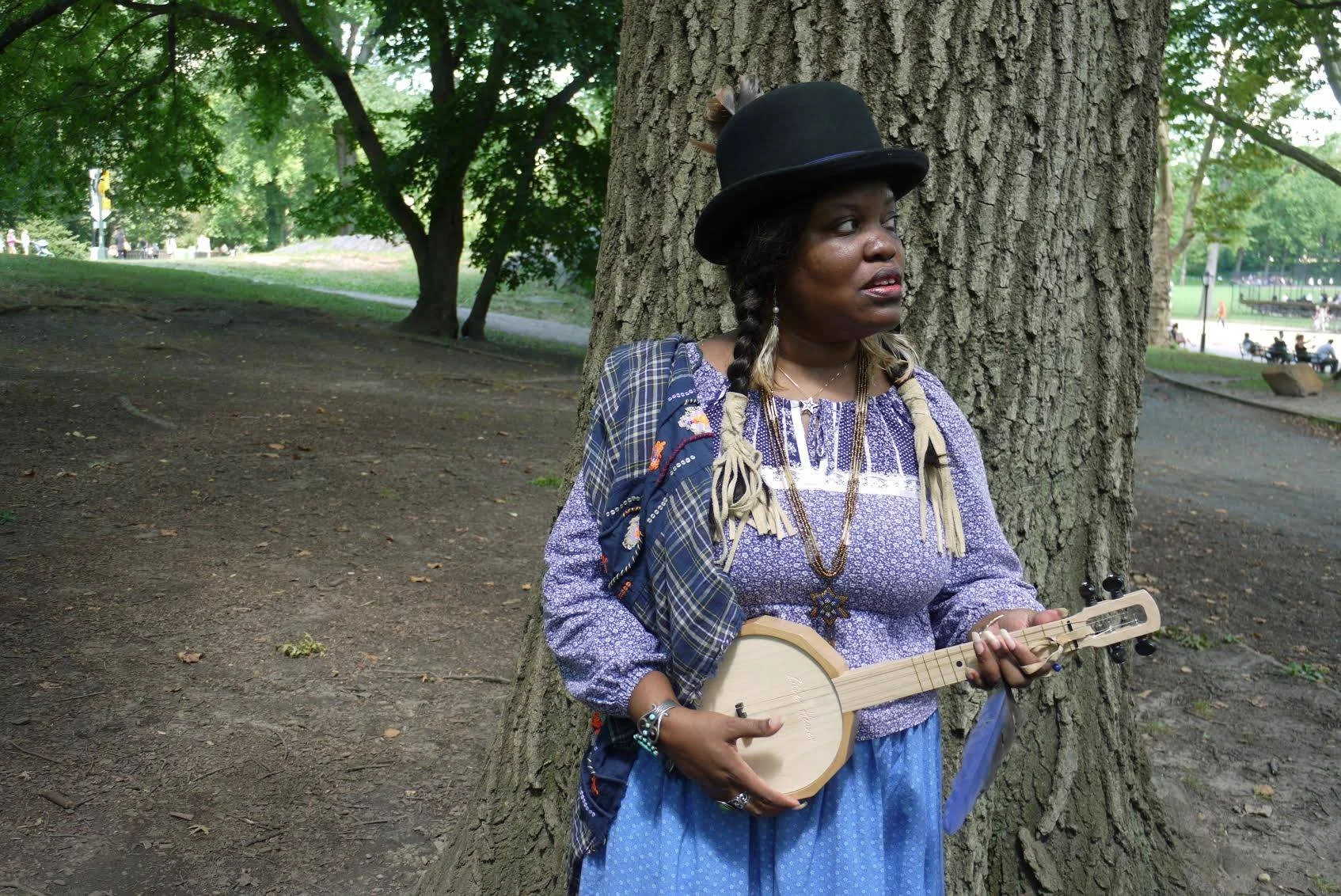
Chama Wingapo! Here in the year of #IndigenousAmerica250, I would like to introduce you gentle readers to the genre of Native Americana which should be considered part of the whole continuum of American black music. There are some notable so-called Afro-Indigenous artists in music – especially the most famous being country superstar Kane Brown (Cherokee) who tends not to be framed as indigenous – including Claudia Hayden, Lido Pimienta, Maimouna Youssef, Radmilla Cody, Julian Taylor, Qacung, Air Jazz, Pura Fé, and the late legends Jimi Hendrix and Virginia Native 1960s icon Ronnie Spector. They tend to operate within the genres of jazz, R&B/Soul, blues, traditional, hip-hop, and folk. And yet I am unique amongst this cohort as an indigenous and black singer-songwriter/activist/model who creates country-adjacent music in a format I call Native Americana.
Afro-Native musicians bear intersectional identities, navigating a complex space wherein we blend indigenous and African diasporic cultural traditions. Being black and native we share the background of being traumatized by settler colonialism and sometimes even disenfranchised by our own nations. Indigenous erasure is also our plight. We share connection to the land and our Ancestors. And we are personally motivated to be involved in political and social movements in which we use our voices to help raise awareness about issues that affect both Indian Country and Black America.
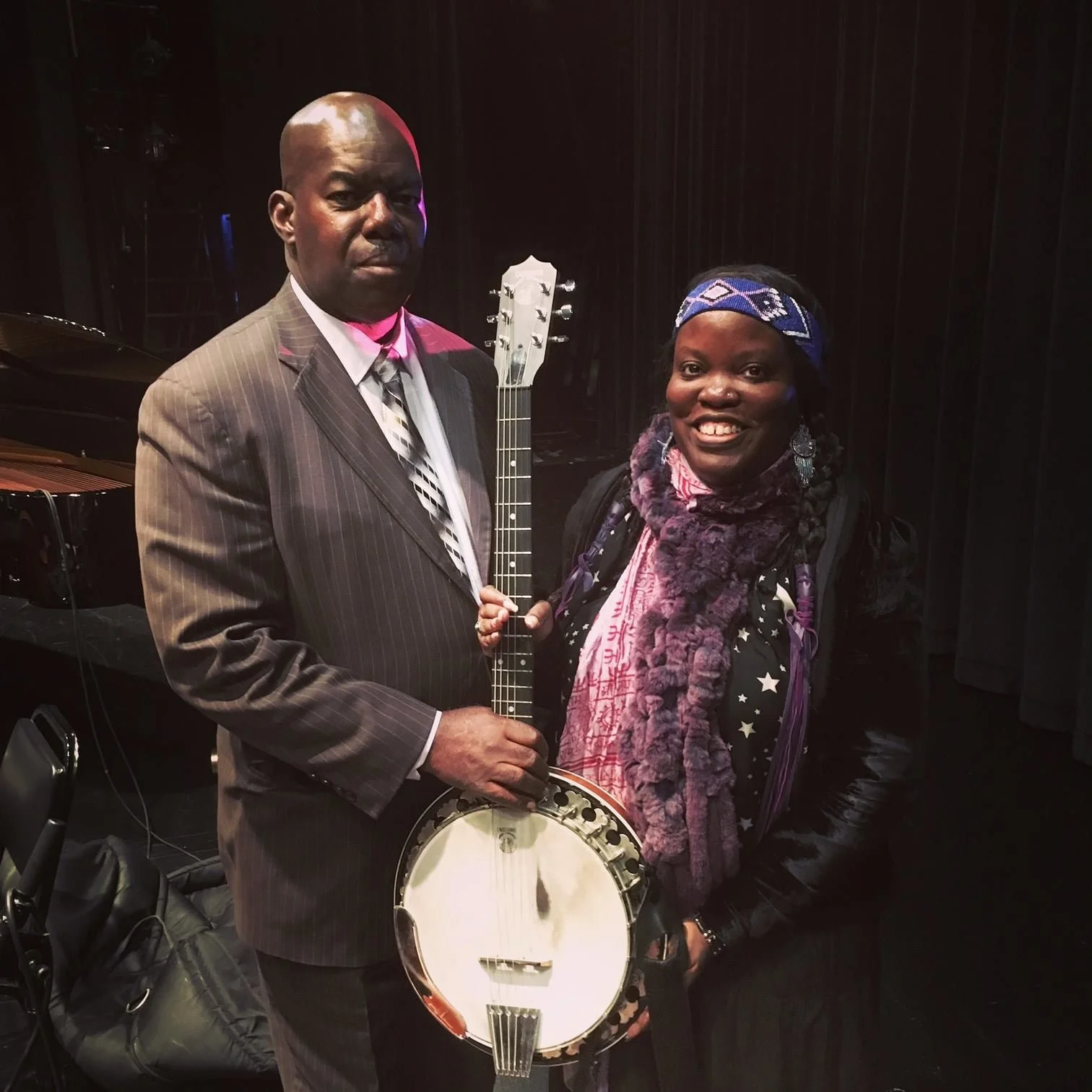
I am Kandia Crazy Horse (Pamunkey/African descent) a singer-songwriter and bandleader of native americana trio Cactus Rose NYC based in Lenapehoking (New York City). Cactus Rose NYC features indigenous and black guitarist Lonnie Harrington (Seminole/Shawnee/Choctaw/Cherokee/black) & guitarist Nico Zaca. Since the release of my critically acclaimed debut Stampede, I have graced stages including performing at the Brooklyn Americana Music festival, the Another Country festival, the Grand Ole Echo @ SXSW, Make Music NY festival, Porch Stomp 2025, the 2026 FWAAMFest in Texas, and beyond. I have curated and performed at benefits for Indian Country including the “Sacred Water Medicine Show” at Decolonize This Place (Artists Space) in Manhattan and a “Benefit Concert For Water Protectors at Standing Rock” at Brooklyn, NY’s Jalopy Theatre. Influenced by Buffalo Springfield and indigenous artists Richie Havens, Cherokee folk singer Karen Dalton, Kiowa Apache Mary McCaslin/Mary Noel Singing Bear, and Buddy Red Bow, Cactus Rose NYC’s music focuses on experiences of urban natives and the breadth of Indian Country. My songs also mine my uncommon adventures growing up between various countries in Africa – Mali, Lesotho, Egypt, Ghana -- and my homelands Attan-Akamik (DC & Virginia) to forge a compelling style of Americana. I am the recipient of black country artist Rissi Palmer’s Color Me Country grant via the Newport Festivals Foundation. I have played venues as diverse as the Shrine in Harlem and Desert 5 Spot in Williamsburg, Brooklyn. I have had diverse opportunities from performing at Lincoln Center’s David Geffen Hall in July 2023 as part of the Songs of the Living Choir in the Afrofuturist opera “Parable of the Sower” written by Bernice Johnson Reagon (my father’s cousin and founder of Sweet Honey in the Rock) & Toshi Reagon to Cactus Rose NYC headlining the Oberlin Folk Festival in Oberlin, Ohio on May 3rd, 2024. We performed at the Indigenous Day of Remembrance+Resistance and at the 3rd annual National Indigenous Peoples of the Americas Parade last year. We released our first EP – Live From Lenapehoking: Field Recordings – in August 2024. And we opened some dates of Valerie June’s “Owls Omens & Oracles Tourl” last May starting in Manhattan at the storied Town Hall. My 3-piece band has been called “a trailblazing country and Americana band” by Indigenous In Music With Larry K & been the spotlight interview on the March 24, 2025 episode of the show. Praised for our fluency with varied Americana and cosmic country traditions, Cactus Rose NYC’s music unifies the ancient with indigenous futures.
Americana the genre – not the traditional definition that encompasses everything from mammy jars to milkshakes – has been defined by the AMA as: “[Americana] is contemporary music that incorporates elements of various American roots music styles, including country, roots- rock, folk, bluegrass, R&B and blues, resulting in a distinctive roots-oriented sound that lives in a world apart from the pure forms of the genres upon which it may draw. While acoustic instruments are often present and vital, Americana also often uses a full electric band.” My hero Leon Russell released an album called Americana as early as 1978 so the genre is not just ratified in the 21st century. My sound with Cactus Rose NYC blends indigenous elements, southeastern Turtle Island roots forms including Appalachian folk, and the folk-rock and Cosmic American Music styles that emanated from Tovaangar’s Laurel Canyon scene in the 1960s. Joined with the guitarists Lonnie and Nico, my total body of work is underpinned with sonic connections to my Pamunkey and African diasporic roots. I have been in the country-adjacent trenches well over a decade and was an early adopter of general Americana as a rock critic for publications including The Village Voice and by penning the first round-up of Black Americana artists for Paste magazine in April 2017. Being from a First Contact tribe, American history and the plight of indigenous nations figure prominently in my work. There is also a mixture of urban and rural themes. All of this informs my take on native americana and puts me in conversation with such other current native americana artists as Annie Humphrey (Anishinaabe), Cary Morin (Crow/Assiniboine Sioux/black), Agalisiga “Chuj” Mackey (Cherokee), and Choctaw-Apache Vincent Neil Emerson. I contribute a rare voice to the Americana stage and amplify diversity and inclusivity in our contemporary indigenous artistic landscape.
Just as there is a deep wave of Black Americana predating Beyoncé’s Cowboy Carter attempt to “go country” as so many pop artists have been doing (eschewing the black music they appropriated in favor of reaping a prized country audience – looking at Jelly Roll, Post Malone & Miley Cyrus...as well as Lana Del Rey who claimed black proximity due to dating rappers, bit hip-hop beats, sang of “[believing] in the country America used to be,” and has posed in a native chief’s war bonnet), native americana actually coalesced in the 1960s. Leaving out the controversial Buffy Sainte-Marie who contributed with her early country album I'm Gonna Be a Country Girl Again among other works but is now in disgrace, the founders of native americana in that decade could be affirmed as Greenwich Village folk singer Peter LaFarge, guitar legend Jimi Hendrix (of Cherokee descent), and member of The Band Robbie Robertson (Cayuga/Mohawk).
Peter LaFarge -- although adopted into the Hopi tribe has been dismissed as being indigenous -- was a composer of the native-themed classics “The Ballad of Ira Hayes” and “Drums” and began mining this territory in the 1950s as a champion rodeo cowboy and actor turned musician. He was the first folk singer signed to Columbia Records in 1961. He was connected to folk singers Sainte-Marie and Patrick Sky (Creek/Irish) from Georgia; Johnny Cash and Bob Dylan counted him as friend and inspiration. Cash recorded the controversial, Indian-supporting album Bitter Tears comprised of several LaFarge compositions and experienced severe backlash for it. Before he walked on from an overdose in 1965, LaFarge made a singular impact haunted by the struggles of indigenous people. He sang “For the red man and the black man / The yellow, white and brown / We walk this road together/ And this road is freedom bound.” Of-the-moment indigenous protest music that you hear from younger artists like Raye Zaragoza about residential boarding school traumas and excoriating pipelines has lineal descent from Peter LaFarge.
With contributions from his repertoire such as “Castles Made of Sand” and “Cherokee Mist,” Jimi Hendrix also limned the contours of native americana which was echoed in his celebrated dress in fringed buckskin, moccasins, and headbands. He memorably queried America’s very core on his turn at “The Star-Spangled Banner” at the 1969 Woodstock Festival and prominently displayed his interconnectedness with nature on many blues narratives and powerful instrumentals. Hendrix related that he learned about his indigeneity and native tales from childhood visits to his Cherokee grandmother. As a pop culture item, he is said to have named the band Redbone while enjoying a relationship with that group’s founders Pat and Lolly Vegas. Hendrix is also the original source of eco-metal that Neil Young carried on. Through the wilder shores explored with his guitar and electric spirituality Hendrix indelibly shaped his own version of Turtle Island that continues to reverberate around the world.
Although his indigenous heritage wasn’t foregrounded during his time with The Hawks and then The Band during the 1960s, Robbie Robertson drew on the remembrances of family musicians during his Canadian childhood on the Six Nations Reserve where he learned guitar just as he did the tales from the American South of his bandmate Levon Helm. Many accounts state that The Band – who turned toward the old-time and rural in the period when psychedelia was waving its freak flag high – are the true progenitors of the Americana genre itself. Such enduring songs as “The Weight,” “King Harvest (Has Surely Come),” and “The Night They Drove Old Dixie Down” supplied Americana with its very language and storytelling parameters. Their albums beginning with Music From Big Pink are staples of Americana and remain as fresh today as back in the day. After saying goodbye to his era with The Band via The Last Waltz performance and documentary, Robertson would go on to embrace his indigenous heritage in sound through the Music For The Native Americans project with musical colleagues -- including Rita Coolidge (Cherokee) and her trio Walela -- called the Red Road Ensemble, featuring songs such as “Coyote Dance,” “The Vanishing Breed,” “Cherokee Morning Song,” and Ulali’s "Mahk Jchi (Heartbeat Drum Song)." His next native-facing album was 1998’s Contact from the Underworld of Redboy which drew inspiration from traditional Aboriginal Canadian songs and chants fused with modern sounds. Robertson’s final contribution to Indian Country was music for Killers of the Flower Moon (2023), which was dedicated to his memory and garnered him a posthumous nomination for the Academy Award for Best Original Score.
LaFarge and these two titans appeared in the standout documentary Rumble: The Indians Who Rocked the World which demonstrated that without the African and indigenous presence there would be no globally celebrated American roots music. Their imprints on music have now lasted over six decades. I treasure their repertoire, perform “Drums” live, and am deeply influenced by Robertson. I have followed in their footsteps illuminating native americana through songs about indigenous subjects and storytelling derived from the deep south and southwest.
Even beyond the indigenous guiding spirits there is the key example of 1960s folk/country/rock band Buffalo Springfield. Combining Canadian and American players, their superstar core consisted of Texas-born singer-songwriter-guitarist Stephen Stills and Neil Young who hails from Toronto, Canada. Young and Stills both have been voted among the top 10 Americana artists of all time. Stills’ Manassas is arguably the greatest album of the genre besides The Band’s first two releases in the Americana canon. He also entered the run of non-indigenous artists’ songs about natives with the Rita Coolidge tribute “Cherokee.” However, it is his bandmate and guitar dueling partner Neil Young that we must look to for traces of indigenous themes. He took up the torch his friend and fellow Canadian Robbie Robertson laid down. Young is famous for his obsession with so-called native americans. There is often a wooden cigar-store Indian lurking on his stages. Indian country is his Muse evident in his fringed threads, the name of his band Crazy Horse, his worldview and songs. Buffalo Springfield press referred to him as “Neil the Indian.” Young has related: “There I was making 120 bucks a week at the Whisky as a musician. … I’ve always liked fringe jackets. I went out and bought one right away with some pants and a turtleneck shirt. Oh yeah, I thought I was heavy. I wore them on some TV shows and whenever we worked. Then I went to this place on Santa Monica Boulevard near La Cienega. I saw this great Comanche war shirt, the best jacket I’ve ever seen. I had two more made. The group was Western, the name Buffalo Springfield came off a tractor, so it all fit. I was the Indian. That’s when it was cool to be an Indian.” Problematic as this view may be, Young persisted in writing famed native-centered songs like “Broken Arrow,” “Pocahontas,” and “Cortez The Killer.”
Young, whose music has been referred to as “Mountain Funk” by Eddie Vedder, is an enigmatic visionary who found a distinct method of composition amongst the move toward songs with environmental, social, and political topics by his Laurel Canyon and Topanga Canyon peers. Young created early songs centered on indigenous figures such as the vanishing Indian of Buffalo Springfield’s “Broken Arrow” with its lines “Did you see him in the river? / He was there to wave to you / Could you tell that the empty-quivered, brown-skinned Indian / On the banks that were crowded and narrow / Held a broken arrow?” and later tunes about the myths of America. His 2012 album Americana displays Young and his band Crazy Horse on the cover superimposed on the faces of Geronimo – derived from a June 1905 photograph of him Guiyatle in a Locomobile outside Ponca City, Oklahoma -- and several other indigenous men. In some liner notes, Young said of Oglala Lakota leader Tȟašúŋke Witkó, “Crazy Horse did not like white men because they encroached upon his beloved wide-open prairie. He detested their developments that chased away the buffalo his people depended on for food and clothing. When the cold came roaring down the Plains, the buffalo faced those raging winds with its head into the white storm, as if it were cleansing itself from hardship and discomfort. Those were the same winds blowing against Crazy Horse’s face as the footprints of the white man stamped more and more across the land.” Young’s obviously a proponent of #LandBack and also voyaged to Standing Rock Indian Reservation on his 71st birthday where he played guitar through the area of the camps. Bringing us up to his more recent history, Young’s “Indian Givers” came out against the Dakota Access Pipeline with strident political lyrics stating, “Our brothers and sisters have to take a stand.”
Essential to my construction of native americana is my soul connection to the land, my homelands in the Southeast. Enter the iconic southern storyteller my Memphis-based “Unc” Stanley Booth (who joined the Ancestors in December 2024 as I was beginning to theorize my way through these genre origins…this mythmaking is his parting gift to me). Stanley was not a rock critic though he had written about Otis Redding, Furry Lewis and his Waycross, Georgia homeboy Gram Parsons for magazines; he was a great chronicler of southern roots music and related folkways – see Rythm Oil: A Journey Through the Music of the American South. Discovering and reading his book The True Adventures of the Rolling Stones at age 12 changed my life. I had no idea then that Stanley Booth would become my honorary uncle – I was upraised ole fashion’ and had to address an elder I respected as “Mr.” or “Uncle” so-and-so – after I got connected to him in my 20s while interning in The Village Voice’s music section. Unc would come UpSouth from his home outside Brunswick, Georgia and then from Memphis to Lenapehoking and stay at the Algonquin hotel in midtown where I would go down to visit him. We would proceed to have great adventures – as an “interracial couple” as he put it -- across the City including when he introduced me to his friend, a legendary photographer from the Southland who became Uncle Bill (Eggleston) to me. Through Unc I also became friends with famed record producer Jerry “Papa Dippermouth” Wexler and musician/producer Jim “Little Lorenzo the Rubberlegger” Dickinson which enriched my life. I was so in awe and encouraging of Stanley Booth’s writing and looked very much forward to him finally releasing his successor to Rythm Oil: Blues Dues. Stanley Booth was and shall always remain my heart in Dixie and a key introduction to Americana.
Of course, there are numerous indigenous artists who have helped formulate the songlines of native americana since the 1950s, writing about their Ancestors, our people, and experiences. They have struck back at a century-plus old trend of non-native visions of “tragic squaws” and “stoic Indian braves” in songs such as ”Cherokee Maiden,” “Apache,” “Seminole Wind,” and “Red Wing.” These acts include the following: Joanne Shenandoah, Floyd Red Crow Westerman, Willie Dunn, Keith Secola, XIT, John Trudell, Jesse Ed Davis, Cody Bearpaw, and Link Wray (Shawnee) -- inventor of the power chord, creator of 1958 instrumental hit “Rumble,” and of the pioneering Americana albums Link Wray (1971) and Beans and Fatback. Wray influenced Neil Young and both influenced me when I came to creating music. My debut solo album Stampede is named after Buffalo Springfield’s lost album and it features a song in tribute to Link Wray and his guitar called “Cowgirls.” On the black hand side, some of the Americana contributing folk and blues singers are Odetta, Len Chandler, Taj Mahal (the earliest black artist I saw playing banjo, who was in the Rising Sons with Jesse Ed Davis and Ry Cooder), and the aforementioned Richie Havens (Blackfeet…whose grandfather and great-uncle from Montana/South Dakota were involved in Buffalo Bill’s Wild West Show). It is well-known that Richie Havens is a towering figure in the history of folk music. His opening performance at Woodstock in 1969 cemented his stature as an artist for the Afrofuture. Among the highlights of his long career, he performed at the Benefit Concert for The Longest Walk, an indigenous spiritual walk from Alcatraz to Washington, D.C. affirming treaty rights in July 1978. Havens is the link between Jimi Hendrix and his latter-day rock career having first caught him in a club in Harlem and turning him on to the Greenwich Village scene. Havens also gave Hendrix the lyrics to Bob Dylan’s “All Along the Watchtower” which was a pivotal exchange. I discovered Havens’ albums in the mid-80s virtually at the same time that I found Buffalo Springfield and they had a huge impact on me starting with Alarm Clock. I forgot for years that my mother had bought me a guitar around age 13 with hopes that I would become the next Odetta. Yet I couldn’t master it so let it lapse. Once I moved to Lenapehoking, the artists I saw live the most throughout the 1990s and beyond were Gil Scott-Heron and Havens. It got to the point where Mr. Havens would acknowledge me at his shows at places like the Bottom Line and the Highline and greet me before he began performing, with his lookalike brother not far behind. I have performed his version of “Indian Prayer” live. Havens was never a country musician but his extremely skillful interpretations of other artists songs as varied as psychedelia – Quicksilver Messenger Service’s “What About Me?” – and traditional spirituals – “Motherless Child” as interpolated in his famous “Freedom” – along with notable originals like the oft-covered “Indian Rope Man” (covered and retitled as "African Herbsman” by Bob Marley) flow into the river of African-sourced American roots music.
2026 is the 250th anniversary of the establishment of the nation America superimposed on millennia of indigenous existence north – Turtle Island -- and south – Abya Yala -- in this hemisphere. A great moment to amplify the voices of native americana. Timely was the release of Beyoncé’s “Ameriican Requiem” in 2024 which is comparable in its way to Jimi Hendrix’s “The Star-Spangled Banner” as both debunk American mythologies. I lack Beyoncé’s $800 million+ in funds to record the albums I envision serving to global indigenous peoples, and yet still I hope for a new horizon of opportunities. My own music interrogates these American mythologies – see “Dahlonega (The Gold Rush)” from the Cactus Rose NYC EP Live From Lenapehoking: Field Recordings which harkens to the Cherokee removal from Georgia courtesy of gold rush settlers and President Andrew “Sharp-Knife” Jackson – and reconstructs indigenous ones on songs with Afro-Native subjects like “Songcatcher” and “Turquoise Ring.” The anniversary is a fitting time to explore the BIPOC sources of roots music; there are apparent native elements of the blues such as the southeastern Round Dance and Stomp Dance as well as thematically. There are native early forebears in blues and jazz such as “Father of the Delta Blues” Charley Patton (Choctaw), Illinois Jacquet (Lakota/Creole), and Mildred Bailey (Coeur d’Alene) – and shared syncopated rhythms, Indigenous vocal inflections, and storytelling modes in early jazz and Delta blues. Some scholars claim the blues scale itself, with its particular microtones and pitch bends, derives from the vocal styles of indigenous music of the Southeast. Centuries back in cultural crossroads New Orleans, jazz and possibly blues were founded amongst the mix of enslaved Africans, Choctaw, Houma, and gens de couleur libre who gathered weekly at Congo Square; world-famous Second Line – sometimes in the retinue of tribes that “mask Indian” -- drumming patterns descend from the native drum. African and native musical traditions both utilize a pentatonic scale, sounding the melodic base for early blues. Keeping all of this in mind and sonic arsenal, I hope to mount a project that will query the swing back to country music dominance and the return of white Christian nationalism through indigenous songcraft just as Woody Guthrie penned “This Land Is Your Land” responding to “God Bless America.”
I exist and create at a crossroads of new and old traditional culture. As a “trailblazer” in native americana – according to Larry Knudsen (Ho-Chunk) of the radio show Indigenous In Music -- I wish to further follow these above cited indigenous musicians into a sonic nation that considers native and afro-native artists in Americana equally and respects their creations despite issues of gatekeeping and anti-black racism. My music is a folksy history lesson and specific view of Indian Country, and it is black music as activism. Native americana mixes and blends diverse cultural expressions, influences, and storytelling while acknowledging the roles of indigenous and black artists in the genre. My musical contribution to native americana is complex like my dual cultural upraisin.’ I don’t abide to gild the brands of white Americana stars that still dominate the genre. My true aim has long been and continues to be promoting other artists of color that have altered the optics of Americana.
Indigenous singer/songwriter/activist/model Kandia Crazy Horse lives in Lenapehoking where she performs with her native americana trio Cactus Rose NYC and is very involved on the urban native scene. You can follow her experiences across Turtle Island via Instagram @cactusroselovesyou