
Black Stories: Ownership, Definition, Protection, and Care
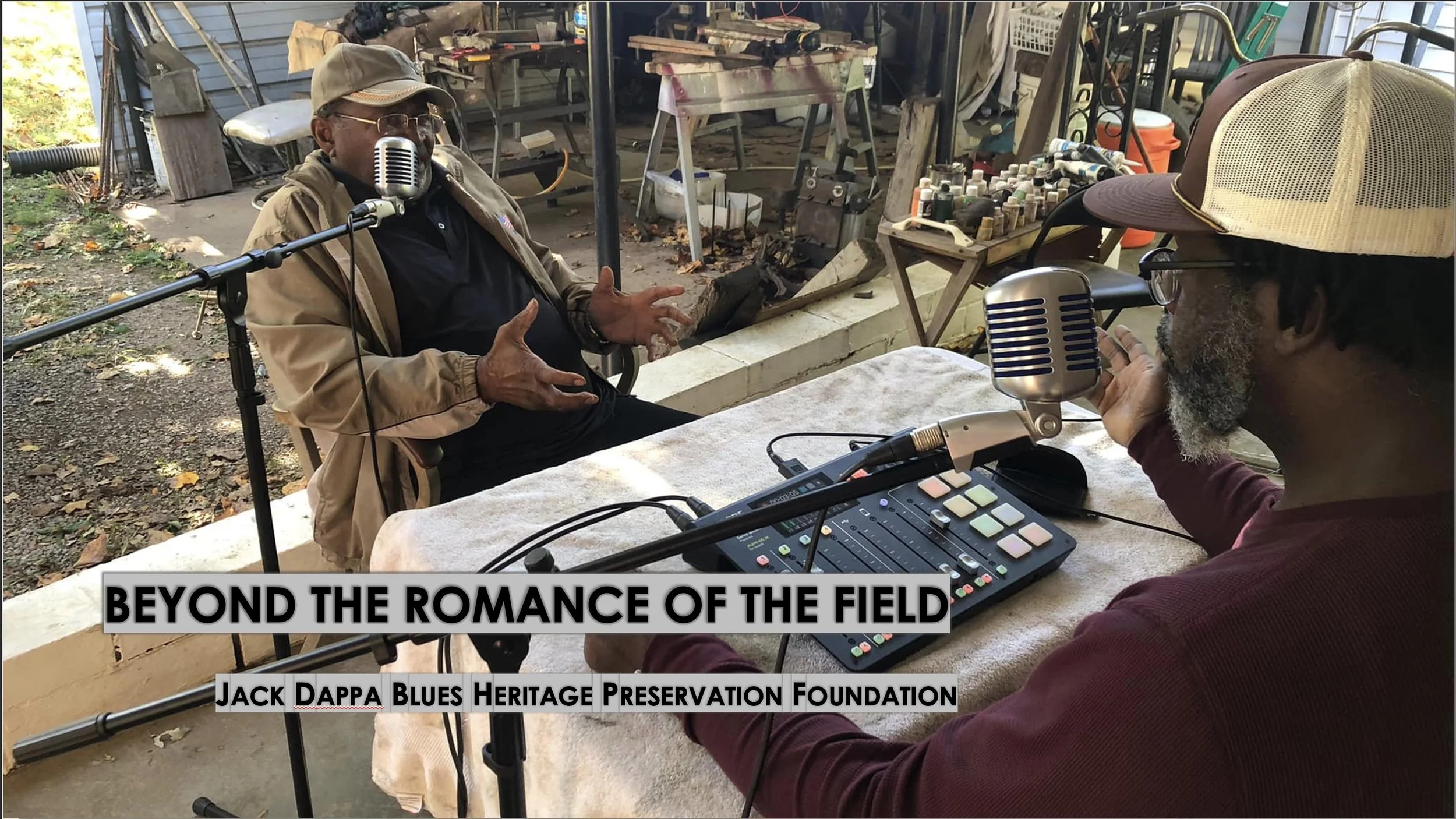
Beyond the Romance of the Field: A Community-Centered Course in Ethical Documentation, Blues Ecology, and Black Storykeeping
Course Overview
Instructor: Lamont Jack Pearley
Organization: Jack Dappa Blues Heritage Preservation Foundation
Platform Affiliation: The African American Folklorist
Course Length: 12 Weeks
Course Format: Seminar / Workshop / Certificate Training
Delivery Mode: In-person, virtual, or hybrid
Course Build Structure
This course is built through three connected layers:
Weeks — the main course pathway for participants.
Modules — the 15 edited video lessons from the Beyond the Romance of the Field lecture.
Lessons — the individual learning pages inside each week, where participants watch the video, complete readings, respond to workbook prompts, and complete applied exercises.
Beyond the Romance of the Field is a community-centered course in ethical documentation, Blues Ecology, and Black Storykeeping. It prepares participants to approach fieldwork, oral history, cultural documentation, and archiving with care, accountability, and readiness.
This course challenges the idea that fieldwork is simply adventure, travel, access, interviews, or content gathering. Instead, it teaches that fieldwork is responsibility. It is preparation. It is consent. It is safety. It is reciprocity. It is stewardship.
Participants will learn how to move beyond romantic ideas of “the field” and into the real work of protecting stories, honoring communities, and handling cultural memory with care. The course centers the belief that Black communities must own, define, and protect our stories on our own terms.
The course is organized through a 12-week syllabus path and 15 video modules. The weekly path guides participants through the readings, assignments, workbook reflections, and final project. The video modules provide the teaching foundation through the Beyond the Romance of the Field lecture. The readings deepen the conversation, while the workbook reflections and applied exercises help participants move from theory into practice.
By the end of the course, participants will understand why fieldwork should not be romanticized as adventure or content gathering. They will learn to see fieldwork as accountability, care, and community responsibility. They will be able to apply Black narrative sovereignty to documentation and archival work, identify ethical issues in interviews, recordings, photographs, family archives, and cultural materials, and practice consent as an ongoing relationship.
Participants will also learn how to create a safety and emergency plan before entering the field, understand language, vernacular, kinfolk, and transmission as cultural knowledge, develop a reciprocity and community return plan, and handle field materials as cultural memory rather than content.
The final goal of the course is for each participant to complete a community-centered fieldwork or documentation plan that includes ethics, consent, safety, reciprocity, documentation, archival care, community return, and self-care.
The readings are part of this preparation. They are not assigned simply to be completed. They are meant to help participants become more responsible, more accountable, more careful, and more grounded in the work.
Read for responsibility.
Read for accountability.
Read for the people whose stories you may one day hold.
Read so that your fieldwork moves from romance to readiness, from extraction to protection, and from observation to care.
The Well Workbook
The Well workbook is the reflective companion to Beyond the Romance of the Field. It helps participants move from watching videos and reading course materials into ethical practice.
The course teaches that fieldwork is not extraction, tourism, or content gathering. The Well gives participants a simple framework for practicing another way:
Receive. Record. Return. Give back.
Each week, participants will use The Well to reflect on the video lesson, connect with the readings, complete applied exercises, and build their final Community-Centered Documentation Plan.
The Well Framework
Receive
Participants begin by asking: What did I receive from this lesson, reading, story, or discussion?
This step teaches participants to listen before collecting.
Record
Participants ask: What needs to be written down, documented, remembered, or handled carefully?
This step teaches that documentation is never neutral.
Return
Participants ask: What belongs back to the person, family, or community?
This step reminds participants that cultural memory should not be taken away from the people.
Give Back
Participants ask: How will I support, credit, protect, or serve the people connected to this work?
This step teaches that ethical fieldwork requires reciprocity, care, and responsibility beyond the recording.
How The Well Works in the Course
Each week, participants complete a short Well reflection connected to the video module, reading, and applied exercise.
A weekly Well page may include:
Lesson title
Key idea from the video
Reading connection
Receive prompt
Record prompt
Return prompt
Give Back prompt
Applied fieldwork task
Final project connection
By the end of the course, The Well will help participants build their final Community-Centered Documentation Plan step by step.
The Well is not extra work. It is part of the practice. It helps participants move from learning into responsibility.
-
-
Lesson 1: Beyond the Romance of the Field
This lesson introduces the course and clarifies what Beyond the Romance of the Field is and is not.
This lesson introduces the course and clarifies what Beyond the Romance of the Field is and is not.
-
Lesson 1.2: Why the Toolkit Exists
This lesson explains why the toolkit is necessary. It grounds the work in reality rather than fantasy and introduces the course’s central belief: Black communities must own, define, and protect our stories on our own terms.
This lesson explains why the toolkit is necessary. It grounds the work in reality rather than fantasy and introduces the course’s central belief: Black communities must own, define, and protect our stories on our own terms.
-
-
-
Lesson 2: Ethics, Reflexivity, and Community Accountability
This week focuses on the fieldworker’s ethical responsibility. Participants begin examining how harm happens, why intention does not erase impact, and how reflexivity helps cultural workers understand their own role in the field.
This week focuses on the fieldworker’s ethical responsibility. Participants begin examining how harm happens, why intention does not erase impact, and how reflexivity helps cultural workers understand their own role in the field.
-
-
-
Lesson 3: Black Stories, Ownership, and Narrative Sovereignty
This week centers Black narrative sovereignty. Participants explore the right of Black communities to own, define, interpret, protect, and preserve our own stories on our own terms.
This week centers Black narrative sovereignty. Participants explore the right of Black communities to own, define, interpret, protect, and preserve our own stories on our own terms.
-
-
-
Lesson 4: Cultural Principles: Language, Legacy, Identity, and Transmission
This week teaches participants to understand language, vernacular, sound, body language, style, land, memory, and kinfolk relationships as sources of cultural authority.
This week teaches participants to understand language, vernacular, sound, body language, style, land, memory, and kinfolk relationships as sources of cultural authority.
-
-
-
Lesson 5: Applied Ethnomusicology, Public Folklore, and Practice
This week centers Black narrative sovereignty. Participants explore the right of Black communities to own, define, interpret, protect, and preserve our own stories on our own terms.
This week centers Black narrative sovereignty. Participants explore the right of Black communities to own, define, interpret, protect, and preserve our own stories on our own terms.
-
-
-
Lesson 6.1 : Safety, Space, and Emergency Readiness
This lesson teaches participants to prepare before entering the field. Safety planning includes sharing itineraries, identifying trusted contacts, researching racial histories and sundown towns, locating medical facilities, preparing lodging, carrying emergency funds, and planning for transportation or equipment issues.
This lesson teaches participants to prepare before entering the field. Safety planning includes sharing itineraries, identifying trusted contacts, researching racial histories and sundown towns, locating medical facilities, preparing lodging, carrying emergency funds, and planning for transportation or equipment issues.
-
Lesson 6.2 : Emergency Documents and Special Precautions
This lesson extends safety planning into crisis preparation. Participants consider emergency letters, collaborator instructions, field material protocols, interpreter preparation, medical information, and what should happen if the fieldworker cannot speak or act for themselves.
This lesson extends safety planning into crisis preparation. Participants consider emergency letters, collaborator instructions, field material protocols, interpreter preparation, medical information, and what should happen if the fieldworker cannot speak or act for themselves.
-
-
-
Lesson 7.1 : Consent, Trust, and Community Entry
This lesson teaches consent as an ongoing relationship. Participants learn that narrators may pause, revise, retract, refuse, or change their minds. Silence is never agreement. Follow-up is part of ethical consent.
This lesson teaches consent as an ongoing relationship. Participants learn that narrators may pause, revise, retract, refuse, or change their minds. Silence is never agreement. Follow-up is part of ethical consent.
-
Lesson 7.2 : Building Trust
This lesson teaches consent as an ongoing relationship. Participants learn that narrators may pause, revise, retract, refuse, or change their minds. Silence is never agreement. Follow-up is part of ethical consent.
This lesson teaches consent as an ongoing relationship. Participants learn that narrators may pause, revise, retract, refuse, or change their minds. Silence is never agreement. Follow-up is part of ethical consent.
-
-
-
Lesson 8.1 : Responsible Documentation and Cultural Memory
This lesson focuses on ethical recording practices. Participants learn that interviews, photographs, songs, poems, stories, recipes, and recordings are not content. They are cultural memory and must be handled with care.
This lesson focuses on ethical recording practices. Participants learn that interviews, photographs, songs, poems, stories, recipes, and recordings are not content. They are cultural memory and must be handled with care.
-
-
-
Lesson 9.1 : After the Field: Return, Credit, and Stewardship
This week focuses on responsibility after the interview or field visit ends. Participants learn that ethical fieldwork continues through follow-up, return, credit, access, and long-term stewardship.
This week focuses on responsibility after the interview or field visit ends. Participants learn that ethical fieldwork continues through follow-up, return, credit, access, and long-term stewardship.
-
-
-
Lesson 10.1 : Community-Facing Toolkit, Archives, and Collective Power
This week focuses on community-facing tools, independent documentation, family archives, Black community storytelling, and preservation as collective power.
This week focuses on community-facing tools, independent documentation, family archives, Black community storytelling, and preservation as collective power.
-
-
-
Lesson 11.1 : Self-Care, Physical Readiness, and Blues Ecology
This lesson teaches that fieldwork is embodied labor. Participants may carry equipment, drive long distances, stand, walk, perform, talk, listen, and move through difficult weather or terrain. Physical preparation supports responsible work.
This lesson teaches that fieldwork is embodied labor. Participants may carry equipment, drive long distances, stand, walk, perform, talk, listen, and move through difficult weather or terrain. Physical preparation supports responsible work.
-
Lesson 11.2 : Emotional and Spiritual Care
This lesson focuses on grounding, emotional boundaries, vicarious trauma, peer support, spiritual care, and culturally competent support. Participants learn that cultural work can be emotionally heavy and that support systems should be in place before entering the field.
This lesson focuses on grounding, emotional boundaries, vicarious trauma, peer support, spiritual care, and culturally competent support. Participants learn that cultural work can be emotionally heavy and that support systems should be in place before entering the field.
-
-
-
Lesson 12.1 :Self-Care as Ethics, Final Integration, and Closing
This lesson teaches that self-care is ethical because the fieldworker is part of the equation. Burnout harms both the fieldworker and the community. Clarity increases safety and cultural sensitivity. Preservation and conservation require sustainability.
This lesson teaches that self-care is ethical because the fieldworker is part of the equation. Burnout harms both the fieldworker and the community. Clarity increases safety and cultural sensitivity. Preservation and conservation require sustainability.
-
Lesson 12.2 : Closing
This closing lesson returns to the course’s central charge. Fieldwork is not extraction. It is accountability. Cultural memory is not content. Consent is relationship. The archive belongs to the people. This work moves participants from romance to readiness, from extraction to protection, and from observation to care.
This closing lesson returns to the course’s central charge. Fieldwork is not extraction. It is accountability. Cultural memory is not content. Consent is relationship. The archive belongs to the people. This work moves participants from romance to readiness, from extraction to protection, and from observation to care.
-
-