
 Image 1 of 1
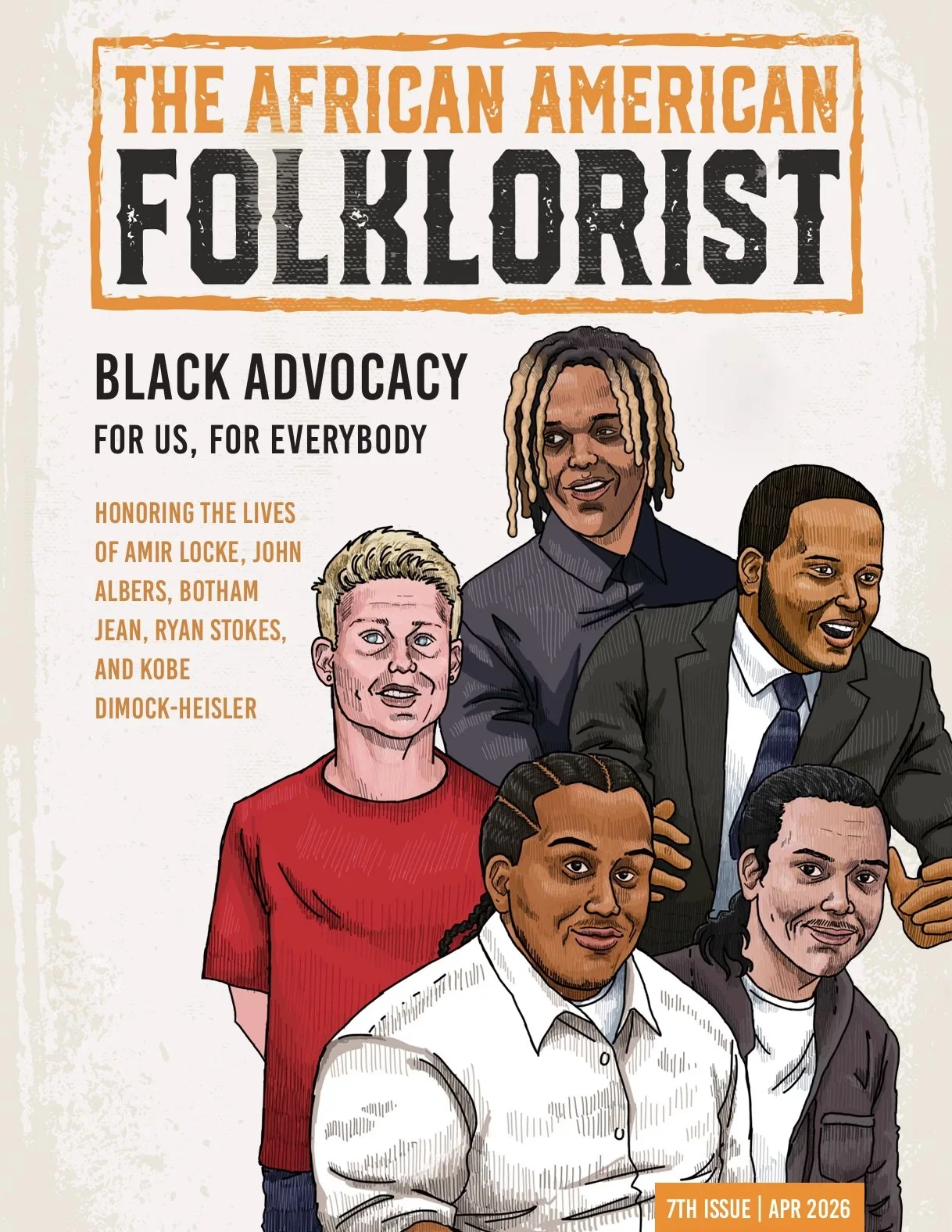
The Black Advocacy Special Issue of The African American Folklorist is built on one central argument: Black advocacy is not new—it is ancestral. It is not something Black people “started doing recently.” It is Black cultural practice in real time—a tradition practiced under pressure, folklore with consequences.
This issue affirms what the Black Advocacy Symposium gathered to name: that from the first moment survival demanded organization—from the first time a mother had to protect her children from a world built to discard them—Black communities have gathered to whisper, warn, testify, strategize, and protect. Black advocacy is Black culture. It is community knowledge in motion, memory turned into strategy, and a living archive of how we survive injustice, resist erasure, and build communal protection when systems refuse to protect us.
In this special issue, advocacy is treated as folklore: when a family turns grief into public testimony; when a sister becomes the keeper of the story after a police shooting; when mothers organize, march, pray, demand accountability; when we sing, chant, preach, post, cry, cook, document, and teach the babies what happened—this is tradition. This is method. This is survival knowledge passed forward.
The issue also makes a clear ethical stand. It is not here to turn grief into content or harvest pain. It refuses the old pattern of treating Black folklore as an artifact to be collected and made legible elsewhere. Instead, AAF commits to archive as empowerment, not acquisition—and access as justice, not privilege. Because Black people deserve narrative sovereignty: if we don’t tell our stories, they will be rewritten; if we don’t archive our realities, they will be erased.
The Black Advocacy Special Issue of The African American Folklorist is built on one central argument: Black advocacy is not new—it is ancestral. It is not something Black people “started doing recently.” It is Black cultural practice in real time—a tradition practiced under pressure, folklore with consequences.
This issue affirms what the Black Advocacy Symposium gathered to name: that from the first moment survival demanded organization—from the first time a mother had to protect her children from a world built to discard them—Black communities have gathered to whisper, warn, testify, strategize, and protect. Black advocacy is Black culture. It is community knowledge in motion, memory turned into strategy, and a living archive of how we survive injustice, resist erasure, and build communal protection when systems refuse to protect us.
In this special issue, advocacy is treated as folklore: when a family turns grief into public testimony; when a sister becomes the keeper of the story after a police shooting; when mothers organize, march, pray, demand accountability; when we sing, chant, preach, post, cry, cook, document, and teach the babies what happened—this is tradition. This is method. This is survival knowledge passed forward.
The issue also makes a clear ethical stand. It is not here to turn grief into content or harvest pain. It refuses the old pattern of treating Black folklore as an artifact to be collected and made legible elsewhere. Instead, AAF commits to archive as empowerment, not acquisition—and access as justice, not privilege. Because Black people deserve narrative sovereignty: if we don’t tell our stories, they will be rewritten; if we don’t archive our realities, they will be erased.