
COLONIALISM & INSTITUTIONS
White Colonial Ideologies and the Institutionalization of Power
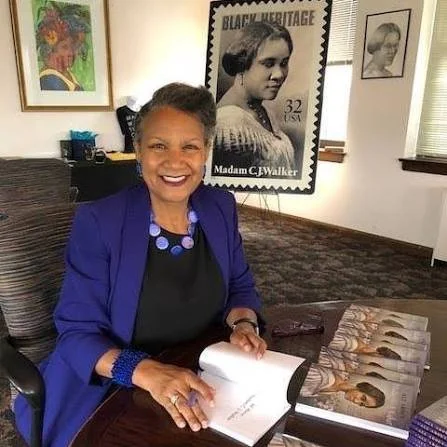
THE BLUEPRINT: Madam C. J. Walker: The Mission We Forgot
Now, the way the story came down to me, Madam C. J. Walker made hair products, invented the hot comb, and became America’s first Black woman millionaire.
THE BLUEPRINT: What We Forgot—and What Black Lives Are Still Trying to Teach Us Blueprint
No. 001:
Madam C. J. Walker: The Mission We Forgot
By Nashima Harvey, EdM In The Blueprint, Nashima Harvey looks at how stories about Black lives become part of our folklore—what gets remembered, repeated, changed, or lost—and recovers the lessons beneath the familiar version.
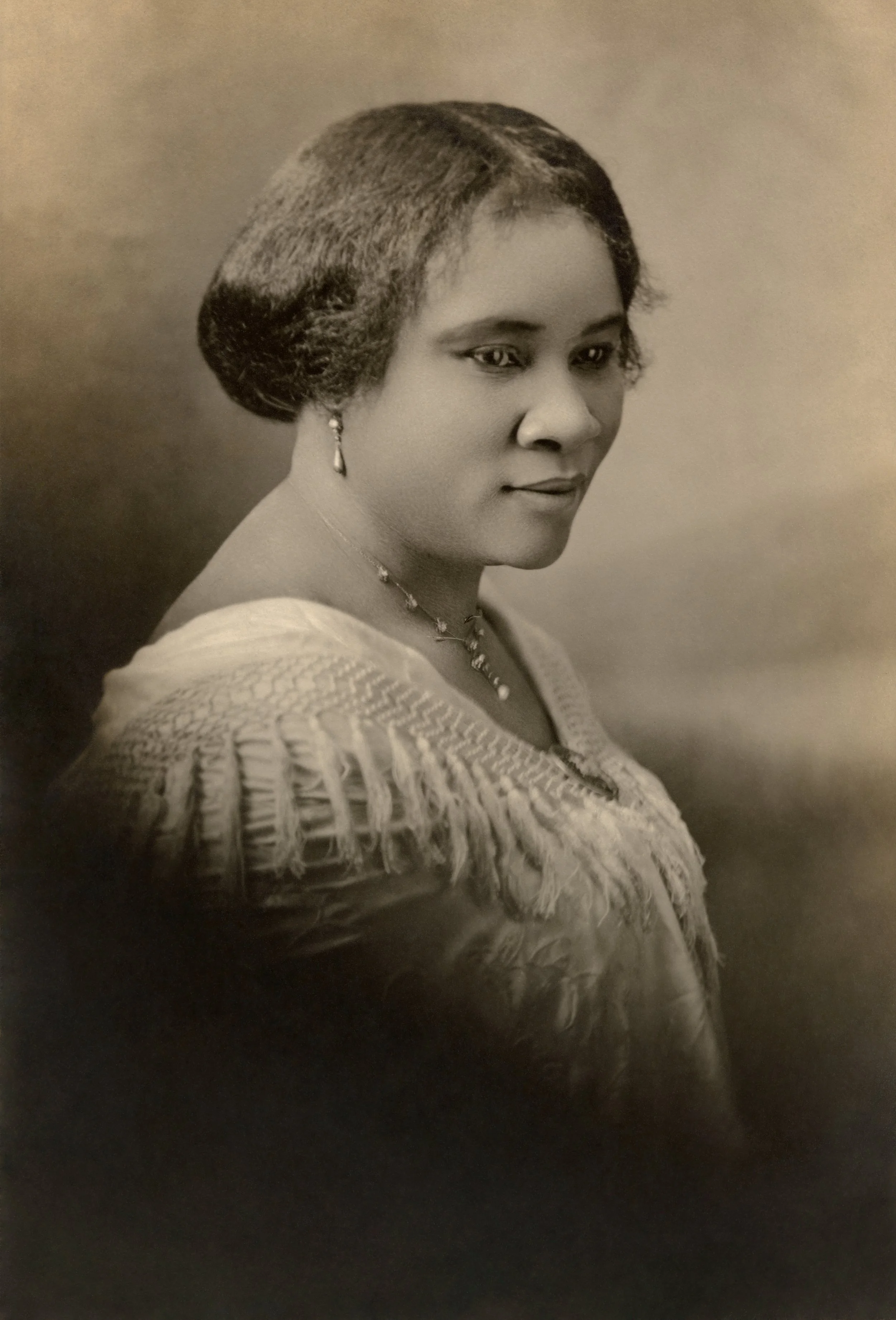
Now, the way the story came down to me, Madam C. J. Walker made hair products, invented the hot comb, and became America’s first Black woman millionaire.
At least, that was the part we kept telling.
The millionaire title survived. So did the hot-comb story, although she did not invent it.
But somewhere in the telling, the woman became smaller than the work. We remembered what she sold. We forgot what she built and what she was trying to change.
That realization began while I was reading A’Lelia Bundles’ On Her Own Ground: The Life and Times of Madam C. J. Walker.
The book sent me outside. I created a walking tour through places connected to Madam Walker and her daughter, A’Lelia. When I reached West 136th Street, near the Countee Cullen Library and the Schomburg Center, the whole area pulled me in. The Walker townhouses that once stood at 108–110 West 136th Street are gone. Still, the block sent me down a rabbit hole.
Who had lived, worked, and trained there? What kind of Black world had surrounded them?
How did such a large legacy become such a small story?
The Year Changes the Picture
Madam Walker moved to Denver in 1905 and began building her hair-care business. She had been born Sarah Breedlove in 1867, the daughter of parents who had been enslaved.
That date matters.
When many of us picture Black life then, we see poverty, segregation, and racial violence. All of that was real, but it was not the whole picture.
Black people were also earning money, opening businesses, reading Black newspapers, and supporting institutions.
Our people had something going on long before the twenty-first century.
We Remembered the Product
Madam Walker developed products for scalp problems, hair loss, and hair-care needs the larger beauty industry often ignored. She did not invent the hot comb, and her business was not built around straightening hair.
Her work centered on care.
But the product was only the beginning.
Through her business, she helped change how Black women were treated, employed, trained, and understood. She created products for neglected needs and opportunities for women whose choices had been restricted.
Her product addressed the scalp.
Her mission addressed the conditions surrounding the woman.
Who Was Buying It?
The more I thought about Madam Walker’s success, the more another question troubled me:
Who was buying all of those products?
She was not selling jars to herself.
The heart of her market was Black women purchasing repeatedly. That tells us something important about Black life then.
Black people earned money, exercised purchasing power, and cared about health, beauty, and dignity.
The oppression was real, but it was not the whole life. Black people were also customers, homeowners, entrepreneurs, and patrons of Black businesses.
Madam Walker became wealthy because she built something Black people needed. But she needed Black customers who chose to buy and trusted her enough to keep buying. Madam Walker built for Black people. Black people helped build Madam Walker.
The Power Was in the System
The part of Madam Walker’s story that humbled me most was not the mansion or the money.
It was the system.
She built the Madam C. J. Walker Manufacturing Company and the Walker System of Hair Culture, combining products, scalp care, sales, and professional training.
In Pittsburgh, she and her daughter established Lelia College. In Indianapolis, she built the company’s factory and headquarters.
In 1917, about two hundred Walker agents gathered in Philadelphia for the company’s first national convention. They shared knowledge and connected business success to charitable service and racial advancement.
This was a company, a training institution, and a pathway into entrepreneurship.
The blueprint was not the product.
It was the process.
The Community Built the Business Too
Madam Walker was not building in isolation.
Black women bought her products, became her agents, and carried her reputation from woman to woman and community to community. Black newspapers, churches, and social networks helped information travel.
That is where business history and folklore meet. A product could be advertised, but trust moved through conversation. Women shared what worked and carried her story. Madam Walker did not forget who helped put her on top. As her business grew, she supported Black schools, churches, civic organizations, and civil-rights causes. The community helped build the business.
The business helped strengthen the community.
Her example suggests that profit does not remove responsibility. It increases it. Do not forget the people who helped put you on top. Pour back into them. Make sure you are not the only one rising.
As Madam Walker’s story traveled, the hot-comb myth grew and the millionaire title remained. But the customers, trained women, systems, and communities became less visible.
The story was not erased.
It was reduced.
That is where the story told about Madam Walker becomes part of our folklore.
Folklore is also what communities remember, repeat, reshape, and pass forward. The question is not only whether a story survived, but what version survived—and what that version caused us to forget.
What I Carried Away

A’Lelia Bundles
When I opened On Her Own Ground, I thought it would fill in the blanks. It did, but it also made me search for the people and places behind the familiar story.
A’Lelia Bundles brought the fuller life forward. The blueprint had been there all along, tucked inside a smaller version of the story.
Madam Walker did not leave me a product to duplicate. She left me a process to uncover:
Recognize a need.
Know the people you serve.
Build trust.
Train others.
Create systems. Remember the community that helped make the success possible.
That message begins with Black women, but it also speaks to people of color whose histories have been reduced and whose communities are still building.
Sometimes we do not need to invent a new answer. Sometimes we need to recover the answer that was left for us.
The question is whether we are finally ready to see it.
Carry the Blueprint Forward
As you read biographies, explore your family history, or learn about people in your community, ask:
What are they most remembered for—and what did that familiar story leave out?
What did they build, teach, protect, or pass forward beyond what they are known for?
Who and what helped make their work possible?
What can their process—and what happened afterward—teach us now?

Black Business in Colonial America
As enslaved Africans gained their freedom in colonial America, they used the labor activities learned in slavery to start a new life. Across the cities and towns of this nation, free Blacks set up agribusinesses and took up as bricklayers, gunsmiths, shoemakers, nurses and innkeepers to form the initial steps of the Black business community.
By Karleton Thomas

As enslaved Africans gained their freedom in colonial America, they used the labor activities
learned in slavery to start a new life. Across the cities and towns of this nation, free Blacks set
up agribusinesses. They took up as bricklayers, gunsmiths, shoemakers, nurses, and innkeepers
to form the initial steps of the Black business community. Collectivism underlined the economic
activity of free Blacks in colonial America as they worked to establish independence in an
outwardly racist society successfully.
Those days are long gone, and blatantly racist laws, such as those barring credit to free Blacks,
no longer sit on the books of American cities. By comparison, the discriminatory laws of today
hold little weight when viewed next to laws in place during colonial America. Few, if any, Black
businesses of that time were allowed to grow outside of the community, but colonial-era Black
businessmen thrived when compared to those of today.
Many arguments have been made regarding the decline of the Black business community -
integration, angry white mobs, racist laws, etc. Though all contributing factors, none can fully
explain the demise of the Black business community. As markets opened up and Blacks were
able to walk through doors closed to previous generations, one would expect burgeoning Black
business metropolises to follow, but despite our best efforts, that never happened.
Today, most Black businesses fail within four years. For all the businesses being started by
Black entrepreneurs today, 87% will gross less than $15,000. Most can be categorized as
lifestyle businesses - entities run by its founder for the benefit of its founder. That’s a hard sell in
a community but despite this, the age of individualism looms on. It wasn’t the angry mobs or
racist laws that first slowed and then stalled progress, it was the varying motivations developed
amongst the Black community. Now, instead of a few options, Blacks were able to chart
individual pathways designed for their sole benefit. This produced outstanding, singular results,
but for many Black entrepreneurs the lack of community has proven to be an insurmountable
obstacle.

Our formerly enslaved, African ancestors practiced collectivism because pulling together to
ensure a chance at survival. Collectivism does not make much sense today but the principals
live on in cooperative business practices. A cooperative business model is one that responds to
the needs of all stakeholders; employees, customers, suppliers, the local community, the
environment and future generations, as well as investors. The adoption of the cooperative
business model as the framework for current and future Black business communities presents
two huge benefits: the recirculation of Black dollars and low unemployment.
The Black dollar and its effect or lack thereof has been well documented across academic
journals. At one point, it was reported the average lifespan of the Black dollar in the Black
community was six hours compared to 28 in Asian communities. That fact was proven to be
false but when the majority of businesses in Black communities are owned by individuals who
do not live or hire from that community - the truth is not far away. It is safe to assume that over
$.50 of every dollar spent leaves the community.

When a business in the Black community is owned by someone who lives and hires from the
community - we all benefit. Cooperative business models present a number of workforce
development opportunities for free Blacks who have been denied entry to the traditional job
market. As more cooperatives are formed, unemployment in those areas will dramatically
decrease, so will crime, drug use, and dependence on government programs. Grocery stores
wholly owned by the community can employ 100’s of employees with an invested interest in that
venture's success. They would live and work in the same area - tending to and protecting their
future.