
COLONIALISM & INSTITUTIONS
White Colonial Ideologies and the Institutionalization of Power

Harvard Cancels Slavery Research program
Harvard recently fired researchers for their Slavery Remembrance program without notice
Update on a troubling situation!
By: Kristina Mullenix, the Alabama Storykeeper
Harvard recently fired researchers for their Slavery Remembrance program without notice and after researchers uncovered links to slavery in Antigua and Barbuda. In September, the vice provost had told them "don't find too many descendants." The project, according to news, has been handed over to American Ancestors in Boston.
Link from Instagram about firing:
https://www.instagram.com/reel/DFTAEpjJn9q/?igsh=MW5yanJ6cm1zajd5aw==
News articles about the situation:
https://www.thecrimson.com/article/2025/1/24/harvard-disbands-slavery-remembrance-program/
This is the website about the project (still on their webpage):

the culture of black girl tokenism
Growing up, seeing black girls on television made me appreciate my skin color and inspired me to be an actress. But I never really paid close attention to the role of black girls on syndicated cable shows. Lately I've noticed that a lot of black roles in programs I watch are grounded in tokenism. Tokenism was established in the 1950s and was termed in the 1970s. In the late 60s and early 70s another form of token was established, “the token black”. According to Ruth Thibodeau in her piece From Racism to Tokenism:
BY: SAMARA PEARLEY
Growing up, seeing black girls on television made me appreciate my skin color and inspired me to be an actress. But I never really paid close attention to the role of black girls on syndicated cable shows. Lately I've noticed that a lot of black roles in programs I watch are grounded in tokenism. Tokenism was established in the 1950s and was termed in the 1970s. In the late 60s and early 70s another form of token was established, “the token black”. According to Ruth Thibodeau in her piece From Racism to Tokenism: The Changing Face Of Blacks in New Yorker Cartoons, “cartoons were mostly racially themed, and depicted black people in token roles where they are only there to create a sense of inclusion”. Though Ruth was speaking specifically about cartoons, this idea can be applied to any medium featuring only one black character. Today in an era of DEI (diversity, equity, inclusion) we see the same things Thibodeau described in her writings. Tokenism strongly suggests the one black character among the many non black means a diverse voice or cast. To be fair, tokenism also includes members of the BIPOC and LGBTQIA community in predominantly white programs, but for the purpose of my scholarship, I'm focusing on black girls. Being a token means being different from the rest of the group in order to create some kind of diversity. Tokenism is a tactic, strategy used to get the optics of inclusion for marginalized people. Unwelcome Guest on the website Antimoon.com states: “An example of a token black would be a black person who is hired in a company, not because of his or her skills but because the company is by law to hire black people. It's not a derogatory term.”
Monique Coleman would be a good example of tokenism. She is the only black-non mixed character in a predominantly white cast. Monique is well known for being on the hit Disney channel original movie (DCOM) High School Musical. In an interview in December of 2022 with Christy Carlson Romano, Coleman states that “disney broke her heart”. Coleman went on to say how they left her out of the high school musical promo tour. She says their reasoning for leaving her and another cast member out was because “they didn't have enough room on the plane”. I find it suspicious how she was on the front cover of all the movies, one of the main characters, and her character Taylor was the smartest girl in school, but she wasn't on the tour? I'm sure Disney had enough resources to accommodate Monique. Coleman’s castmate is Corbin Bleu who is mixed. Do you find it suspicious that he got invited on the plane and Monique didn't? He gets to wear his natural hair but she doesn't? For example, in an article published by the Guardian, Coleman states that her hair stylist for high school musical did her hair very poorly in the front. And because of that she suggested wearing headbands so the stylists wouldn't have to cover her hair up with a hat everytime she was on screen.
Tokenism leads to stereotypes as well as mistreatment of black actors. It can also result in short lived programming of African American content. A result of mistreatment of blacks as a whole in this space is, black shows don't have the same life as non black shows, whether the show is good or bad. For example True Jackson v.p a show about a Black girl named True who was offered a job at mad style (a predominantly white fashion company) as the vice president of their teen apparel department. Keke Palmer is the main character of this show. This show got canceled after 2 seasons. Keke Palmer is in the process of trying to get theTtrue Jackson V.P. reboot done, while her counterparts iCarly and Zoey 101 have gotten, approved, and aired their reboots. Is this based on race? I can't say. However the track record of disparity between blacks and whites are very real. Recently Nickelodeon has been airing a show titled “That Girl Lay Lay” with not only 2 black girl leads but a predominantly black cast! There's no information on whether it's getting renewed or canceled, but I hope that this show can get a 3rd season. There's a lot of work to be done but this show signifies progress.

John H. Bracey, Jr., a pioneer of Black Studies
Andrew Rosa, author (top row, second from left); John H. Bracey, Jr. (front row, fourth from left), Annual Meeting of the Association for the Study of African American Life and History, Charleston, South Carolina Oct. 2, 2019.
BY: DR ANDREW ROSA
In “the Grand Tradition”: A Reflection on the Passing of John H. Bracey, Jr., a pioneer of Black Studies Western Kentucky University
“To teach is to mentor, and to mentor is to teach and lead students out,” John H. Bracey, Jr., 2019
Historians are, by and large, not noted for introspection. Our calling requires us to analyze past events, but rarely do we turn our interpretive talents upon ourselves. The occasion of John H. Bracey’s recent passing from the scene at the age of 81, however, has prompted me to reflect upon his significance to the field of Black studies and to my own evolution as a scholar of Black history. While beyond the scope of this reflection, I contend that any comprehensive examination of Bracey’s life history would illuminate an important genealogy of Black intellectualism essential to an understanding of the history of Black studies and a model for doing Black history at a moment when many states, especially across the U.S. South, seem to be engaged in a general assault on any type of knowledge that interrogates such critical issues as race, sex, gender, and class.
My relationship to Bracey began when I arrived to the W.E.B. Du Bois Department of African American Studies at the University of Massachusetts, Amherst in 1998, after receiving my masters from Temple University. In the broader history of Black studies, Temple is distinguished for establishing the first PhD-granting program in the field and for capturing, by the time I got there in 1995, significant media attention due, in no small part, to its Afrocentric orientation and to the charisma, entrepreneurialism, scholarly productivity, and rhetorical acumen of its chairperson, Molefi Kete Asante. Who could but forget the noisy academic battles that erupted during this period between Asante and the Wellesley classicist Mary Lefkowitz over how much, if anything, the civilizations of ancient Greece and Rome, and all Western thought for that matter, owed to the cultures of Africa, and particularly Egypt. This debate resulted in some notable books by Asante and Lefkowitz, as well as several acerbic essays in such popular outlets as The Washington Post, and Village Voice. In this way Afrocentricity was introduced to a wider public as a combination of racial romanticism, historical mythmaking, popular history, and the paradigmatic antithesis of Eurocentricity in that it purported to be a corrective to the wholesale exclusion of Africa and Africans from the unfolding of world history.
To be clear, my choice of Temple for graduate school was not rooted in a desire to study under Asante, or by any unquestionable commitment to Afrocentrism. In fact, I knew very little about either at the time, and simply chose Temple because it was considered the premier graduate program in Black studies and I was offered a full ride in the form of a Future Faculty Fellowship, which aimed to increase the number of minority faculty in the professoriate. More than this, Temple offered me the opportunity to continue a course of study that began when I was an undergraduate student at Hampshire College where I felt as if I walked in the shadows of Great Barrington’s own W.E.B. Du Bois and the writer extraordinaire James Baldwin, who briefly taught in the Five College Consortium as a visiting faculty, before returning to the south of France where he died a few years before I started my undergraduate journey. At Hampshire, I had the good fortune of studying under the likes of Robert Coles, e. francis white, Michael Ford, Andrew Salkey, and David Blight, to name a few. Each of these individuals shaped how I first began to seriously analyze the history, culture, and contributions of people of African descent to U.S. society, which led me into the interdisciplinary field of Black studies.
At Temple I came to appreciate how Afrocentrism represented a distinct school of thought within the larger universe of Black studies and, beyond this, an important variant in a long tradition of Black intellectualism that, since the early nineteenth century, defended Black capacity from attack by marking the achievements of African civilizations in the long centuries before European contact and the rise of racial slavery. For Asante, Afrocentricity’s centering of African knowledge systems made it the ideal foundational philosophy for the discipline; however, I came to reject efforts to impose a single methodology on doing Black studies, seeing it as stifling, unrealistic, and anti-intellectual. Moreover, as one who grew up in diverse working-class communities on both side of the Atlantic, Afrocentricity seemed to me to reinforce troubling discourses and hierarchies, and fell well short, as a research methodology, for engaging with the actual history and cultures of Africa. In addition to its inability to account for the hybrid identities and experiences across Africa and its diaspora, Afrocentricity’s emphasis on the dynastic universe of ancient Nile River Valley civilization made, in my view, little room for considering the contributions of Black people to the making of the New World and and an understanding of the myriad transformations wrought by the process of enslavement and colonialism.
It was this type of interrogation that led me to join the doctoral program at UMass where I was one of five students admitted into the History track of the program’s second class. It was here where I developed a wider understanding of Black Studies’ history and learned how the UMass program was uniquely connected to Black movement history. In fact, it seemed as if the department’s founding faculty rode into academia on a wave of campus revolts, the freedom movement in the South, and several militant organizations that took hold in cities across the country in the era of Black Power. The department’s first acting head, Michael Thelwell, was a close confidant of Kwame Toure (Stockley Carmichael) and a founding member of the Student Nonviolent Coordinating Committee (SNCC) at Howard University. As a student at Bennett College, where she now serves as provost, Esther Terry participated in the sit-in movement in Greensboro, North Carolina and was instrumental in the founding of SNCC. Ernest Allen, Jr. was active in the Revolutionary Action Movement (RAM) and became a leading historian on Black nationalism; William Strickland was Malcom X’s biographer and a founding member, along with Vincent Harding, of the Atlanta-based Institute of the Black World (IBW)—a grassroots organization committed to bringing Black studies into Black communities.
Of John Bracey, he arrived to UMass in 1972 by way of Howard University in Washington, D.C. and Chicago where he attended both Roosevelt University and Northwestern University. At Roosevelt, Bracey came under the influence of the linguist Lorenzo Turner, Charles Hamilton, coauthor of Black Power (1967), August Meier, an historian of Black intellectual history, and, most significantly, St. Clair Drake, a trailblazer in urban sociology and a pioneering figure in both African and African American studies. At Northwestern, Bracey became involved in the Black studies movement along with the likes of James Turner, Christopher Reed, and Darlene Clark Hine, all leading figures in the field of Black Studies today.
As with most of the founding faculty of the Du Bois Department, Bracey was active in the civil rights, Black liberation, and peace movements, working with the Congress of Racial Equality (CORE), Chicago Friends of SNCC, Students for a Democratic Society (SDS), and RAM. Bracey often recalled how his arrival to UMass was the result of a request from Du Bois himself to hire the executor of his estate, the historian, Communist, and author of American Negro Slave Revolt (1943), Herbert Aptheker, as a condition of acquiring his personal papers. Meeting resistance from the Massachusetts legislature, Aptheker advised Thelwell to request five new faculty lines for the department in his place, one of which became Bracey’s position. More than underscoring the curious intersection of Cold War politics and Black studies, this story of Bracey’s joining UMass points to the insistence of the department’s founding faculty to protect their autonomy in building a program that would advance Black scholarship and mobilize knowledge for the liberation of Black peoples and all other exploited groups worldwide.
In the long years after the battle over Black studies had been won and new questions arose as to theory, methodology, and the place of the discipline in relation to larger Black community, Bracey was instrumental in moving the Du Bois Department forward by bringing in a host of brilliant faculty who were at the forefront of charting new directions in the field of Black studies. Over the course of a career that spanned more than a half century, Bracey established himself as a giant in Black studies and a veritable institution within himself. A lifetime member of the Association for the Study of African American Life and History (ASALH), National Council of Black Studies (NCBS), and the Organization of American Historians (OAH) Bracey’s significance and presence were felt across the profession. As a scholar with an enormous range of interests and competencies, he resists simple definition. He wrote several award-winning works on Black life and history, and produced the kind of documentary and bibliographic research that gave textual substance to Black studies; all of this he made accessible to scholars, teachers, and students.
Bracey was also a consummate collaborator, working with such prominent thinkers as Sharon Harley, August Meier, James Smethurst Manisha Sinha, Sonia Sanchez, and Elliott Rudwick, to name just a few. While much of his writing and research focused on Black social and cultural history, radical ideologies and movements, and the history of Black women, he also produced comparative and transnational histories, which explored, for example, relations between African Americans and Native Americans, Afro-Latinx, and Jewish Americans. This includes several co-edited volumes, such as Black Nationalism in America (1970); the award-winning African American Women and the Vote: 1837-1965 (1997); Strangers and Neighbors: Relations between Blacks and Jews in the United States (1999); and African American Mosaic: A Documentary History from the Slave Trade to the Twenty-First Century (2004). From an award-winning essay on the musician John Coltrane in the Massachusetts Review in 2016 to his contribution to the Furious Flower poetry anthology in 2019, even Bracey’s final works stand as testaments to his interdisciplinary imagination, creative spirit, and genuine love for Black people.
As a model for Black studies, Bracey’s legacy suggests that the best of the discipline is in its interdisciplinary approach to knowledge production, its embrace of scholarly rigor and analysis, and in its mindfulness of the history, culture, and contributions made by people of African descent in the U.S., and throughout the African diaspora. Despite the many transformations that have accompanied the institutionalization and expansion of Black studies in American higher education, for Bracey, the discipline’s priority commitment to subjecting society to the most serious analysis to generate greater understanding of Black people’s experiences in the modern world was one that always remained steadfast and foundational to the Black studies enterprise.
I cannot help but to think of how my own work documenting the life history of St. Clair Drake was perhaps inspired by the genuine affection Bracey carried for his Roosevelt mentor and their shared commitment to the field of Black studies. As he once informed me, “Drake was my teacher and guide in the struggle.” For this reason, the idea of building an interdisciplinary department of scholar-activists at UMass “was not that utopian. After all,” he concluded, “we had Professor Drake himself—co-author [with Horace Cayton] of Black Metropolis (1945), Pan Africanist and advisor to Kwame Nkrumah, participant in civil rights marches and sit-ins for over three decades, sociologist, anthropologist and political theorist—as a model.” In this way Bracey laid claim to an intellectual estate that can be traced, through Drake, to Black studies earlier peripheries, particularly to those sites where Black intellectuals were free to combine scholarship and militant activism in what Drake called “the grand tradition.”

Black Business in Colonial America
As enslaved Africans gained their freedom in colonial America, they used the labor activities learned in slavery to start a new life. Across the cities and towns of this nation, free Blacks set up agribusinesses and took up as bricklayers, gunsmiths, shoemakers, nurses and innkeepers to form the initial steps of the Black business community.
By Karleton Thomas

As enslaved Africans gained their freedom in colonial America, they used the labor activities
learned in slavery to start a new life. Across the cities and towns of this nation, free Blacks set
up agribusinesses. They took up as bricklayers, gunsmiths, shoemakers, nurses, and innkeepers
to form the initial steps of the Black business community. Collectivism underlined the economic
activity of free Blacks in colonial America as they worked to establish independence in an
outwardly racist society successfully.
Those days are long gone, and blatantly racist laws, such as those barring credit to free Blacks,
no longer sit on the books of American cities. By comparison, the discriminatory laws of today
hold little weight when viewed next to laws in place during colonial America. Few, if any, Black
businesses of that time were allowed to grow outside of the community, but colonial-era Black
businessmen thrived when compared to those of today.
Many arguments have been made regarding the decline of the Black business community -
integration, angry white mobs, racist laws, etc. Though all contributing factors, none can fully
explain the demise of the Black business community. As markets opened up and Blacks were
able to walk through doors closed to previous generations, one would expect burgeoning Black
business metropolises to follow, but despite our best efforts, that never happened.
Today, most Black businesses fail within four years. For all the businesses being started by
Black entrepreneurs today, 87% will gross less than $15,000. Most can be categorized as
lifestyle businesses - entities run by its founder for the benefit of its founder. That’s a hard sell in
a community but despite this, the age of individualism looms on. It wasn’t the angry mobs or
racist laws that first slowed and then stalled progress, it was the varying motivations developed
amongst the Black community. Now, instead of a few options, Blacks were able to chart
individual pathways designed for their sole benefit. This produced outstanding, singular results,
but for many Black entrepreneurs the lack of community has proven to be an insurmountable
obstacle.

Our formerly enslaved, African ancestors practiced collectivism because pulling together to
ensure a chance at survival. Collectivism does not make much sense today but the principals
live on in cooperative business practices. A cooperative business model is one that responds to
the needs of all stakeholders; employees, customers, suppliers, the local community, the
environment and future generations, as well as investors. The adoption of the cooperative
business model as the framework for current and future Black business communities presents
two huge benefits: the recirculation of Black dollars and low unemployment.
The Black dollar and its effect or lack thereof has been well documented across academic
journals. At one point, it was reported the average lifespan of the Black dollar in the Black
community was six hours compared to 28 in Asian communities. That fact was proven to be
false but when the majority of businesses in Black communities are owned by individuals who
do not live or hire from that community - the truth is not far away. It is safe to assume that over
$.50 of every dollar spent leaves the community.

When a business in the Black community is owned by someone who lives and hires from the
community - we all benefit. Cooperative business models present a number of workforce
development opportunities for free Blacks who have been denied entry to the traditional job
market. As more cooperatives are formed, unemployment in those areas will dramatically
decrease, so will crime, drug use, and dependence on government programs. Grocery stores
wholly owned by the community can employ 100’s of employees with an invested interest in that
venture's success. They would live and work in the same area - tending to and protecting their
future.

WHITE PEOPLE CAN’T TALK ABOUT RACE
I am the grandson of a sharecropper on my father’s side. He had a simple philosophy about firearms: “better to have it and not need it than to need it and not have it.” Racism, then as now, represented a mortal threat, be it physical violence of the lynch mob or the systematic violence exercised by the legal system. My maternal grandfather was raised by a single mother who was born into slavery and washed clothes for white folks for a living. Nevertheless, she made sure that her ten children learned to read
By: Corey Harris
“The very serious function of racism … is distraction. It keeps you from doing your work. It keeps youexplaining, over and over again, your reason for being. Somebody says you have no language, and so youspend 20 years proving that you do. Somebody says your head isn’t shaped properly, so you havescientists working on the fact that it is. Somebody says that you have no art, so you dredge that up.Somebody says that you have no kingdoms, and so you dredge that up. None of that is necessary.” - Toni Morrisson
Can White People Talk About Race?
I am the grandson of a sharecropper on my father’s side. He had a simple philosophy
about firearms: “better to have it and not need it than to need it and not have it.” Racism, then
as now, represented a mortal threat, be it physical violence of the lynch mob or the systematic
violence exercised by the legal system. My maternal grandfather was raised by a single mother
who was born into slavery and washed clothes for white folks for a living. Nevertheless, she
made sure that her ten children learned to read. A few even went to college, not a small feat for
rural southern Black folk in the early twentieth century. Myself being raised by a single mother, I
grew up surrounded by two great aunts who worked as cleaning ladies for white people their
entire lives. The blues and gospel music was the first music I heard as a young boy. It was my
first reference point, the soundtrack to numerous church picnics, family reunions and house
parties. Since becoming a professional blues singer and musician, these family stories and
experiences have informed my craft since the day I first picked up what my great-aunt called the
“guit-fiddle”. Indeed, for the vast majority of Black blues musicians, their particular racial
identities and family histories feed the music that they make. It matters. However, over the
years I observed many times the minefield that when Black musicians must navigate whenever
they endeavor to talk honestly and publicly about their experiences with racism in America and
how it relates to our music making. Similar to when Fox News commentator Laura Ingraham
famously advised LeBron James to ‘shut up and dribble’ in reaction to his vocal social activism,
the Black musician is often told to ‘shut up and play.’ As in sports, any honest discussion about
race as it relates to the history of the music and contemporary dynamics is extremely unpopular
among many white folk. This essay is about the backlash that ensues when this happens.
In today’s white-dominated blues industry, the Black musician is expected to entertain,
first and foremost. However, this expectation is in direct opposition to the traditional Black
cultural imperative of the blues musician as a truth teller. As Willie Dixon once said, “It’s got to
be fact or it wouldn’t be blues” and we all know that facts never cared about anyone’s feelings.
However, offending white people’s feelings or challenging their preferred narrative is frowned
upon and is punished by reduced income and marginalization. In 2015 this became glaringly
obvious when I penned a short essay on FB entitled, “Can White People Play the Blues?” My
central premise was that in the context of systematic American racism and the history of slavery,
Jim Crow and oppression which greatly benefitted European immigrants to the United States,
the positionality of white people with regards to blues performance can not be overlooked.
Music scholar Lawrence Hoffman once remarked that “there is no white original master of the
blues on any instrument - electric or acoustic.” As Cornel West once famously declared, race
matters.
Although I clearly stated in the article that white people have always been free to play
what they want to play, and that there are many outstanding blues musicians who identify as
white, many white commentators overlooked this point and flooded my inbox with all manner of
defensive and hostile responses. Admittedly, the provocative title was rhetorically framed to
grab the readers’ attention. I immediately found out that this worked. In the pages that follow I
will examine white reactions to discussions of race in the blues and what this tells us about
white identity and privilege. Sifting through the various outraged comments to the post, four
main points reveal themselves: 1) The author is not Black enough; 2) It’s racist to talk about
race and race has nothing to do with the history of the blues; 3) Anyone has a ‘right’ to play the
blues and white people suffered, too; 4) blues is not the sole domain of Black people but is
rather the result of the ‘melting pot’ of Black and white cultures in America.
Rather than engage the main points of the essay, many negative responses took the
form of personal attacks, questioning my ‘authenticity’ as a Black person or my ‘right’ to play the
blues. Consider this emphatic response:
Harris is a joke. It's not a racial thing. Harris went to Bates College! That's a school for rich
privileged people. Harris is a phony through and through and his music and his whole style is a
joke. Some rich kid from Colorado that went to some fancy northeastern snob school. You are a
damn joke Harris. You have absolutely no right to turn it into a racial thing. I'm from Chicago.

The implication here is that the author is not to be taken seriously because education
somehow invalidates Black player’s cultural history or ethnic identity. Moreover, the fact that I
was born in Colorado and was able to attend Bates College (on scholarship) was evidence that I
was rich and privileged, thus making my chosen profession a ‘joke’. The obvious inference is
that the Black player must be poor and uneducated in order to qualify (by this white man’s
standards) as a ‘real’ blues player. Curiously, it is hard to find such challenges to the ‘right’ of
white British players such Eric Clapton, or white American blues musicians such as John
Hammond Jr. or Stevie Ray Vaughn. Harvard-educated Pete Seeger, son of the famed
ethnomusicologist Charles Seeger, is widely accepted as an authentic, traditional folk musician,
his privileged social status notwithstanding. Their authenticity is never questioned, because ‘it's
not a racial thing’ and ‘anyone can do it’...except a college educated, Black blues musician.
Socialization that is the result of the historical legacy of white supremacy dictates that the final
arbiter of who and what is blues, and who is Black enough is necessarily a white person. They
alone claim the power to name things and people, to decide what is real and what is fake. The
concluding assertion, “I’m from Chicago” implies that merely residing in a city known for its blues
music is license enough to reserve the right to have the final say on the issue. This is akin to
the author saying that he is more of an authority on Italian music than any Italian simply by
virtue of the fact that he lived in Italy for three years. Never mind the fact that I don’t understand
Italian and have no comprehensive understanding of that nation’s culture nor its history. As
generations of Mande griots’ have observed, just because a log is floating in the river does not
make it an alligator.
Another commentator’s response was so similar to that of the above respondent, that it
was as if they had compared notes ahead of time. Again, instead of grappling with the points
raised in the article, this irate writer focused on the author’s education as proof of being a
‘phony’ and a ‘joke’:
“He's turning a great American music into a race war. Good Work! Corey! Man I wish I had the
chance to go to that fancy school you did. And the guy plays Reggae! Give me a break. It's like
Donald Trump playing Reggae. You owe everyone an apology. Phony! Then get a job in a bank.
That is where your rich privileged ass belongs.”
Undergirding these biases is the idea of colorblindness: race as being insignificant to musical
expression, identity or group history. The implication here is that if we simply proclaim that we
don't see ‘color’ then racism ceases to exist. If we don’t talk about race or history then it is not a
problem. Ideas such as these masquerade as being anti-racist but in fact refuse to do the
harder work of considering the complex implications of race as it relates to the blues. Moreover,
by resorting to a personal attack, the respondent puts the onus on the author of the article who
must now apologize for offending everyone’s feelings. Talking about race as it relates to the
blues is framed as turning the blues into a ‘race war’. We are led to believe that race was never
a problem in the music industry until someone dared to bring it up. With the concluding
legerdemain, this writer transforms the author into an absurdity, invoking Donald Trump for extra
comic effect. Race is conveniently left off the table. Nevermind the elephant in the room, but
can you believe this uppity negro has the nerve to challenge white folk’s perceptions? He’s
dangerous! How dare he? As another respondent wrote, “In an age when it is apparent that
races need to understand each other, live in peace and fairness and come together, your essay
is clearly throwing fuel on a fire that needs to be extinguished. Shame on you.” Unfortunately
for this respondent, no fire was ever extinguished by simply ignoring it.
Reading comments such as this, I began to realize that many white people simply can’t
talk about race. Merely talking about race is seen as more dangerous than racism itself.
Several commentators immediately resorted to personal attacks and insults, an easier tactic
than considering the actual assertions of the article. One particularly indignant respondent
wrote with an energetic use of his keyboard’s caps lock, “Can black people play rock? can black
people play ANY OTHER FUCKING GENRE ON THE PLANET?! I guess not, you racist mother
fucking pig!” Another enraged commentator expressed his anger, also with capital letters for
extra emphasis: “ It's not about COLOR, CULTURE or RACE. IT'S about SPIRIT! ! And the cat
that wrote this dribble has the SPIRIT of a RACIST!!”

Such comments reveal that many of these writers were triggered by the title and did not
even read through the whole article. Both of the above comments betray a peculiar sensitivity
to any suggestion that racism/white supremacy plays any role in blues music history. I had
crossed an invisible line. In a situation that is as tragic as it is comical, the irony of white people
calling a Black blues musician a racist for bringing up the topic of racism in the blues was
completely lost on many commentators. Looking closely, we see the common perception in
white culture that racism is not an entrenched system to maintain white supremacy in society,
but rather a simply a question of individual acts. Reducing the problem to individual, isolated
acts encourages blindness to the repeated and systematic violence that has characterized
American history since the beginning, whether it be by the lynch mob, the fountain pen or
cultural appropriation and exploitation. If Black people have not thrived in America, it is the
result of their individual failings, and definitely not structural inequalities.
This is reminiscent of the NRA’s typical reaction to the repeated mass shootings over the
years; it is only a deranged ‘lone wolf’ that is the problem. The system is never at fault. Forget
the national glorification of gun culture, extreme violence or the lack of any serious gun control
laws. By this same line of reasoning, if we ignore racism and don’t talk about it, it simply goes
away. Thus, the real racist is the Black blues artist who dares address the pink elephant in the
room, while the white people objecting to any discussion of the matter position themselves as
noble champions of anti-racism. Not only is race avoided, but the concept of white innocence is
reinforced. What is fascinating here is the arrogance displayed by those who benefit from
racism as a group, enabling themselves to claim a moral high-ground while attempting to
silence any debate on the matter. Ironically, although their assertions are framed from a
standpoint of colorblindness, such attitudes only reinforce the work of white supremacy by
denying Black people’s very real experiences with American racism and reifying white people’s
definition of racism above that of non-whites.
Others sought to educate the author by linking the article’s assertions to ‘nationalism’:
Mr. Harris you are recycling 19th century concepts of cultural exceptionalism and superiority that
led to the facist and totalitarian regimes in Italy, Japan and Germany. You are attempting to
create rigid racial discrimination requirements for legitimate entry for cultural "authentic"
expression. This is entirely wrong, morally.... Mr. Harris [owes] every decent person, white and
black, an apology. Americans of all colors will not tolerate racist ideologies to prevail.
As another respondent wrote, “this article represents black nationalism of the worst kind.” The
article is characterized as unpalatable, immoral and downright dangerous, bordering on
totalitarianism and fascism. This person apparently ignored the part where I write that anyone
has the right to express themselves in the genre of their choosing. The main point is that the
positionality of a Black player can never be the same as that of a white player. Eric Clapton is
not Otis Rush, John Mayall is not B.B. King. This commentator’s seemingly willful
misunderstanding permits him to pass over the main thrust of the argument and continue with
his own socialization unexamined. His conclusion positions himself as the ultimate anti-racist
crusader who then demands an ‘apology’ from the author for the transgression of talking about
race. His response makes it clear that his perception of racism (i.e. talking about the
implications of racism) is the only acceptable one. The arrogance and superiority displayed in
dictating to Black musicians, who have historically been on the receiving end of systematic
racism, is quite stunning. Having constructed his straw man (the affront of the author pointing
out race), he grants himself the agency to denounce it and knock it down.
Another commentator linked the contentions of the article to ‘nationalism’ identifying it as
The author’s primary motivation:
All nationalists have the same mentality and narrative. They claim they hail from a noble race of people and possess extraordinary powers that no other tribe, race or nationality are capable of. I know because I come from a country that disintegrated in a civil war as a result of different nationalisms. Nationalism is an archaic way of dealing with one's psychological hangups, a method of self-aggrandizement at the expense of the "other" and the "uninitiated", and it runs contrary to all notions of contemporary ethical behavior.
Here again the straw man rears his shaggy head, enabling him to ignore the issue of race. Now
our attention is turned to the evil spectre of ‘nationalism’, leading us to believe that merely
discussing race and blues music can possibly lead to racism and even war. Having thus
detoured the discourse onto a path of his own device, he is free to declare any engagement with
the issue as being downright ‘unethical’, claiming the moral high-ground. Bias, positionality, and
the topic of racism is left untouched, and now we find ourselves talking about some unnamed
civil war in a foreign land combined with a diagnosis of the author’s psychosis motivated by
‘self-aggrandizement’. To do all this work requires a considerable amount of bending and
twisting, yet I found that these men consistently proved themselves up to the task. However,
unlike concrete, building with straw requires much less heavy lifting.
Several respondents complained that the author made ‘skin color’ a litmus test for blues
authenticity, as if ‘color’ and ‘race’ were essentially the same. Here we see working class white
people from broken homes being magically transformed into an oppressed class. The point of
the article is missed entirely:
“You're a joke, man. I know a lot of white people that were raised in single parent families that
worked menial jobs. But those people can't play the blues because of the color of their skin,
because it happens to be white? You just proved that you're a damn racist, man. Thank you. You
proved it all by yourself with what you said. Man you are a phony and a disgrace to your race,
man.”
Again we see a glossing over of my explanation that yes, white people can and do play the
blues. The fact that white people have suffered at all is offered as proof enough for the above
writer to claim their ‘right’ to play the blues. Since blues is equated with suffering one can easily
skip over thousands of happy blues songs about love, joy, hope and triumph. As bluesman
Brownie McGhee once declared, “the blues is not a dream, the blues is truth.” The common
trope of blues as being essentially the pitiful lamentations of poor, illiterate southern negroes
lurks just beneath the surface, only to be transformed into a universal right for suffering white
folks to claim as their own. Anyone can play it because it is really just ‘sad’ music. Any deeper
engagement of these underlying assumptions is painted as ‘disgraceful’ to the entire Black race.
Another commentator wrote,
It isn't about skin color at all. It's about what experiences one brings to the table. Do we think that
a prisoner in solitary confinement doesn't know the blues? How about the 9/11 widow? Note that
color of skin or ethnic history has no impact on that. Was this spectacular art form started by
people of color in the fields and in bondage? Yep, without question.
It is notable that while denying that ‘skin color’ (i.e. race) has anything to with historical issues of
power dynamics in the blues, this respondent avoids using the words ‘Black people’ or
‘African-Americans’. By using the currently accepted term, ‘people of color’, we are now led to
re-imagine the slave plantation as being populated by indeterminate ‘colored’ folk of vague
origin. Black people, racism and white supremacy is taken out of the picture, being replaced by
the nebulous concept of skin color. Ironically, this peculiar manifestation of colorblind ideology
allows this writer to deny the implication of race as it relates to blues history.
Yet another category of responses denied that Black culture was the sole progenitor of
the blues. In this reading of blues history, Black musicians only came up with the blues
because of European influence. Here we have a response which attempts to minimize the
Black genesis of the blues, while simultaneously invoking the well-worn ‘angry Black man’ trope:
This music was completely American in every sense of the word.... the product of a melting pot.
Socially and culturally the blacks brought their own experience to it, and their voice, there's no
denying that. But remember that the blues, as we have heard it for the last 85 years, uses the
musical harmonies of the European culture. To call it purely the product of just one culture,
especially with the anger that Corey is using is superficial.
In this response we are treated to a re-writing of history that denies the intense segregation of
American society by invoking the tired metaphor of the American ‘melting pot’. Obviously, Black
musicians did learn Black repertoire as well as white musical styles, given the financial needs of
many professional Black musicians who entertained whites in social settings. However,
individual cases notwithstanding, there is no historical record of widespread blending of Black
and white communities in the United States. The ‘melting pot’ is simply a comfortable myth.
Segregation against both African slaves and free people of color was the order of the day, and
the United States is still highly segregated. The author of the offending essay is reminded that
within the various styles of the genre in the twentieth century there are definite influences of
European harmony. Yet at the same time, the above commentator refuses to acknowledge any
African influences. Here it is useful to briefly turn to the history of the banjo.
A wholly African instrument, the earliest depiction of the banjo was first depicted in the
painting, The Old Plantation , from the end of the 18th century. Its widespread use among the
African enslaved in the Caribbean and the Americas was the basis for its entree into blackface
minstrelsy, that well-known mockery of Black culture for white amusement. The first form of
mass entertainment in America, touring medicine shows featuring blackface comedians
exposed rural white Americans to what had previously been solely a Black instrument. As a
symbol of blackface minstrelsy, the instrument began to fall out of favor with many Black
communities around the time of Reconstruction in the aftermath of the Civil War. Guitars
gradually replaced the banjo in many quarters as Black folk sought to move beyond the pain of
slavery that minstrelsy represented. At the same time, rural whites ‘discovered’ it and adopted
its tunings and playing techniques (‘frailing’ and ‘clawhammer’ styles) to fit their repertoire.
Moreover, the music was already in existence prior to the standard I-IV-V chord progression that
characterizes the genre today. The popular Memphis bandleader WC Handy is widely credited
for this innovation in the early years of the 20th century. As the electric bluesman Little Milton
explained in Debra Desalvo’s book, The Language of the Blues: From Alcorub to Zuzu,
“W.C. Handy created sequences — verse, chorus, et cetera. But the old timers didn’t really play
that way. John Lee Hooker, he didn’t play by bars, he didn’t count — he just made a change
whenever he felt like it. He didn’t necessarily rhyme all his words, neither. Whatever he was
thinking, whatever came up, that’s what he was singing. I think Handy was trying his best to make
the songs seem as professional as possible, yet also simple to play, so he put bars to the music
where you could count. Twelve bars with a turn-back.” (17)
The blues was fully formed within Black culture before the introduction of chord changes. Any
attempt to erase the African foundation of the music necessarily ignores the true history of race
relations in America and Black agency in the birth of the blues.
Similarly, yet another commentator resorted to his own re-telling of history when he
responded,
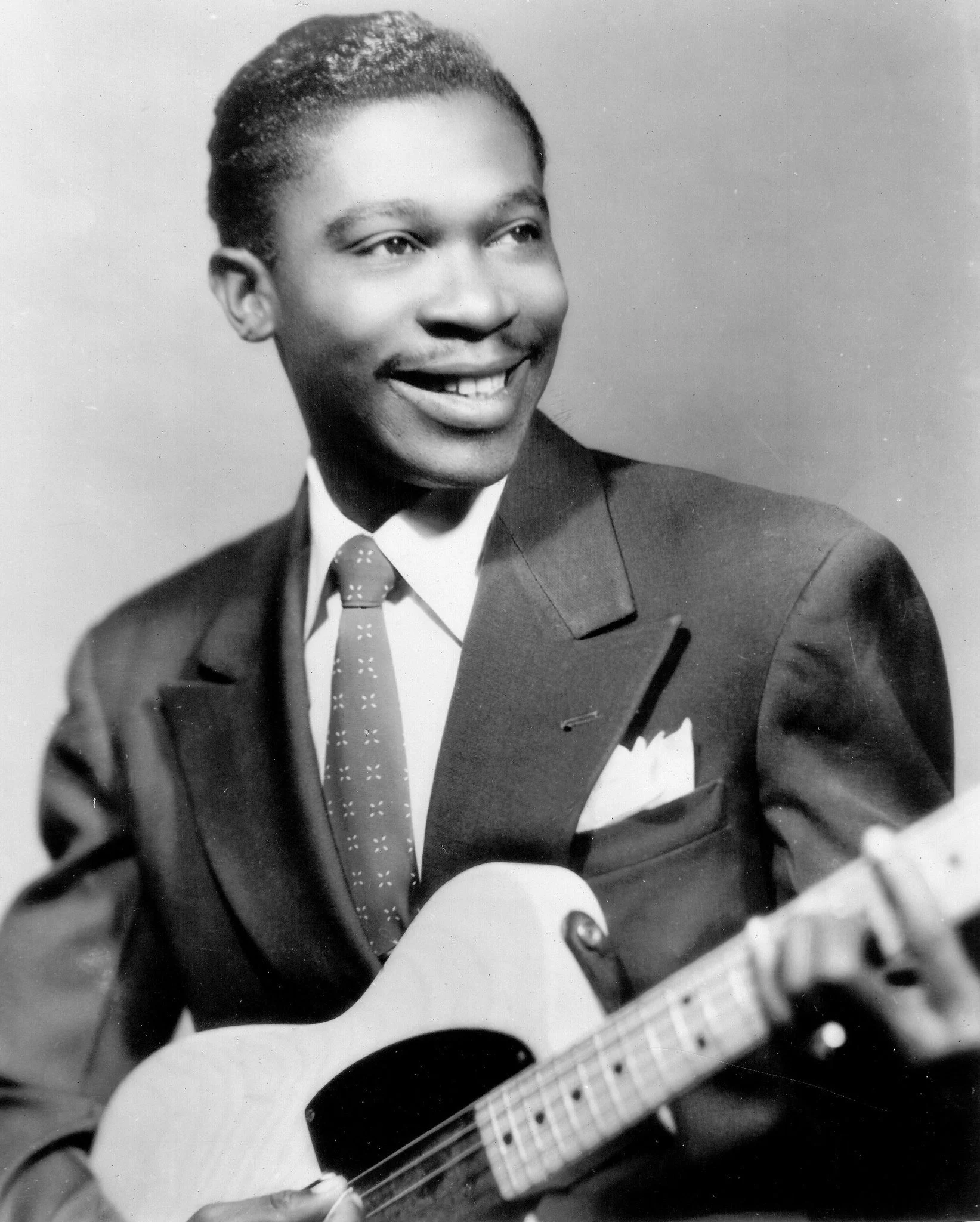
There would be no blues or jazz as we know it without black slaves living in the U.S., using
"white" instruments and assimilating folk and popular music elements of other cultures that live
here. The proof of that is that nothing similar to American blues existed in Africa. B.B. King said
that a lot of white blues guitarists can run circles around black ones, but they can't sound as
authentic as black singers. Well, he's wrong about the second part of the sentence since Jack
Bruce and Joe Cocker certainly sound better and more blues-authentic to so many listeners than
B.B. King himself.
Yet again, we can detect not a small amount of ignorance and arrogance in the declaration that
“nothing similar to American blues existed in Africa”. It is doubtless that this self-appointed
expert had ever seriously listened to the music of Ali Farka Toure, Lobi Traore or Bassekou
Kouyate. Similarly, he seems unaware that the music of Skip James, Robert Pete Williams, RL
Burnside or Otha Turner did not strictly adhere to the widely vaunted I-IV-V chord changes
introduced by W.C Handy. His conclusion that the Scotsman Jack Bruce or the Englishman Joe
Cocker sound “better and more blues-authentic” than the Mississippi-born and bred B.B. King is
nothing short of astounding. Overall, his response betrays an astonishing ignorance of Black
history such as his assertion that ‘black slaves’ used ‘white instruments’ and merely assimilated
the music of other cultures to create the blues. Black agency is simply erased, while the
influence of white culture is glorified as an improvement upon anything that even B.B. King
could come up with.
Another response indulged in the ‘melting pot’ metaphor to compensate for his lack of
comprehensive knowledge on the subject:
[The] blues as we know it is a conglomeration of so many influences, black, white, brown, red,
yellow, purple etc.. Old American was a gumbo of diversity and archetypal human experience and
for anyone to stake ethnic exclusive claims to the root of a folk music form can really lead us all
into a dead end corner. All are welcome and entitled.
The main intent here is to educate the author and minimize any Black claim to blues as being
the product of Black culture. Curiously, he invokes a range of colors (even purple! ) in his
clumsy attempt to discuss the impact of different cultures in the development of the blues. In
this creative re-telling, segregation and race and class differences did not exist, being elided by
the nebulous concept of an ‘old American gumbo’. To him, the blues is universal and can not
be characterized as essentially Black. As such, anyone can do it and anyone is entitled. Again,
a strange colorblind ideology combined with historical ignorance is presented as a perfectly
reasonable explanation for denying the essential nature of the genre. We are instead subjected
to another artful denial of Black agency in the production of Black culture in the name of
preserving a white supremacist reading of blues history. Race is such a vexing concept that it
must be removed from the equation to mollify white feelings of superiority. If we don’t
acknowledge it, it ceases to be a factor. With race and Black people removed from the picture,
he is free to declare that ‘all are entitled.’ Like a homesteader who must do the hard work of
hacking away the underbrush, cutting down trees and burning out the stumps, he strikes his
claim and prepares it for exploitation by the dominant society. Sadly, he would rather do this
work of verbal gymnastics than attempt to explore the implications of racism and the Black
foundations of the blues.
🎶🎵🎶🎵🎶
The fact is that all people bring their specific ethnic group histories to their musical
practice. Yes, all people suffer, yet we all don’t suffer in the same way from the same problems.
The white experience is not the same as the Black experience in America, and it never has
been. When a white performer performs in a Black musical style, it is impossible to check his
positionality as a member of the white race at the door. The same goes for the Black performer.
Though no one needs a permission slip to play music from other cultures, we each take our
personal and family histories with us whatever we do. We can’t run away from ourselves.
Writer Paul Garon asks,
“ Is it the same when a black man like Chuck Berry sings that he went ‘across Mississippi clean,’
as when a white man like Elvis Presley sings the same lyrics in the same song? Hardly! Getting
‘across Mississippi clean’ has a whole accumulation of meanings when sung by a black
[performer], meanings that just don't exist for a white performer.” (1)
Musicking in America has never existed in a vacuum, insulated from the realities of racial
oppression. In the context of a deeply violent system of historical white supremacy that is
enshrined by law and interpreted by the courts in ways that serve to protect white economic and
social privilege, the positionality of the white musician is a determining factor in how they
approach the social, economic and historical issues surrounding the performance of blues
music. American racism and its impact on white people’s socialization is as natural as water in
the ocean. However, simply saying it doesn’t exist won’t save one from drowning. It is a
foundational reality that we ignore at our peril..
There is an apparent confusion - whether legitimate or deliberately artificial - between
race and skin color, even though this distinction is not supported by history or popular opinion.
The ‘one drop-rule’ that forms the baseline of racism in the United States dictates that one need
not be phenotypically Black in order to be considered as a Black person in terms of the law or
societal perception. American slave plantations were filled with people who were phenotypically
‘white’ but whose ancestry was not ‘pure’ by the rigid standards of white supremacy (Sally
Hemmings can you hear me?). In a slavocracy in which political and economic power was
based on racial identity, such designations were essential to the continuation of white
domination over land, property and resources. Cheryl Harris writes in “Whiteness as Property”
of Homer Plessy, the plaintiff in the case of Plessy vs. Ferguson , whose plea stated that "the
mixture of African blood [was] not discernable in him."' (41) This case took place against the
backdrop of a long history of New Orleans’ racial admixture between African, European, and
native American populations, such that skin color alone was never a reliable qualifier for
whether or not a person could be seen as Black or white under Louisiana law. Simply put,
Black folk have always presented in a variety of colors, from ‘high yella’ and ‘redbone’ to
‘chocolate brown’ and ‘blue black’. What we know as ‘the Black race’ can never be reduced to
simply a matter of skin color. It is more than skin deep. Simplifying the argument in this way
again serves to deny the reality, impact and complexity of racism’s effect on socialization. The
straw man of skin color is a convenient way to brush away a deeper consideration of the issue,
transforming the author’s argument as being about an obsession with ‘color.’
Even today there are white people in America who would be considered legally Black
according to the restrictive definition of racial/genetic heritage constructed over time in the
ultimate interest of consolidating white social and economic hegemony. In my own family, there
are people who could have passed for white but because their ‘blood’ could be legally verified
as being ‘mixed’ were subject to the same restrictive laws, covenants and social conventions
that served to oppress the blackest Americans of African descent. Of course, they could have
chosen to move away, eschew any family ties with their darker kin and begin life anew as white
people. However, they chose to be identified with the group into which they were born, even if it
was against their self interest. It seems inconceivable that white Americans are completely
unaware of this. Conflating race with skin color is a classic red herring - a convenient way to
sidestep the deeper questions of heritage and identity. The dominant discourse is thus
protected from any challenges.
For a sizable portion of blues-loving whites, Black musicians’ questioning of white
people’s unquestioned liberty to appropriate traditionally Black musical styles is racism. There
is also the assumption that white people’s positionality as offspring of broken homes or as
members of the working class are enough to qualify their ‘right’ to play the blues. Such
assertions serve to minimize the unique nature of the blues as a cultural product of Black
history, ignoring any differences between Black pain as a result of racism and white misfortune
in a society where they are the dominant group. Whenever Black folk have dared to speak up, it
is often called ‘pulling the race card.’ However this is exactly what these respondents are doing
in their objection to a Black musician talking about his experiences and observations of racism.
DiAngelo’s concept of white fragility is in play here, demonstrating why it is often extremely
difficult for white people to talk about racism. The socialized arrogance of white dominance is a
barrier for white peoples’ understanding of Black perspectives about racism.
When racism is called out, anger and defensiveness is the predictable result. DiAngelo
asserts that the main concept driving white people’s reluctance to acknowledge racism is the
racist = bad/not racist = good binary. Indeed, no one in any society wants to be seen as being
‘bad’, so white people can absolve themselves from having to do the work of being truly
anti-racist, since ‘they are not racist.’ In this way we can see this cry of ‘racism’ as simply a
rejection of any opinion that upsets the dominant group discourse. The entrenched legal and
social realities that reify whiteness are not dealt with. Individualism also plays an important role.
In her essay, “What Makes Racism So Hard for White People to See”, DiAnglo writes that white
people are socialized to think of themselves as individuals and not members of a group. This
means that if they do not deem themselves as participating in individual racist acts, then racism
is necessarily absent. The pervasive effect of segregation can not be understated. Growing up
in an all-white environment normalizes whiteness as existing outside of race, i.e. “we are all just
human.” By this logic, if ‘people of color’ are not present, then race is not present. Thus, there is
no racism. Therefore race is something, ironically, that is brought to white spaces by ‘people of
color’ since it is they who ‘possess’ race and white people are ‘just human’. In this highly
controlled and heavily sheltered environment, it is racist to even talk about racism. Overall,
DiAngelo contends that white people’s socialization and lack of experience with racism
conditions them to expect and demand racial comfort. When this expectation is compromised,
reactions such as anger, defensiveness and hostility can ensue. As a result we have the irony
of white people who feel qualified to declare the presence or absence of racism when they as a
group are the least qualified to ascertain what racism is or isn’t. These conscious and
unconscious behaviors and modes of thought ensure that Black attempts at self-determination
and valorization are effectively nipped in the bud. The end result is the continuation and
strengthening of white supremacy, which emerges unscathed every time.
But whose definition of racism are we using? We need a deeper examination of what
racism is and how it operates. Is it merely an individual occurrence, or is it a social structure
that affects all relations between different racial groups? Is racism a phenomena that
specifically upholds white supremacy, or can Black people use it as a tool to dominate another
group in the same ways that it is wielded by whites? Consider Omowale Akintunde’s definition:
“Racism is a systemic, societal, institutional, omnipresent, and epistemologically embedded
phenomenon that pervades every vestige of our reality. For most whites, however, racism is like
murder: the concept exists, but someone has to commit it in order for it to happen. This limited
view of such a multilayered syndrome cultivates the sinister nature of racism and, in fact,
perpetuates racist phenomena rather than eradicates them.” (168 )
Since whites as a group have never been subordinate to Black people, they have never had to
develop strategies for dealing with racism. Additionally, living in an intensely segregated society
means that most white people can go their entire lives without really knowing any Black people
or how racism affects Black lives. This is the basis of the fragility that they demonstrate when
they are called out on racist behavior. In White Fragility, Diangelo writes that “racism is a
society-wide dynamic that occurs at the group level”. (22) Racism is a team sport. Any cursory
observation of how the system of racism operates in society reveals the ultimate objective: white
domination. Black people have never possessed the property of whiteness, so although it is
entirely possible for them to hold prejudices or in certain circumstances even discriminate
against an outside group, they do not have the power to oppress any group in the ways that
they themselves have been historically restricted from property ownership, legal rights and civic
participation due to their racialized identity imposed upon them by the dominant power structure.
This power only resides in those who possess the property of a whiteness that was violently
established through conquest and domination and codified by law. Indeed, as the example of
the one drop rule shows us, to be white is to be absent of any provable trace of Blackness, this
being the ultimate prerequisite for group success.
This conceptual system is so pervasive and powerful that even though exceptions to the
rule do exist and are constantly held up by the white mainstream as advancement for the entire
race - the election of Barack Obama or the existence of numerous rich Black athletes and
entertainers come to mind - these isolated, individual examples of success do nothing to upset
the status quo nor do they liberate all Black people from racism/white supremacy. This is not to
say that all whites are automatically members of an elite class solely by virtue of their
possession of whiteness. As Harris asserts, it means only that “whiteness retains its value as a
‘consolation prize’: it does not mean that all whites will win, but simply that they will not lose, if
losing is defined as being on the bottom of the social and economic hierarchy - the position to
which Blacks have been consigned.” (53)
This conceptual system is so pervasive and powerful that even though exceptions to the
rule do exist and are constantly held up by the white mainstream as advancement for the entire
race - the election of Barack Obama or the existence of numerous rich Black athletes and
entertainers come to mind - these isolated, individual examples of success do nothing to upset
the status quo nor do they liberate all Black people from racism/white supremacy. This is not to
say that all whites are automatically members of an elite class solely by virtue of their
possession of whiteness. As Harris asserts, it means only that “whiteness retains its value as a
‘consolation prize’: it does not mean that all whites will win, but simply that they will not lose, if
losing is defined as being on the bottom of the social and economic hierarchy - the position to
which Blacks have been consigned.” (53)
Diangelo’s critique of colorblindness elucidates this line of thinking well. In writing about
this new philosophy of the post-civil rights era, she states,
“One line of [Reverend Martin Luther] King’s speech in particular - that one day he might be
judged by the content of his character and not the color of his skin - was seized upon by the white
pubic because the words were seen to provide a simple and immediate solution to racial
tensions: pretend that we don’t see race, and racism will end. Color blindness was now promoted
as the remedy for racism, with white people insisting that they didn’t see race or, if they did, that it
had no meaning to them.” (41)
The result of color blind ideology actually strengthens racism/white supremacy. “ To define race
reductively as simply color, and therefore meaningless, however, is as subordinating as defining
race to be scientifically determinative of inherent deficiency.” (63) Paul Garon’s observations
are helpful in understanding the volatile mix of colorblindness and talking about racism. He
writes,
“ many of these color-blind whites are really resisting the importance of consciousness of race and
race matters, with all the nagging reminders of racism contained therein. They believe that by
refusing to use race as a criterion for anything, they are being the ultimate non-racists, but they
are actually blinding themselves to the complexity of racial issues.” (1)
Another implicit assumption in such commentary is the idea that white people are the ultimate
arbiters of the authenticity of any ethnic group. As we will see below, such claims have a long
history in the American law and social life.
Consider Cheryl Harris’s writing about the legal case of Mashpee Tribe vs. the Town of
Mashpee, wherein the tribe sued to recover land that a small group of Indians had sold to a
group of non-Indians in violation of a federal statute that barred conveyance to non-Indians
without federal government approval. Unfortunately for the Mashpee Indians, a judge ruled that
they were not a ‘true’ tribe under the laws of white society at the time that the suit was filed.
The suit was summarily dismissed.
“The Mashpee's experience was filtered, sifted, and ultimately rendered incoherent through this
externally constituted definition of tribe that incorporated outside criteria regarding race,
leadership, territory, and community.248 The fact that the Mashpee had intermingled with
Europeans, runaway slaves, and other Indian tribes signified to the jury and to the court that they
had lost their tribal identity.” (59)
No consideration was allowed for the Mashpee’s definition of what constituted Mashpee
identity. White law and the prevailing opinions of white society had the final say:
“for the Mashpee, blood was not the measure of identity: their identity as a group was manifested
for centuries by their continued relationship to the land of the Mashpee; their consciousness and embrace of difference, even when it was against their interest; and, their awareness and
preservation of cultural traditions.250 Nevertheless, under the court's standard, the tribe was
"incapable of legal self- definition.” (ibid)

Returning to our commentators, their positionality as a member of the dominant race gives them
the privilege to judge who is the right Black person to play blues and who is inauthentic based
upon criteria that they alone control and define. Perhaps such arrogance would not be so
problematic were it a two way street. Can Black people who play or listen to classical music
(think of Awadagin Pratt, or Leontyne Price) pretend to be gatekeepers for 18th and 19th
century European music? No, this is not our collective social reality. Rather, it is the essential
positionality and peculiar property of whiteness in America that permits white people to define
what is and is not representative of European culture. This same whiteness reserves for them
the right to say what is authentically blues or authentically Black. Their word is the final word.
Unlike blackness, which has never been valorized in America, whiteness is prized above all
other properties.
So how do we move forward? Black people must continue to tell the truth about racism
and white people must get over their problem of talking about it. For this to happen,
expectations of racial comfort must be discarded. Interest in Black history must go beyond the
simplistic broad strokes that characterize slavery as the beginning of Black history and
culminating in the triumph of colorblindness imposed by the post-Civil Rights era. Though Black
folk aren’t perfect, the reality is that racism is not their creation. It is a system that upholds white
domination, and as we have seen in the above comments, many blues-loving white fans are not
exempt. Only white people and the institutions they control have the power to end anti-Black
racism. As a social illness, and a profound manifestation of neurosis, it permeates American
society from top to bottom. The blues is not exempt.
The ways in which white people have historically engaged with the blues and other Black
musics are heavily characterized by this the legacy of slavery, Jim Crow, colonialism and
racism. White people must honestly accept and address the privilege afforded to them by a
system that has always positioned being white as winning and being Black as losing. This
privilege and this history must be talked about. If it is ignored, the sore will only continue to
fester and metastasize. It will undoubtedly be a long, hard road to freedom. The system was
not constructed overnight and only God knows how long it will take to deconstruct it. But this is
the work that must be done. Thankfully, the truth of the blues is the inspiration that we need to
keep on keeping on. As countless bluesmen and women have declared in song, “the sun gon’
shine on my backdoor one day.” Until that day….
⭐⭐⭐
The blues aren’t pessimistic. We’re prisoners of hope but we tell the truth and the truth is dark.
- Dr. Cornel West
Bibliography
Desalvo, Debra. The Language of the Blues: From Alcorub to Zuzu . New York, Billboard Books,
2006.
DiAngelo, Robin. White Fragility . Boston, Beacon Press, 2018.
DiAngelo, Robin. “Why is it So Hard for White People to Talk About Racism.” Huff Post , 30 April
2015,
https://www.huffpost.com/entry/why-its-so-hard-to-talk-to-white-people-about-racism_b_
7183710.
Garon, Paul. “White Blues.” Bluesworld Online , 1994,
http://www.bubbaguitar.com/articles/whiteblues.html.
Harris, Cheryl. “Whiteness as Property.” Harvard Law Review , vol. 106, no. 8, 1993, p. 85.
Harris, Corey. “Can White People Play the Blues?” Blogspot , 2015,
https://bluesisblackmusic.blogspot.com/2015/05/can-white-people-play-blues.html .
Hoffman, Lawrence. “At the Crossroads.” Guitar Player , August, 1990.

From Me to You
In this episode, I speak with Deidra R Moore Janvier, Esq. about her new book, From Me to You: The Power of Storytelling and Its Inherent Generational Wealth.
Published By; Lamont Jack Pearley
From Me to You: The Power of Storytelling and Its Inherent Generational Wealth
In this episode, I speak with Deidra R Moore Janvier, Esq. about her new book, From Me to You: The Power of Storytelling and Its Inherent Generational Wealth.

From Me to You is the answer to one crucial question: “So, Mom, what exactly was slavery about?” asked the author’s young son after learning of the atrocities of the Holocaust and slavery. Faced with the formidable challenge of answering her son’s question, Deidra devoted herself to exploring African American history with the end goal of creating a teachable moment. Starting with Ida B. Wells and ending with President Barack Obama, From Me to You features illustrations and short biographies of the most prominent 19th and 20th-century civil rights activists, centering their voices with quotes and affirmations anchored in the time in which they lived. Through stories about family, faith, and the power of multigenerational unity, From Me to You explores the legacy of slavery in America from the viewpoint of enslaved Africans and their descendants. Deidra proves that African American history is American history and that these two concepts rely on each other for posterity.
Author Deidra R. Moore-Janvier, Esq. exemplifies the Bronx area. As an African American mother, wife, and advocate for change, Deidra set out on a journey in 2020 to teach young minds “the value in investing in themselves and in learning about their history.” Deidra is no stranger to self-investment. As a single mother in 1996, she quit her job to attend law school. Upon graduating from the City University of New York School of Law (CUNY School of Law), Deidra worked as a public defender with The Legal Aid Society in Bronx County. In 2004, she established the Law Offices of Deidra R. Moore, P.C. Her work is deeply informed by her personal and professional experiences.
http://www.deidramoore.com/about/

Gentrification
Gentrification reflects how communities change. The question always is how good or bad it is for the community. Pictures provide different stories related to Gentrification. They include building improvements, more people, more businesses and different races living together.
Written By: Dhane Pearley
Gentrification reflects how communities change. The question always is how good or bad it is for the community. Pictures provide different stories related to Gentrification. They include building improvements, more people, more businesses and different races living together. Gentrification can remove the past and appear to make a brighter future for a community. Gentrification can turn small affordable living neighborhoods into unaffordable expensive communities. There are many different perspectives on Gentrification, I will explain how my neighborhood in Bed-Stuy Brooklyn is changing and how the changes are affecting people: how are these changes good and bad for Brooklyn?
Gentrification” is a social justice problem and the manifestation of inequality.” According to “There goes the Neighborhood “one argues that Gentrification is a polite way of saying the white people are moving in! Bed-Stuy is a much different place today from what it once was today.
Interview: Shawn Morrison
Topic: Historical Significance
In my interview with Shawn, she explained to me that she recently discovered that her block was changed into a historical community. Shawn can no longer make major improvements to her home without prior approval. She only can make small changes like painting your house a different color.
After Shawn finished talking about historical communities, she started to tell me about some historical landmarks like the Weeksville Museum. When Shawn was younger the Weeksville Museum used to be houses that people lived in. Another landmark Shawn told me about was Laurel Magnolia Tree. The tree was located at 769 Lafayette Ave, Brooklyn. She told that this Tree was a designated landmark in New York City. This tree was planted in 1885 by William Lenken and still is in good shape.
interview: Justin Morrison
Topic: Economic Applications
231 Macdonough street
ask: $2.35 - sold: $2.45
4.26% above ask
Date :5/3/17
1 unit - 20 x 40
321 Stuyvesant Ave
Ask: $1.25m - sold: $ 1.37m
6.96% above ask
Date 12/1/17
1 unit - 19.5 x 45
These homes above were once affordable and actual were offered as apartments for rent. Justin explained to me that many landlords in Bed-Stuy use to rent rooms inexpensively. The only downside was that you were required to share the bathroom and kitchen.
I think Gentrification has made my neighborhood look different from when I was younger. There are some nice restaurants, cool clothing shops and gyms. My parents always complain about no parking and too many bikes in the street. There are still some black families, but most have moved out. When I was younger the neighborhood was nice too just different. Less joggers and more music. Gentrification in my community has changed the look of Bed-Stuy. I don’t think its good when people can no longer afford to live where they grew up at or enjoyed living at. Gentrification has not been the best thing for Bed-Stuy.
Bibliography
Corcoran/ 2018 Homeowners Handbook Bedford-Stuyvesant-Crown Heights-Prospect Lefferts Garden The DIMA LYSIUS Team.

The Gentrification of Hip Hop
Honestly, the term guests would be an overstatement. We are treated as servants in their houses. Lord Jamar, whose feud with Eminem is well chronicled, stated that Eminem is a guest in the house of Hip Hop. He’s saying that all “White folk who participate in Hip Hop are guests in the “Culture”
by: Courtland Hankins

photo credit: Gordon Cowie
From The South Bronx… The South-South Bronx… to... SoBro… So SoBro….Hip Hop… Black America’s most recent cultural response to the oppressive history we are all so familiar with. This piece is on the current gentrification of Hip Hop. Gentrification is defined as follows: the process of renovating and improving a house or district so that it conforms to middle-class taste. In street terms, it means that white folk has decided that they want to move into Black neighborhoods and reshape the community to meet their values. There is usually not much Black folk can do about it, because the truth is, this system, politically and economically is controlled by White folk. We are treated as guests in their house! Honestly, the term guests would be an overstatement. We are treated as servants in their houses. Lord Jamar, whose feud with Eminem is well chronicled, stated that Eminem is a guest in the house of Hip Hop. He’s saying that all “White folk who participate in Hip Hop are guests in the “Culture” - that White folk should not get it twisted and think that they have any controlling interest in the “Culture” - no matter how skilled they may be. I agree with that sentiment wholeheartedly. There are very few things of value in this construct that Black people control. Hip Hop is one of those things. I would say we control it politically, however, we do not control it economically - and that is where the battle is being waged. White folks' economic might is formidable, and their desire to use that might to control the narrative of something that they deem valuable is challenging to offset. I believe it is of the utmost importance that we do not allow the battle to be lost. It is ok to claim what we created as our own, to raise our baby if you will. White folk has been used to controlling our babies and using them as they see fit, see slavery for a reference. I’ll say it again, see slavery as a reference.
White folk is irresistibly drawn to Hip Hop, just like all of our cultural creations that preceded Hip Hop, i.e., Blues, Jazz, Rock n Roll, etc. Hip Hop is a bit different because we have created a gate around the “culture” and have been able to maintain our keepership. Some White folk like to claim that they’ve been apart from the beginning as if to say they are not guests in the house. Ironically, white folk is a very important reason why Hip Hop exists. No, I’m not talking about cat’s like Rick Rubin or Paul “C” McCosky – who’s early contributions I respect very much by the way, and more modern-day artists like Eminem and the late Mac Miller (my favorite white rapper) – I’m talking about the oppressive system of white supremacy, who without white people behind that there would be no such thing as Hip Hop as we know it. Funny story, I was at a Hip Hop event this past summer and one of the panelists suggested that we should be grateful for the slavery, jim crow, etc. because it was that experience that brought us, Hip Hop. Nahhh, I don’t endorse that statement in the least bit, however, the point is that without the tragic historical experience, Hip Hop would not have been created to be a response to it. I mention this because it does give us a true representation of White folk’s initial relationship with Hip Hop. Hip Hop is a voice for the voiceless, a medium for the oppressed to testify to their experience, to express their needs, desires and wants, to speak life into their dreams. Hip Hop was and is a phenomenal force of manifestation. But like everything the original people create and every valuable resource at our disposal, the colonizers must control it. Make no mistake about it, colonizer and gentrifier are closely related and both move in the same spirit. They share the ultimate goal of controlling the landscape and eventually replacing the native with their likeness – on all fronts. Hip Hop is the most powerful culturally creative force on the planet and has a World Bank filled with deposits of mind currency. It is explicitly a Black thing that wields tremendous influence, much of it untapped. Hip Hop is a Black Planet, both feared and desired by the colonizer for 1: it’s the ability to destroy the colonizer and 2: because of their envy of their inability to create something of such natural value. So what does the colonizing mind do? It gentrifies. It creates a plan to control and eventually consume the resource. How is this currently happening?

photo credit: Derrick Treadwell
It’s been going on since the beginning. Hip Hop is just a continuation of the warfare between the so-called black and white construct in this country. The battle for the white supremacist system to control the mind and spirit of black folk and for black folk to take back control of our mind and spirit. Twenty-five years ago, Ice Cube said in an interview with ABC News, ‘that although the white corporate structure is making the most money, what Hip Hop has to give is deeper than money." He mentioned that "Hip Hop distributes information and circulates mental money. Hip Hop has the minds of masses, and that is more valuable than the fiat currency at the end of the day." However, the White structure still has the money and a long-standing history of utilizing it’s monetary and institutional influence to break down the strongest of Black movements. That is where the gentrification of Hip Hop comes in. Gentrification has a friendlier face but is aligned with the same colonizing intent because it is ultimately designed and funded by the colonizing mind. Middle-class White America has been infatuated with Hip Hop since the beginning and has desired to find its place within the “Culture”. Much of the issue is that the infatuation is rooted in an ignorance of Hip Hop’s true roots and purpose, and fawns over the more “shallow” surface side of the “Culture”. It has taken 40 years, but the gentrification of Hip Hop is in full effect. There are more and more White rappers and artistic representatives to coincide with the already existing White majority corporate powerhouse. That is a recipe for a full coup. We cannot let that happen. I repeat we cannot let that happen. That doesn’t mean that white folk or anyone else for that matter can’t participate in Hip Hop. However, it does mean that they must know and to the best of their ability, learn and understand the roots of Hip Hop, the purpose of Hip Hop, in order to play a part in the empowerment of Hip Hop and the larger Black culture it represents. There can be no mistake that Hip Hop is for the empowerment of Black people and through that, it is for the empowerment of the world. That is the order. We’ve seen this happen before, over and over again… from The Blues to blue-eyed Jesus, White folk have mastered gentrification and remixing our creations and history to serve their self-interests. So how do we stop it? Well, that is up to my generation of Hiphoppa’s who are now adults, with children and grandchildren, professionals in places of influence like schools, banks, government, corporations, etc. It is up to us to preserve and realign our “Culture”, facts! We cannot leave Hip Hop out there to be taken, continually exploited. We cannot devalue our creations and our creative force. Not at all. That is why there is a President of Hip Hop. To make sure that our Blues is not in vain, but is the ancestral force energizing Hip Hop to push forward, to stay self-controlled, and to Stay Black!