
COLONIALISM & INSTITUTIONS
White Colonial Ideologies and the Institutionalization of Power
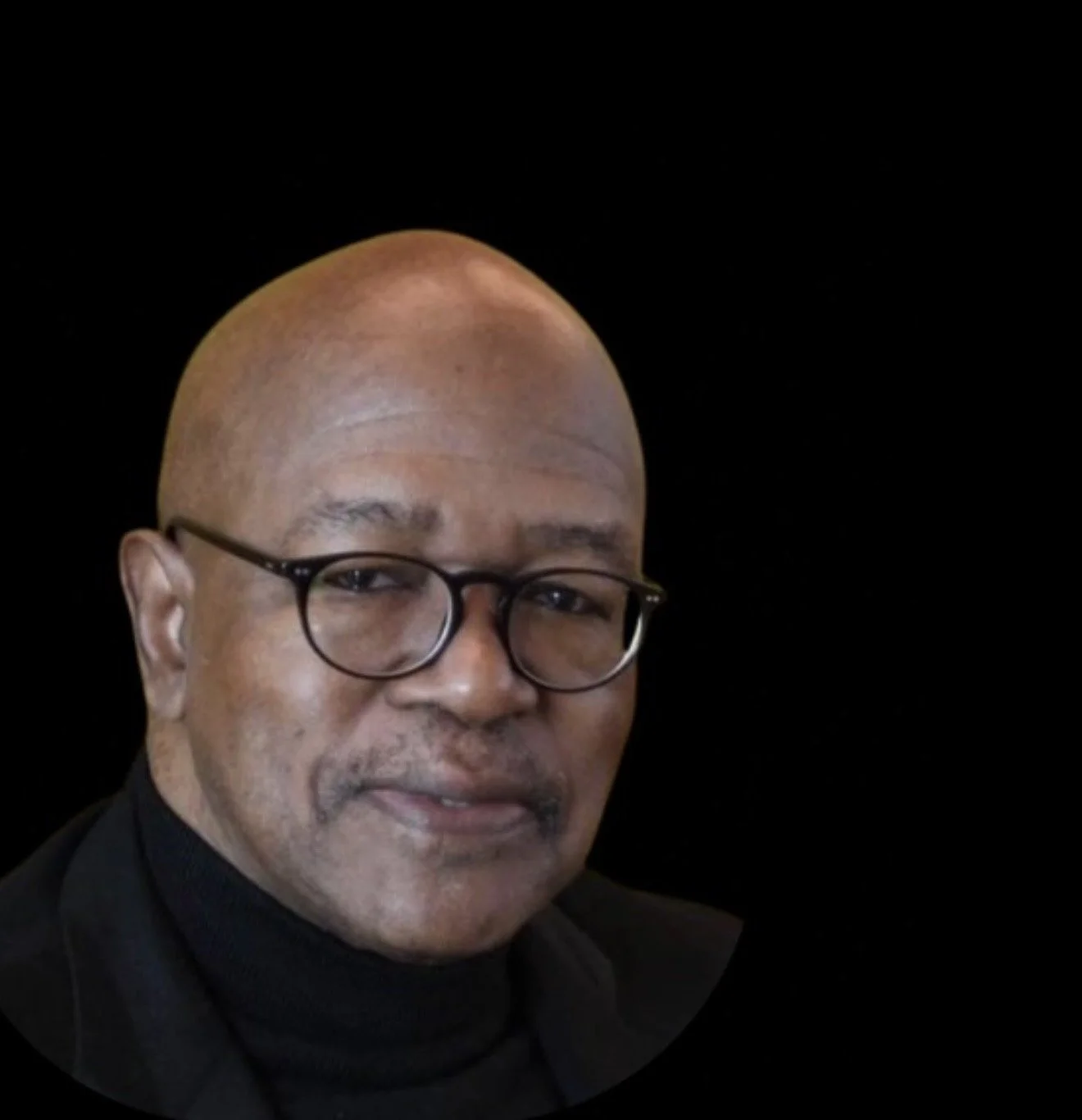
A Conversation with Elijah Anderson
Elijah Anderson, one of the leading urban ethnographers and cultural theorists in the United States, is the Sterling Professor of Sociology and of African American Studies at Yale University. Among his many scholarly contributions to the field of sociology are five books that provide a detailed cultural history of US urban landscapes. Qualitative fieldwork he conducted as a doctoral student at the University of Chicago led to his widely acclaimed first book, A Place on the Corner: A Study of Black Street Corner Men(University of Chicago Press, 1978), examining street-corner life at “Jelly’s,” a South Side Chicago bar. Streetwise: Race, Class, and Change in an Urban Community (University of Chicago Press, 1990) is a study of gentrification that explores race and class in two very different Philadelphia neighborhoods.
Interviewed By: Susan L. Worley
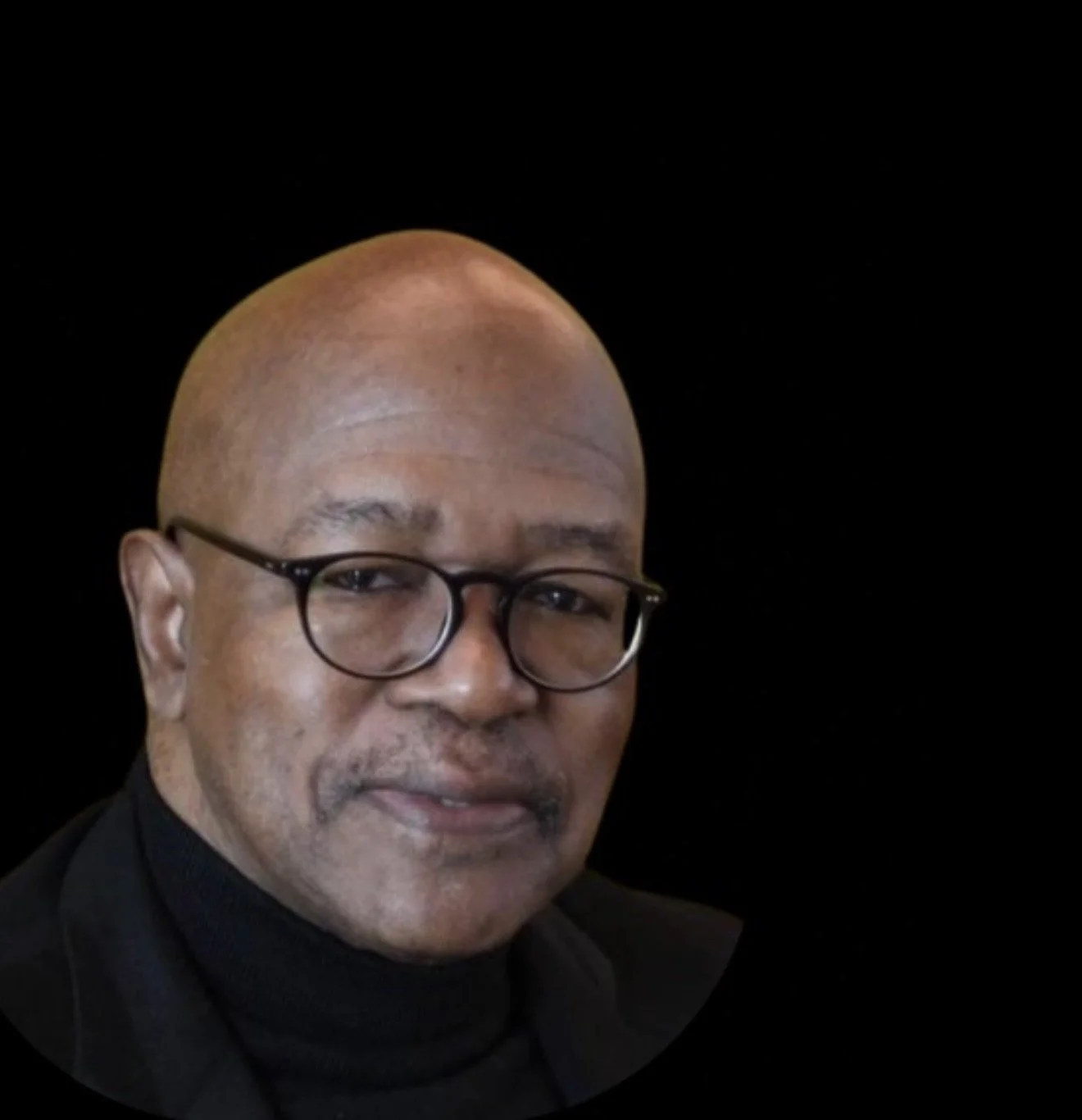
Dr. Elijah Anderson
Elijah Anderson, one of the leading urban ethnographers and cultural theorists in the United States, is the Sterling Professor of Sociology and of African American Studies at Yale University. Among his many scholarly contributions to the field of sociology are five books that provide a detailed cultural history of US urban landscapes. Qualitative fieldwork he conducted as a doctoral student at the University of Chicago led to his widely acclaimed first book, A Place on the Corner: A Study of Black Street Corner Men (University of Chicago Press, 1978), examining street-corner life at “Jelly’s,” a South Side Chicago bar. Streetwise: Race, Class, and Change in an Urban Community (University of Chicago Press, 1990) is a study of gentrification that explores race and class in two very different Philadelphia neighborhoods. His third book, Code of the Street: Decency, Violence, and the Moral Life of the Inner City (Norton, 1999), examines codes regulating violence and codes of decency in Philadelphia inner-city neighborhoods. His fourth book, The Cosmopolitan Canopy: Race and Civility in Everyday Life (Norton, 2011), introduces the concept of the cosmopolitan canopy as an “island of racial civility in a sea of segregation,” describing encounters and forms of negotiation between Whites and Blacks of different social classes in various public spaces in Philadelphia and other US cities. His most recent book, Black in White Space: The Enduring Impact of Color in Everyday Life (University of Chicago Press, 2022), draws on more than forty years of qualitative fieldwork to document the challenges Black people face as they navigate “White space” and attempt to overcome negative stereotypes. In 2025, Anderson received the American Society of Criminology’s Edwin H. Sutherland Award for his ethnographic investigations of city life and the origins of urban crime in the United States. In 2021, Anderson was awarded the prestigious Stockholm Prize in Criminology. His long list of other awards and honors include the Cox-Johnson-Frazier Award, the W. E. B. Du Bois Career of Distinguished Scholarship Award, and the Lynd Award for Lifetime Achievement from the American Sociological Association.
Here, Professor Anderson reflects on his personal history and recent work with Susan Worley.
About the interviewer: Susan Worley is a science writer who resides in Pennsylvania. She is a member of the American Folklore Society and the National Association of Science Writers.
SW: I’m wondering if we could start by talking a little bit about your background and what initially drew you to the craft of ethnography. What was your early upbringing like?
EA: I was born in the Mississippi Delta in a small village of Hermondale, Missouri, near the Mississippi River. My grandmother was the village midwife—and in fact, she delivered me. She was kind of a village doctor, and she had what they would call “mother wit”—limited formal education, but a natural leadership ability, including intelligence and knowledge of all kinds of herbal cures. When I was born, my mother was twenty years old and already had three other children. After my father’s experiences in World War II, he had tasted freedom and decided that he and our family could not live in the South any longer. The industrial North beckoned with employment opportunities, including low-skilled, high-paying factory jobs.
SW: How old were you when your family decided to leave the South?
EA: I was two years old. Like so many Black people during that period, my family was part of the Great Migration. They left the Mississippi Delta and moved to South Bend, Indiana, an industrial town ninety miles east of Chicago and five miles south of Michigan. Many poor, working-class southern Black people were attracted to South Bend. Two of my uncles and their families were already living there, and we joined them.
My family made the trek, first to Chicago, and then to South Bend, where my uncles worked in the Studebaker factory. They got my dad a job there, and we lived with one of my uncles for a while before moving into our own apartment. Then, my mother opened a grocery store in the local Black community.
SW: Were the local communities very segregated?
EA: Yes, the community was all-Black. As I was growing up, the White people owned certain local businesses, like the drugstore, the bakery, and the local cleaners. There were also local taverns, a barbershop, and a large rooming house on Chapin Street, a main artery of the city. White people were generally tolerant, and Black people were encouraged to know their “place,” a place inferior to that of the local White people. That was an important understanding throughout my childhood. I initially attended a racially gerrymandered, predominantly White elementary school. I was one of the few Black kids there. By the time I entered second grade, my family had more resources and bought a house on the west side of South Bend. That neighborhood was racially mixed, but my elementary school, Linden, was segregated, with a few Black teachers; most of the teachers and the principal were White.
SW: In Black in White Space, you mentioned several jobs you had when you were a child.
EA: When I was eight and nine, I hung out in downtown South Bend and followed the older kids, mimicking their behavior. I sold the South Bend Tribune on downtown street corners, and by the time I was eleven, I worked at a downtown bowling alley, setting pins. Eventually, at the age of twelve, I started working at a local typewriter shop. I simply entered the shop one evening and approached Mr. Forbes, the owner, and asked him for a job. We seemed to hit it off, and he hired me. Initially, I ran errands and did handyman chores around the building, including emptying the wastebaskets, mopping the floors, and washing the front window and doing other odd jobs. Eventually, in my spare time, Mr. Forbes taught me to service and to repair typewriters. I worked for him through my high school years and beyond.
SW: You wrote very eloquently of Mr. Forbes and his role in your life in Black in White Space. It seemed that your relationship with him and the time you spent in that store provided you with something of an early ethnographic experience.
EA: Yes, I was observant and quite intrigued by the social environment of the setting; Mr. Forbes and his family, the older boys around the shop, and the comings and goings of the customers, or the “public,” were of great interest to me. There, I learned social skills that proved important for my development. That job was my first real introduction to a White social setting that I was able to observe with a work-related purpose.
SW: Did you know that you wanted to go to college after high school?
EA: Yes. Earlier in my young life, though I was a precocious reader (reading on a sixth-grade level in the third grade), I had become somewhat indifferent to school, mainly because schooling seemed not to matter so much. Gradually, however, I began to appreciate the role of education in allowing one the possibility of the “good life.” My teachers in elementary school, my minister, and family encouraged me. By tenth grade, I had become more serious about school, especially after I was cut from the basketball team for what my teammates and I thought were essentially arbitrary reasons. At the time, I felt it was the worst day of my life, in large part because my peer group members made the team, and I didn’t. I felt certain opportunities for social mobility now seemed closed to me. Ironically, this incident caused me to focus on my studies, even flipping my sense of priorities. As I became more focused on school, which was reinforced as I began to shy away from my “cool” friends and spend more time with the kids who were nerdier, or “square.” This change was so abrupt, it alarmed my mother, but it oriented me toward college.
In South Bend, a small industrial city, most people, Black and White alike, seemed to aspire to working-class occupations where schooling was not so important. And for most Black people, school seldom seemed to really pay off. Many, if not most, of the people I knew were primarily interested in obtaining a factory job for its relatively stable income and security. But during the civil rights movement, many children of the aspiring Black middle class became acutely interested in and promoted “getting an education.” This sentiment was reinforced by local churches, the NAACP, the Urban League, and other organizations. People like the Reverend Dr. Martin Luther King Jr. visited South Bend and strongly encouraged Black social mobility and racial integration.
As this civil rights movement became a part of our consciousness as young people, I became increasingly focused on education, and for many working-class youths like me, college became an important aspiration. Because my family had limited funds, I started my college career at the South Bend extension of Indiana University and later obtained a scholarship to attend Indiana University, Bloomington, where a whole new world opened to me.
SW: Did you already know then that you would pursue ethnography?
EA: No, but as an undergraduate, I found myself drawn to sociology, almost like a calling. As an undergraduate student, my teachers encouraged me to apply to the University of Chicago, which emphasized qualitative fieldwork as part of the important Chicago school of sociology tradition. I was then recruited to Chicago by Professors Gerald D. Suttles and Morris Janowitz, both of whom were major figures in the field of urban sociology. I received a personal offer letter from Janowitz, the chair of the department. Ultimately, Suttles departed the university for SUNY Stony Brook, and I began to work with Howard S. Becker, another major figure of the Chicago school, and completed my dissertation under him at Northwestern.
During this period, the civil rights movement was culminating in minor rebellions, riots, and civil disturbances in major cities throughout the country. Great numbers of Black people, especially the militant young people, became increasingly critical of the older generation’s apparent acceptance of the racial status quo. As young Black students, many of us felt a sense of equality with our fellow White students and expected to be treated as equals and as full citizens. And when discrepancies appeared, they were quickly noted and set right. As students, we demanded equality.
SW: And you benefited from the incorporation process that followed?
EA: Of course, as did so many Black people who have now joined the Black middle class, the largest in history. This period is often likened to a Second Reconstruction, including the Civil Rights Act of 1964, the Voting Rights Act of 1965, and President Lyndon Johnson’s great speech at Howard University, spelling out the rationale for “affirmative action,” as well as other progressive legislation. It was a time of student activism, and opportunities seemed readily available in the American workplace, including at major corporations and universities. An ethos of racial inclusion was emerging, an amazing national moment, and ultimately, the public policies emanating from these circumstances created the largest Black middle class in American history.
SW: Did you begin with a focus on urban ethnography at the University of Chicago?
EA: At IU Bloomington, I studied under Professors Frank Westie, Alden Miller, and others. Westie had me write a book report on Elliot Liebow’s important ethnographic study of Black street corner men in Washington, DC. Liebow’s book, published in 1967, was entitled Tally’s Corner: A Study of Negro Streetcorner Men. His book became a best seller, as there was a great deal of interest in Black people in urban settings at that time. Liebow was concerned with why the Black people he studied failed to become middle class, and he attributed this inability to what he called “manly flaws” and “serial monogamy.” While the book was wildly popular, his formulation left many young Black scholars, including myself, unsatisfied. But the book’s flaws motivated me to study the condition of such Black men for myself. I conducted the fieldwork for this project as a graduate student at Chicago under Gerald Suttles and Howard Becker at Northwestern, and this ethnographic fieldwork led to my dissertation and my first book, A Place on the Corner, which the University of Chicago Press published in 1978, a publication that became the germ of my entire body of work.
SW: After you completed your PhD, you taught at Swarthmore before heading to Penn, correct?
EA: After completing my fieldwork in Chicago, Swarthmore recruited me, and I taught there for two years before departing for the University of Pennsylvania, where I completed my dissertation and then published it. At Penn, I was recruited by some of the major figures in the field, including the chair of the sociology department, Renée Fox, as well as E. Digby Baltzell, William Labov, Dell Hymes, and Erving Goffman, among others. After I arrived, these scholars mentored me; we became colleagues and friends.
SW: Dell Hymes taught in the folk department at Penn, too. Did you interact with others in the folk department?
EA: Yes. Henry Glassie and Dan Ben-Amos, among others, welcomed me.
SW: Did you already have a new ethnographic pursuit in mind when you arrived at Penn?
EA: As I finished A Place on the Corner and prepared it for publication, I became interested in Powelton Village, an area just north of the Penn campus, a community in which my wife and I then settled. I wondered why so many of my White neighbors (people who had gentrified the area), people with resources and options, would remain in Powelton Village, which was adjacent to one of the most distressed and impoverished Black neighborhoods in the city of Philadelphia. I began to explore this question ethnographically, and the study became my second book, Streetwise. This work expanded on the issue of the color line, a question that persisted for me long after I completed my work in Chicago, and it was apparent as a dividing line between Black and White residents of Powelton Village.
SW: Could you talk a little about your approach to ethnography, which seems to overlap significantly with folk ethnography, and explain what you mean by qualitative fieldwork?
EA: Ethnography is defined as the systematic study of culture, a set of shared understandings that people live by. Virtually all human communities develop an informal “local knowledge,” as Clifford Geertz has suggested, by meeting the exigencies and the demands of their everyday lives. They share this knowledge and their understandings of it with members of their community, people they care about, and especially their children. Ultimately, this knowledge gets manifested in the various myths and rituals, and the patterns of everyday life. Through qualitative fieldwork, the researcher tries to apprehend this knowledge and then represent it in lectures, articles, and books. For the ethnographer, the challenge is to render accurately the way of life of members of the community. This is the kind of ethnographic work in which I have been engaged in throughout my career, which is reflected in my five books on the Black experience in American cities.
EA: From the lessons of Howard Becker, Gerald Suttles, and others, both at Chicago and at Northwestern, I learned about ethnographic methods while engaging in qualitative fieldwork for my dissertation. Ethnography is the only method in which we place our own body in the field and, through a reflexive analysis and observation, come to an understanding of the local culture of the people we are studying.
Essentially, by observing what people do and listening to what they say, we learn about their everyday lives, their “way of life.” And we try to accurately represent this in our work.
SW: What was the focus of your third book?
EA: After completing Streetwise, I became curious about why so many young Black people as well as adults were caught up in violence, why so many Black people were killing each other in their communities. Beginning with Mantua, just to the north of Powelton Village, I explored these issues in ghetto areas around Philadelphia, including North, South, and Southwest Philadelphia. What I discovered was that many residents lived by what I call the “code of the street,” a set of prescriptions and proscriptions of behavior, an understanding among many young men and women that transgressions would be met in kind, as “an eye for an eye, a tooth for a tooth” form of “street justice” involving payback and revenge. Street credibility was a highly sought-after coin that could not just be earned once but had to be negotiated endlessly. Many residents of the inner city believed that the larger American society—including city government, the police, and especially the criminal justice system—had abdicated any responsibility for the welfare of the local Black community and its residents.
Many Black residents felt they were on their own, especially in matters of personal defense, public safety, and security at home. When they summoned the police, the response was almost always slow, or non-existent, and when the police did arrive, they were often disrespectful to the people who had called them in the first place. Thus, to keep safe, many residents took matters of personal security into their own hands, by effectively “taking up” for their friends, loved ones, and family members. Street justice became the norm. Often this meant that individuals needed to be able to effectively convey that they would engage in retributive violence to keep dangerous people from bothering them or their loved ones. In the local community, even the most “decent” people can feel the need to appear tough and streetwise to prevent others from taking advantage of them. This is part of the description and analysis that appears in Code of the Street.
While completing that book, I moved my family downtown to Rittenhouse Square, a tony area in Center City.
SW: And then you had the opportunity to study Rittenhouse Square.
EA: Yes, I became intrigued by Rittenhouse Square, which was literally outside my front door. I was impressed by the diversity and civility of Philadelphians, and the ways in which they seemed to get along with one another. The old-growth trees that covered the square reminded me of a canopy, and so I decided to call the book The Cosmopolitan Canopy.
The square is a relatively peaceful public space that welcomes all kinds of people, and these people are mostly civil to one another. Tensions are mostly kept at bay, and violent incidents rarely occur. Under the canopy, there are people of essentially two orientations: cosmopolitan and ethnocentric. At times the two orientations may appear in the same person, who may code switch from one to the other, depending on the situation. The cosmopolitans typically dominate and define the canopy space, while the ethnocentric people, often hailing from the more parochial communities around the city, defer and keep their ethnocentrism or racism in check; when they reach their limit, their racism or ethnocentrism might be manifested in the drawing of the color line, separating “us” from “them.” These two orientations can be exhibited by people of all races. On rare occasions, any one of them might be capable of drawing the color line, thereby excluding others by their words or actions.
Another important concept that I introduce in The Cosmopolitan Canopy is the idea of the iconic ghetto. The idea is that the Black community is not simply a physical space, but is understood as an icon, a symbol or image that hovers over unfamiliar Black people in public. This is true especially for the more ethnocentric types around the square, who may weaponize their racial prejudice to put out-groups “in their place.” I found that in public, such associations burden unfamiliar Black people with an almost instantaneous deficit of credibility. Occasionally, in these circumstances, Black people and others determined to be on the margins may experience moments of acute disrespect, or an abrupt drawing of the color line, that can make them feel excluded, like outsiders.
SW: That is what happened during the Starbucks incident in Rittenhouse Square.
EA: Yes. Here you’re referring to the infamous incident that occurred in 2018, seven years after The Cosmopolitan Canopy was published, in which two Black men sat at a table in Starbucks without ordering, as they waited for a friend to arrive, but then had the audacity to request the key to use the restroom. The barista refused and called the police, who arrived within minutes and arrested the two young men for basically being Black in Starbucks. This incident made nationwide news, and this Starbucks as well as others around the country closed for a day to engage in some public soul searching and bias training for its workers. The incident is a prime example of the way the color line gets drawn, which Black residents of the city know all too well.
SW: Historian Frank Hoeber and others consider The Cosmopolitan Canopy to be relatively optimistic regarding racial relations but find Black in White Space to be less optimistic, or even pessimistic, in tone. Would you agree with that?
EA: Of course, the two books were studies of different settings at different times, but the last chapter of The Cosmopolitan Canopy examines racialized disrespect or what Black people sometimes call the “nigger moment”—circumstances in which the color line is abruptly drawn. Black in White Space is a sequel to The Cosmopolitan Canopy and takes up the issue addressed in that final chapter, or how Black folk manage their Blackness in White-dominated settings. Given the changes the nation has undergone over the last two decades, it appears that the canopy space is increasingly under a peculiar form of distress. Under such canopies, especially as cosmopolitans recede in prominence, the ethnocentric folks seem not only to grow in number, but also to become emboldened, with fewer constraints on how they treat Black people and other marginalized minorities.
However, the cosmopolitan canopy can be taken as aspirational, or even a metaphor of civil society. By nature, as Erving Goffman suggests, such relations in public involve not a little amount of what he referred to as a “social gloss.” The gloss various people display—including polite smiles and sympathetic looks—helps them to smoothly get past others in public and the possible social entanglements they pose. Because of such displays of social gloss, The Cosmopolitan Canopy analysis might be viewed as more optimistic. The canopy is a place that gives off positive vibes, but all it takes is one person to draw that line, which can then render others as outsiders and not welcome in that space, as though they don’t belong.
When I wrote that book, the times were perhaps more optimistic. Since then, there has been a conservative, ethnocentric reaction that contributes to the occasional rending of the canopy. It may be that Black in White Space picks up on the ways in which the canopy is now under threat and details the ways that ethnocentric people feel increasingly more emboldened to make life more difficult or stressful for marginalized people.
SW: When The Cosmopolitan Canopy was published, President Obama was still in office.
EA: That is true. In fact, during a television interview I did with Calvin College (now available on YouTube) around that time, I spoke about how Congressman Joe Wilson interrupted Obama’s State of the Union address and loudly called him a liar. People were stopped cold, and Black people recognized the incident immediately as a racial insult.
SW: A lot of us believed that with Obama being president that some racial healing was going to occur. But then, things changed. When you wrote Black in White Space, we were experiencing the first Trump presidency.
EA: In this context, the ethnocentric people seem to have become more emboldened in their drawing of the line of demarcation against minorities, immigrants, and other marginalized populations, and not only in the US. In Europe, you see this happening as well; in Germany, Poland, France, and the UK, there has been a return and rise of ethnocentrism. I began to observe this phenomenon at the end of The Cosmopolitan Canopy and turned my attention more fully to the issue in Black in White Space.
SW: And now, as several sociologists have pointed out recently, we are witnessing so-called “White victimization”—is that a new phenomenon?
EA: No, I wouldn’t say so. The feelings of White grievance have been around since the enslaved people were emancipated and the rise of the Black Codes and Jim Crow. Today, as increasing numbers of Black and Brown people rise in class status, many ordinary White people can feel they are losing out, that their own rights and privileges have somehow become abrogated by the rise or the inclusion of Black and Brown people as well as women entering spaces such as the labor force and corporate America.
SW: That was the beginning of the sense of White victimization.
EA: An interesting question is: What happens in response to all this inclusion? As part of a White backlash, microaggressions and racial attacks on Black and Brown people seem more common—though I am not fond of the term “microaggression,” as it implies that such acts are minor, when, in fact, they can be profoundly consequential in their impact on a person’s mental and physical health and sense of well-being. And of course, the larger moments can be life-changing and even lethal.
SW: Would you say that in some sense the resistance you’ve described stretches back to the early days after slavery?
EA: Yes, I think so. It goes back to Emancipation and even before that with Justice Roger B. Taney’s ruling in the 1857 Dred Scott decision, when he declared that Black people “had no rights which white people were bound to respect”—in other words, that Black people were not and could not be citizens of the United States.
SW: In Black in White Space, you mentioned that because of considerable Black prosperity, which is traced in part to affirmative action, there was an emerging indifference to racial inequality and a strong narrative of blaming the victim. And now that there are so many White people who are unable to live as well as their parents did, they’re feeling anger and resentment about Black people who are enjoying jobs and benefits that they want for themselves. Do you think this explains the current anti-DEI and anti-woke atmosphere that has become quite frightening?
EA: Yes, in part. I wrote a piece for the Atlantic called “Black Success, White Backlash” (November 2023 that explained this process. Historically, whenever Black success and prosperity have occurred, there has always been a White backlash.
SW: And gradually there was Black prosperity.
EA: Largely because of the civil rights movement that culminated in the massive riots and civil disorders of the 1960s and 1970s throughout the nation, the powerful White majority was unable to ignore the racial inequality and the way it negatively impacted American civil society. In this context, Lyndon Johnson gave a critically important speech (“To Fulfill These Rights”) at Howard University, imploring the White establishment to do better. The racial exclusion of Black people had become urgent and needed to be addressed, not with more racial exclusion, but by racial inclusion, or what Lyndon Johnson defined as “affirmative action.”
At that time, Johnson had commissioned a blue-ribbon panel to be chaired by Illinois Governor Otto Kerner, whose report concluded that “White Racism” was at the heart of the problem. The 1968 Kerner Report stated quite clearly that the nation was rapidly moving toward becoming “two societies . . . separate and unequal,” one Black, impoverished, and socially marginalized, and the other predominantly White, often prosperous, and relatively privileged.
The Commission made these points emphatically while encouraging the major stakeholders of the nation—including the Fortune 500 companies, major universities, and state and local governments—that for the good of the nation, they needed to commit themselves to the inclusion of Black people going forward. Relatedly, a whole host of civil rights legislation passed through Congress, making possible what amounted to a New Deal for Black people, akin to a Second Reconstruction. It effectively outlawed discrimination in various areas of American life, specifically public accommodations, housing, employment, voting rights, and more. Equally important, the variously impacted institutions began to actively reach out to Black people and, going forward, to include them. Otherwise, as a nation, we might expect increasing racial turmoil and greater levels of alienation among the large Black underclass of the nation’s urban ghettos.
Essentially, what this meant was that Black people would begin to move into spaces previously occupied only by White people. Strikingly, their reception has been mixed. Totally White spaces continue to exist, while Black and Brown people, as well as other marginalized minorities and White women, have made inroads toward greater inclusion. Now in America, we have the largest Black middle class in history. And to a large degree, this massive inclusion of Black people became an impressive and inescapable example of American democracy at work, but it also helped to “cool out” the anger and alienation felt by large numbers of Black people still living in the ghetto. Today, such racial progress is under profound threat as voting rights and efforts that support the inclusion of Black people and other underrepresented minorities disappear.