
arts & culture
Honoring Expression Rooted in Memory and Movement

Pandemic Protests Collection By Larry Handy
The first protest I attended in 2020 here in Los Angeles took place on May 30th at Mariachi Plaza slightly east of downtown in the Boyle Heights district. LA which has a predominately Latino population showed up for George Floyd as did the rest of America
Editor’s Note | The African American FolkloristWe are honored to present a powerful new collection of poems by Larry Handy—work that blends lyrical precision with lived memory, cultural critique, and a deep understanding of Black folklife. More than verse, these are field notes in poetic form: rooted in personal testimony, shaped by collective struggle, and annotated with the clarity of a community archivist.This collection, Six Poems by Larry Handy, includes:Pulled Over (A View from the Curb)We’re In This Together (Covid19 Racial Rant)The Act of NamingI Still Remember LatashaProfiled…And We Still CoolGhazal for the Word Complete
Each poem is accompanied by a reflective annotation—layering the poet’s intent, backstory, and cultural context to illuminate the realities behind the imagery. These writings trace the intersections of protest and pandemic, memory and mourning, resistance and survival. They move fluently between spoken-word urgency and archival sensitivity, crafting a living document of Black American experience through the lens of Los Angeles and beyond.At The African American Folklorist, we are committed to platforming work that emerges from and speaks to Black communities, identities, and traditions. Handy’s poetic voice echoes the mission of this publication: to preserve, contextualize, and amplify Black lifeways on our own terms.We will be releasing this collection one poem at a time to give each piece the space it deserves—and to invite readers to sit with the weight, rhythm, and resonance of each individual offering.— Lamont Jack Pearley Editor in Chief
The African American FolkloristPandemic protests collection
written by: Larry Handy

Pulled Over (A View from the Curb)
They told me I look like someone they were looking for.
Sitting on the curb I was told I look like something they were looking for.
And who or what is it? Freedom? Their own soul? Their fear? Their aspiration? Their mirror?
Are you looking for Christ, officer? The moon is brilliant, have you looked at it? Why are you
looking at me?
Told to sit next to a cigarette butt. A cockroach shell separated from its antennae. White tweens in
SUVs making funny faces at me. This is the view from the curb.
To be treated like me, White friends get Mohawks, tattoos, and piercings.
To be treated like me, I just exist.
I will wear Hawaiian shirts in the cold…next time…
the anti-hoodie…next time…
maybe this will change things…next time…
Annotation
The first protest I attended in 2020 here in Los Angeles took place on May 30th at Mariachi Plaza slightly east of downtown in the Boyle Heights district. LA which has a predominately Latino population showed up for George Floyd as did the rest of America, but the city also brought to attention the Latino men and women who had been abused by law enforcement. Latinos that did not make the national news like Anthony Vargas, Jose Mendez, Christian Escobedo and eventually 19 days later on June 18th Andres Guardado, an 18-year-old security guard who was shot 5 times in the back while at work by LA County sheriffs. Mexicans, El Salvadorians, came out with Black Lives Matter masks and danced indigenous dances. Though they were not Black like me they held signs that said: “Black is Beautiful.”
What drove me to protest was my own experience with the LA County Sheriff's Department, dating back to the early 2000s. Despite having college degrees, voting, paying taxes, abiding by the law, and complying with the law, routine stop and frisks would still happen to me. While they never used racial slurs to my face, sheriffs would tell me to my face, “You look like a Black guy who did (fill in the blank)”, or “Black dudes like you like to (fill in the blank)”. I was even groped between my legs by female officers who were “looking for illegal items”. The humiliating thing about it all was no one apologized to me for mistaking my identity. No one apologized to me for making me late for work. No one thanked me for complying. After filing formal complaints against the LA County Sheriff Department failed, I gave up the fight but I didn’t give up the right to write.
Black folks have said in the past do not waste your time explaining racism to White folks. But I do. I do because I am a librarian and librarians answer questions. We were the first “Google”. And I tell White folks, if you have piercings, mohawks, tattoos, the world looks at you a certain way. Cops stare at you, courts frown at you, and employers doubt you. Well, my skin to the dominant culture is treated as though it were a mohawk, tattoo, and piercing. Some of them finally get it, while others just walk away, pretending not to understand.
The protests in Los Angeles came as karma to me. When Black, Brown, Beige, and White came together with signs, chants, and demonstrations, it was as though my formal complaints that were ignored finally got brought to light. Every step I took marching was a stomp upon the very streets that tried to kill my spirit. It may not come when you want it to come, but it will come.
We’re In This Together (Covid19 Racial Rant)
Locked in scared to go out told what to do by the government confused can’t find what you want loss of privilege sick family sick friends imprisoned no job worried how to pay rent Now you know what it’s like being Black. Waiting for covid19 reparations from the government see what I mean? You’re a nigger now.
Slaves in the same ship
Sickened by something strange
Sickened by something systemic
Sickened by something foreign to you
Sickened by something you didn’t create
Startled by stuff you didn’t start
Yep. You’re a nigger now.
Feeling worthless helpless feeling agitated not knowing when it will all end; now you know how it feels to be Black. Living 3rd world in the richest country in the world. Screaming power now! Yes, we want power! Now! Praying the power stays on—the utilities are due.
My people and I know this to be true.
To you and yours how much is new?
Annotation
I never loved using the N word. I never liked hearing rappers or comedians or brothers in barbershops using it. But for this one I had to. I tell people that the marginalized have a certain wisdom that the privileged don’t have. And while the privileged do have confidence and a spirit of adventure that the marginalized often lack, when things don’t go the way the privileged expect, they shatter. They become babies again. During the pandemic I watched the privileged get subjected to things they were not used to. They complained that they were oppressed because they had to wear a mask or were denied entry to a building because they didn’t wear a mask. And they complained that it was un-American and that the founding fathers were rolling in their graves. Well, prior to 2020 they also complained that people like myself complained too much about racism and injustice. Funny how Karma comes. It may not come when you want it, but it comes.
The Act of Naming
For many on earth
The only thing they name is their child
Their pet
Their pain
For me I’ve named thousands of things—
Poems, mostly
Choice by choice
Voice by voice
It never dawned on me I am an Adam in my own way
See? There I go again naming things.
Trump has named you the China Virus
The Wuhan
Kung Flu
I call you fate
Plague
Peter for Peter PanDemic
Never Never in my land
Could I ever ever imagine
You could fly
you could fly
you can fly
from sea to shining sea
Peter
Welcoming the dead to Heaven’s gates
Blowing your Covid horn
As the dead walk
Though gates
TRUMPeting the dead
Though Heaven’s
gates
Annotation
Trump is proof that White Privilege exists. There is no way a Black president would be able to make up words like “Kung Flu” and not be called “ghetto” or “gangster” or “jungle”. Trump did it and got praised by his base. I grew up in an era where rap and hip hop were fledgling. Rap was treated as the bastard son of disco, just an experimental passing fad. I remember when rappers said things on wax and the religious right wanted them banned for indecency, inappropriateness and inconsiderateness. That same religious right has elected a gangster rapper in orange face. Trump has many similarities to television evangelists. They preach off script as the spirit leads. They promise miracles. They cast out demons. They (some of them) survive scandal. They are anointed by the “whole armor”. Trump preaches off script as the spirit leads, Trump promises American miracles, Trump casts out Mexicans and Muslims, Trump survives scandals, and his miracle ear that was shot but not shot off was anointed by some type of armor. Christians relate to Trump because they relate to television evangelists.
What I wanted to do in this poem was play with words the way rappers do, the way Trump does and throw in Christian imagery the way television evangelists do. As Don King would say, “Only in America!”
I Still Remember Latasha
I Still Remember Latasha
50 stars in rows or 13 in a circle
We’ve wished upon them all.
Dragged into war like Sandra Bland’s cigarette
We’ve touched cotton and steel
Woven freedom in quilts
Dug our own ditches
To the tune of God Bless America
So, let’s stand for Betsy Ross’s graven image
Or kneel
Whatever your choosing
Black Lives Matter or Boston Massacre
Kapernic or Cris’ Attucks
Revolutions come in cycles
Kill time with history
The mystery isn’t lessened once you know
1619 was a long time ago
But I still remember Latasha from ’91.
Shot in the back before Trayvon in 2012
Michael and Tamir in 2014
Freddie in 2015
And George last week
Remember those names but remember hers.
Before body cams
Cell phones
Social media and distance
Before Trump
While a Democrat was in office.
See? The party doesn’t matter.
We matter.
And we’ve died under them all
13 in a circle or 50 in rows.
Annotation
This is a very important piece to me. Rodney King was beaten by 5 LAPD officers on March 3, 1991. It was filmed on tape and seen across the world. But it was Latasha Harlins, a 15-year-old girl, 13 days after Rodney King on March 16, that triggered outrage among Black folks in Los Angeles. Latasha was shot in the back and killed by a store owner over a bottle of orange juice. Had she been alive in 2020 to watch George Floyd die on screen she would have been 44 years young.
Black Lives Matter is a complicated term. It is a folk term because it is not copyrighted, and is for all to use. It is an organization, but it is also a rallying cry. A slogan. A belief. Many people who oppose the organization confuse it with the folk term. And though there have been scandals involving the organization, the folk use must still be upheld.
Black Lives Matter the organization, when it holds meetings, rallys and protests, it conductions a formal water ritual common among African peoples. The libation. In 2020 BLM leaders would poor a drop of water on the street and the crowd would say the name of a deceased person killed unjustly or a deceased elder. “Say his name. George Floyd [water poured]. Say her name. Breonna Taylor [water poured]. Say his name Ahmaud Arbery [water poured]. Say her name. Sandra bland [water poured].” People began running out of names and even the musician Prince was shouted out. “Say his name. Prince! [water poured].” Chadwick Boseman, the esteemed actor who played Thurgood Marshall, Jackie Robinson, James Brown, and superhero Black Panther died on August 28, 2020 of colon cancer and in Los Angeles—the city of stars—his name entered the BLM libations. But it saddened me that Latasha Harlins was rarely mentioned. And I believe partially it had to do with her death being so long ago that it had not impacted the younger generations of activists and protestors.
As an archivist/librarian by day I have a special place in my heart for memory. Nowadays if something isn’t posted on social media it hasn’t been posted in the mind. I wrote this poem as a poetic libation to Latasha Harlins who I remember.
Profiled…And We Still Cool
THE GOOD KIDS
SEVEN IN BLACK HOODIES.
We still cool
Them streets is our school
Learning cops cruise late
Our edges stay straight
Too sober to sin
Soda is our “gin”
Store robbed in June
They’ll blame us soon
Annotation
I had to commit blasphemy with this one. The great Gwendolyn Brooks wrote “We Real Cool” and I had to write my own version of it. The poem speaks for itself. The unique thing that I found during the 2020 Los Angeles protests was the presence of punk rock culture largely brought on by the White allies who joined us. It was in their defiance, their dress, their leaflets and flyers and their “ACAB” slogans. They took inspiration from the Anti-Racist Action punk movement of 1988 started by the Minneapolis “Baldies”—a group of White and ethnic kids of color banning together to kick out the neo nazi-skinheads who were assaulting immigrants and people of color. Punk rock is very folk. I had a music professor explain it to me. When it is your birthday no one cares how good or bad the song “Happy Birthday” is sung at your party. It is sung by everyone and what matters is that it is sung. Punk rock songs are like “Happy Birthday”. It is about the gathering. In my personal life I have embraced the punk rock philosophy of the straight edge made popular by the band Minor Threat. Straight Edge teaches strength through sobriety and sobriety fuels one’s resistance to control and injustice through clarity of thought. In this piece I incorporated the straight edge image.
Ghazal for the Word Complete
Teddy bear and shovel and afternoon sun
A child slides alone in her own park complete
Last week I let go of a man who died
Stages of breath show a life complete
Covid came and we masked our world tight
We prayed our trials would be complete
Songbirds pitch their 10-minute tweet
Peppered at high pitch the wind is a radio
Complete
Time can be squandered on pleasures and treats
And soon without warning the year is complete.
Annotation
My final protest of 2020 came the day after the elections. Wednesday, November 4, 2020. Nationally Trump had lost to Joe Biden which the world watched, but locally Los Angeles protestors were focused on the district attorney. The incumbent DA Jackie Lacey ran against the challenger George Gascon. Black Lives Matter Los Angeles led by Dr. Melina Abdullah challenged District Attorney Lacy on many issues. BLM Los Angeles held Wednesday protests outside the Hall of Justice every Wednesday for 3 years beginning in 2017. This protest was a gathering in celebration, District Attorney Lacy had lost. Despite Jackie Lacey being the first woman and the first African American to serve as District Attorney in Los Angeles, both BLM and the ACLU held her responsible for not prosecuting police offers for their actions and for accepting donations from law enforcement unions which they felt was a conflict of interest.
Everything was polarizing. If it wasn’t about race it was about power and if it wasn’t about power it was about the virus that stopped the world. We had no Summer Olympics because of the virus. Movie theaters shutdown and so I went to drive in theaters. Sports channels were showing reruns of old games and when they finally had current games teams played under quarantine to a fake crowd. The Los Angeles Lakers won the NBA championship. Los Angeles Laker Kobe Bryant died in January kicking off the year which possibly inspired the Lakers to go on and win the NBA championship 9 months later as well as the LA Dodgers that same month. The same people who criticized Kaepernick for kneeling, began taking knees themselves—coaches alongside players.
I was a caregiver working an essential healthcare job on the side. Since many senior citizen centers were closed, I worked with older adults in their homes, and I happened to be with one while he passed.
Many people in my profession, the profession of modern American poetry, turn away from the pastoral. “Poems about nature don’t move me / I want something that says something / A tree doesn’t speak to me.” This poem was my middle finger to that way of thinking with the image of the songbird. We need to listen to nature more because it will summon us back whether we go peacefully or go kicking and screaming.

Whiteness Is the Water
They ask why we aren’t free yet.
Why justice still slips through our fingers
like water cupped in trembling hands.
Written By: Dee Parker

They ask why we aren’t free yet.
Why justice still slips through our fingers
like water cupped in trembling hands.
But the truth is,
America is not broken.
It is working exactly as it was designed.
Whiteness is not just skin.
It is the scaffolding,
the courtroom gavel,
the school zone line,
the zoning map.
It is the quiet entitlement in a boardroom.
The invisible hand choking a school budget.
The smile at the museum
while ignoring the bones beneath it.
Whiteness is the standard.
The measure of good.
Of safety.
Of success.
It was never neutral,
it was never meant to be.
From the auction block to the redlined block,
from cotton fields to prison yards,
from stolen labor to stolen votes,
this nation has carved itself
into a fortress of protection
for whiteness.
And when we demand breath,
they give us hashtags.
When we demand land,
they give us murals.
When we demand justice,
they offer us diversity workshops, which in turn, they are quick to snatch away from us.
Because real change
would mean surrendering power,
not sharing it politely.
It would mean rewriting the blueprint,
not painting it Black for a month.
We are not asking to sit at the table.
We are asking to dismantle the room
brick by brick,
until no child chokes on air thick with history,
no dream dies in a cell with bars built by policy,
no voice echoes unheard
beneath the weight of inherited silence.
Until then,
Black liberation will remain
not a right,
but a radical idea.
A vision.
A threat.
A promise.
Still waiting to be kept.
We will have Black Libration for all, one day, I just pray it's not too late.
Because none of us are free and liberated until we all are free.
It's all small steps to a giant.
Not So Random Thoughts.
D~Parker 7.18.2025

The Promise of Black Music Month
As the month of June concludes and we enter July, Black Music Month (or African American Music Heritage Month) follows in tow. The uniqueness of our time is the dynamism of Black music operating in the popular consciousness now more than ever.
Written By: Kyle Thompson
“Music is a world within itself, with a language we all understand.”
- Stevie Wonder
As the month of June concludes and we enter July, Black Music Month (or African American Music Heritage Month) follows in tow. The uniqueness of our time is the dynamism of Black music operating in the popular consciousness now more than ever. From Kendrick Lamar’s legendary Super Bowl performance, the box office hit Sinners, and Beyoncé’s Cowboy Carter tour, there is no shortage of great music and reflective art emerging during this time. One of the most fundamental questions, however, is what the “promise” of Black music is to the history of African Americans as a people, and the broader implications it has on America and the world.

Black Music Month – Some background.
Black Music Month was established by President Jimmy Carter in 1979 as a way to support the work of the Black Music Association, which was created by Philadelphia artists Kenny Gamble, Leon Huff, and Cleveland-Based DJ Ed Wright.
The first Black Music Month Celebration was hosted at the White House. Artists like Chuck Berry and Billy Eckstine were in attendance, along with many other musicians, to commemorate African American music. The month would not receive an official presidential proclamation until 2000, under President Bill Clinton. Later, President Barack Obama would rename the commemorative month “African American Music Appreciation Month” in 2016. In the proclamation, President Obama stated, “African-American music exemplifies the creative spirit at the heart of American identity and is among the most innovative and powerful art the world has ever known” (para. 1).
Why is this moment in time distinct?
The movie Sinners has brought revitalized attention to Blues music, which contributes to the broader zeitgeist on musicality in America. Sinners effectively presents folkloric and supernatural motifs in Blues music in a unique and stylized manner that has not been explored prominently in film up to this point. At the same time, the everyday lives of Black people continue forward. The Black church continues to operate as a fixture in the lives of Black people, and rap remains a dominant secular art form. Above all else, the humanity of Black people is central to these experiences, whether at the cookout, praising God, or attending concerts of prominent Black artists. Upon further analysis, one would find that musicians who play blues, perform in churches, or create the next viral rap summer anthem do so not just as an expression of a specific genre, but to provide a soundtrack to the Black experience at a given point in time. This soundtrack is lived by people who seek comfort in the divinity of God, escape from life’s challenges through relatable lyrics, and camaraderie at social events.
What is the Promise of Black Music Month?
Black music touches every corner of the globe and resonates across history, languages, and personal experiences. It honors the complexity of the Black experience by the multitudes of artists who put pen to paper, recorded in studios, or performed on stages to express themselves. How, then, can we think about what I call the “promise” of Black music month? What does this mean in terms of looking at Black music beyond just a simple monthly designation, but as an ongoing, persistent feature of the human condition expressed by African Americans?
To me, the promise of Black Music Month is honoring the expression of humanity across genre, style, and approach to music in the Black community. So much so that anyone, around the world, can find some piece of themselves in the music, too. I would furthermore suggest that Black Music Month is a reflection of America, and the diversity that is cultivated by lived experiences and regional differences, unified by cultural similarities that have shaped the essence of what it means to be Black in America. The ability for Black people to express themselves is the ability for America to see itself reflected in a community that survived challenges for centuries, yet still continues to thrive. It is this promise that opens the door for new artistry and genres to emerge, reflecting the soul of America.

History Speaks: The Black Experience in Southeast Kentucky
The Black Experience in Southeast Kentucky is a series that shares the stories of African Americans living in the hills of Southeast Kentucky.
Written By: Emily jones Hudson
History Speaks: The Black Experience in Southeast Kentucky is a series that shares the stories of African Americans living in the hills of Southeast Kentucky. Our roots are deep in the mountains but have stretched beyond these hollowed hills. Voices from the past and present herald the presence of Black life in these mountains and quietly whisper: "We were here." "We are still here."
Emily Jones Hudson
I spent my early "growing up" years in Hazard, Kentucky struggling to reconcile my identity as and African American and an Appalachian. A Black person living in the hills of Southeast Kentucky. Coming Full Circle introduces my quest for identity and explains my passion to share the stories of African Americans living in these mountains, past and present.
Coming Full Circle was originally published in my book, Soul Miner, A Collection of Poetry and Prose, in 2017 and revised for my column, History Speaks: Voices From Southeast Kentucky.
Coming Full Circle
They say these mountains separate. They say these mountains isolate. When I was young and growing up in these mountains, they kept the world out. I grew up to embrace these mountains, their history and story; they became etched in my soul. I was raised up listening to my father’s stories of coal-camp life and to his version of Jack Tales; to grandpa’s stories of hunting in the woods, burying sweet potatoes in the ground, of working his farm up on the hill and a mine below the hill. These mountains’ hold grew strong on me.
It was not until I began my journey beyond the boundary of these mountains that I was able to meet you, my beautiful African sister. You told me stories from the Motherland, the cradle of civilization. I told you Mother Earth stories. You draped your body in a beautiful rainbow of colors. I dressed in blue jeans and hiking boots. And then we shared the woman-secrets passed down from mothers and grandmothers, from generation to generation. These woman-secrets kept them strong. They had to be strong to survive. We found a common bond. You taught me of the Motherland, and I began to understand why you walked so proud with head held high. We discovered that Motherland and Mother Earth were one in the same.
But soon the mystique of my mountains awakened from deep within and began to call me. I knew my journey was home bound. I wanted to bring my beautiful African sister home with me to meet my mountain sisters. You came. I now embrace a triad of cultures: African, African-American, and Appalachian.
Home. These mountains are home to me. Mother Earth. It was here in these mountains that I grew into womanhood. I say “grew” into womanhood because early childhood years were tom-boy years. I played rough and tough with my brothers. I thought I was no different. I climbed the apple trees in grandpa’s yard on Town Mountain. I climbed the coal cars that straddled the tracks across from my uncle’s house in Kodak. We built forts above our house and named them Fort Boonesboro and Fort Harrodsburg. I thought I was no different.
As I grew older, I learned to appreciate the mountains, their quietness and stillness. They became my friend as I would spend countless hours living beneath the treetops lost in my dreams. What did it mean to be a young woman growing up in these Southeastern Kentucky hills? What did it mean to be a young black woman growing up in these mountains? You see, I felt there was no difference.
I loved the life of tradition. I grew up watching my mother quilt, canned tomatoes and put up beans. My father grew corn upon the hill behind the house. I remember the Sunday trips to the coal camp to visit my Uncle Ralph and Aunt Frankie. It was always dusk when we would catch a glimpse of my uncle coming up the holler wearing coal dust on his face and carrying an old dinner bucket. I dreamed of writing music, playing my guitar, and becoming a country music singer. It seemed such a simple life. My mountains kept out anything that threatened to upset that simplicity.
And then I left the shelter of my mountains as daddy sent me off to college to follow my brother. Berea College welcomed me with open arms, and I found that I could still maintain some of that simplicity and Appalachian flavor. It was here during my college years that I was exposed to true cultural diversity. Coming from a small mountain town where everyone was related one way or another, I had never before seen so many people of color all together at once! I was introduced to my African brothers and sisters. I became enchanted and obsessed with finding my roots and discovering how they linked together. I was enticed to look into my mirror. I saw two women I did not know. The first woman carried a peace and freedom sign and invited me to march to Selma with her. The second woman walked so graceful with a basket balanced atop her head and beckoned me to join her at the Congo. I was intrigued and mystified and wanted to know more about the women who extended their hands in greeting to me from my mirror.
I began to learn about the rich African culture and how early civilization was there in the ancient cradle. I discovered a whole new world, and I began to think, “I have missed so much life while being rocked and sheltered in the arms of my mountains.”
Then an incident occurred that turned my mirror inside out. I was one of the founding team members that started the campus radio station, one of three African-American students and the only female. My program included contemporary rhythm and blues and many times I worked the night-owl shift. During my senior year as I began to think about graduation and job hunting, a friend convinced me to make a demo tape and send it to radio stations. I mulled it over in my mind. Three years’ experience working for the campus radio station. First female disc jockey. Surely, I would not have any problems finding a job with a radio station. I sent my resume and cover letter to a Black radio station in Indianapolis. I had visited relatives there often and that was the choice radio station to listen to. Before long I received a reply. They were so impressed with my resume and requested a demo tape. I put the demo tape together, rushed it to them and then played the anticipation game. I just knew they had a job for me based on their reply to my resume. Their second response, however, was not what I expected to hear: “There must be some kind of mistake. This can’t possibly be the same person on the demo tape that sent the resume.” And then there it was: “You don’t SOUND black! You sound like a hillbilly!” That is what they essentially said. I still have the demo tape buried in a trunk, but I did not try to bury my accent, that part of my cultural background. But that incident caused me to look harder and longer into my mirror.
After graduation I did make it to Indianapolis to work for a Black-owned weekly newspaper. I was the women’s editor and the only female reporter in the male-dominated newsroom. I still listened to that choice radio station. Eventually I landed in Cleveland where I spent 12 years getting to know the other women in the mirror. I worked for an organization that was female-led and culturally oriented. I was exposed to so much more of my African-American culture as well as African heritage. The founder and owner of the organization later admitted that she did not know how to take me at first. She said I was too light to be black. I was living on the west side of Cleveland in Parma where Black folks just did not live. And then I opened my mouth, there was that accent. She was not aware that African Americans lived in Southeast Kentucky. She was only seeing what the media chose to show.
As our local history has written, I found that many African-Americans living in Cleveland were born and raised in the hills of Southeast Kentucky, but they did everything they could to shed that suit and put on another, including dispensing of their accent. They blended in. They had been there too long and had no intention of ever returning to the mountains to live. But I could not change suits; if anything, I wanted to add different apparel to my wardrobe.
The mountains kept calling me home. As people told me, “You’re not Black enough for the city,” the mountains reminded me of my true home. I brought my new-found friends from the looking-glass with me; they were now part of me. I returned to the mountains like so many prodigal sons and daughters before me. I had come full circle.
These mountains no longer separate. These mountains no longer isolate. And yes, you can come home again.

the blues that sprung from my roots
Growing up, I was often teased by my peers in school for liking blues. I did not mind though. I preferred the culture and history of the Blues instead of consuming dominant pop culture at the time. I had no true explanation as to why I felt the way I did about the Blues- I just did. Being a black man from the suburbs was my way of engaging with my environment. Some people say the Blues is something that comes to you, rather than you coming to it.
BY: KYLE THOMPSON
Growing up, I was often teased by my peers in school for liking blues. I did not mind though. I preferred the culture and history of the Blues instead of consuming dominant pop culture at the time. I had no true explanation as to why I felt the way I did about the Blues- I just did. Being a black man from the suburbs was my way of engaging with my environment. Some people say the Blues is something that comes to you, rather than you coming to it. Other people say you get the blues over a person you love. I think both are true, in a way, but no one has to live a hard life to feel the Blues. I got the blues yesterday when I dropped my sandwich on the ground.
There is something to this magnificent music that draws my ears in a way like no other. People always say that there is that one song that you hear, and when it grabs you, it holds you to your very core. I would say most, if not all blues music I came in contact with had that effect on me. One benefit of growing up in the age of the internet was that I had options to craft my individuality the way I saw fit. In this case, I dived deep into the blues, because it was always at my fingertips. The way I saw it, why would I only listen to what was popular when I could literally explore any genre I wanted? I listened to punk, afrobeat, hip hop, gospel, and classical music. In each of these genres, I found the blues. It was so interesting to me understanding how everyone’s favorite band loved and admired the blues so greatly, yet everyday people didn’t seem to care about blues.
I quickly learned that people’s perception of the Blues were heavily misguided. Some people thought it was just a black man strumming a guitar down south singing about whiskey and women. Other people reduced its complexity to being just a music that gave birth to Rock n’ Roll. The Blues in this narrative was an antiquated sonic form, its only purpose being a stepping stone to the development of rock and roll. Very few people were intentional in saying what it actually was though- an African American art form. I see the blues as a folkloric element to the Black experience that is passed down through generations- verbally or nonverbally. When I was a child growing up, my grandfather would sit in the back of his truck and listen to the radio. Oftentimes, I would tag along, and together we would spend afternoons sitting in his car listening to Blues music on the radio. I was much younger then, barely past four or five, however I knew that what I was experiencing was something special. I had no words to describe what that experience felt like until years later, when I came across a well-known painting called The Banjo Lesson by Henry Ossawa Tanner. In that image, I saw an aesthetic contextualizing the relationship with my own grandfather- a Black man passing down culture and folklore to a younger generation.
The blues has roots in field hollers, slave spirituals, and work songs meant to uplift the spirits of enslaved Africans brought to America. The pain, hardship, and inequality of slavery would naturally bring about a sound of music and cultural expression reflective of their environment. As slavery became replaced by the impact of Jim Crow, it became a new barrier to the success of the Black community to achieve and thrive. The blues acted as that healing, secular music that would be a form of release after a long day of work. Musicians would channel their experiences into singing about their lives, their experiences, and their emotions. I hear more than an aesthetically pleasing sound of music listening to blues. I heard the sounds of grandparents and their elders, recorded so long ago. I hear backyard fish fries, I hear trains bustling down the railroad, I hear cottonfields, I hear cars driving up and down the city highway, I hear community centers, I hear Thanksgiving, I hear Christmas with family, and I hear vestiges of African culture. The lives, slang, style, and morals were wrapped in the painful and profound. In a sense, when I listened to the blues, I was receiving this heritage that was apart of a larger narrative and experience. I found where I fit in my own culture, and in turn, where America and the world fit in with my expression.

OKLAHOMA BLUES
Between the 1830s to 1850s, Native Americans of the Five Tribes were forcibly marched on the Trails of Tears from their homelands in the southeastern United States to the eastern part of modern Oklahoma, then called “Indian Territory.” With them, they brought their African American slaves. It must be understood that slavery in Indian Territory varied widely – ranging from resembling white cotton plantations, to commonly practicing intermarriage and allowing other extended freedoms. Linda Reese cites, “By the time of the outbreak of the Civil War in 1861, the tribes' members owned approximately ten thousand slaves.”
BY: SELBY MINNER AND IRENE JOHNSON
“Da-dut – da-dah-duh – dah-de-dup!” My bass rang out across the crowd… I could hardly breathe! He had me starting the song as a solo – indeed the whole set! Up the steps he came, out from behind the stage and into the light, sporting a yellow ice cream suit and a big red guitar. The drums kicked in, the rest of the band, and then… Mr. Lowell Fulson hit the microphone and the place came alive: “TRAMP! You can call me that! But I’m a LOVER!” I was holding the bass line – one of the greatest bass lines. The man at the top of the West Coast blues was back home in Tulsa, and Juneteenth on Greenwood was rocking! D.C. was wearing “old shiny” – his green and red tux jacket – with his red guitar, Big Dave 'Bigfoot' Carr was in from Spencer, OK, with his sax, Jimmy Ellis on guitar and vocals, and Bob ‘Pacemaker’ Newham on traps. It was 1989 and Lowell Fulson was at home to be inducted into the Oklahoma Jazz Hall of Fame. He later said he would come back to play the Traditions Festival in Oklahoma City in the fall, but only if he had the same backup band! Such an honor to play with an Oklahoma legend!
Oklahoma’s unique history and heritage provided fertile ground to grow its particular blues sound. Before we can dive into the blues, though, we need to travel back to Oklahoma before it gained statehood in 1907. I call it the wild west – where anything could happen.
Between the 1830s to 1850s, Native Americans of the Five Tribes were forcibly marched on the Trails of Tears from their homelands in the southeastern United States to the eastern part of modern Oklahoma, then called “Indian Territory.” With them, they brought their African American slaves. It must be understood that slavery in Indian Territory varied widely – ranging from resembling white cotton plantations, to commonly practicing intermarriage and allowing other extended freedoms. Linda Reese cites, “By the time of the outbreak of the Civil War in 1861, the tribes' members owned approximately ten thousand slaves.”1
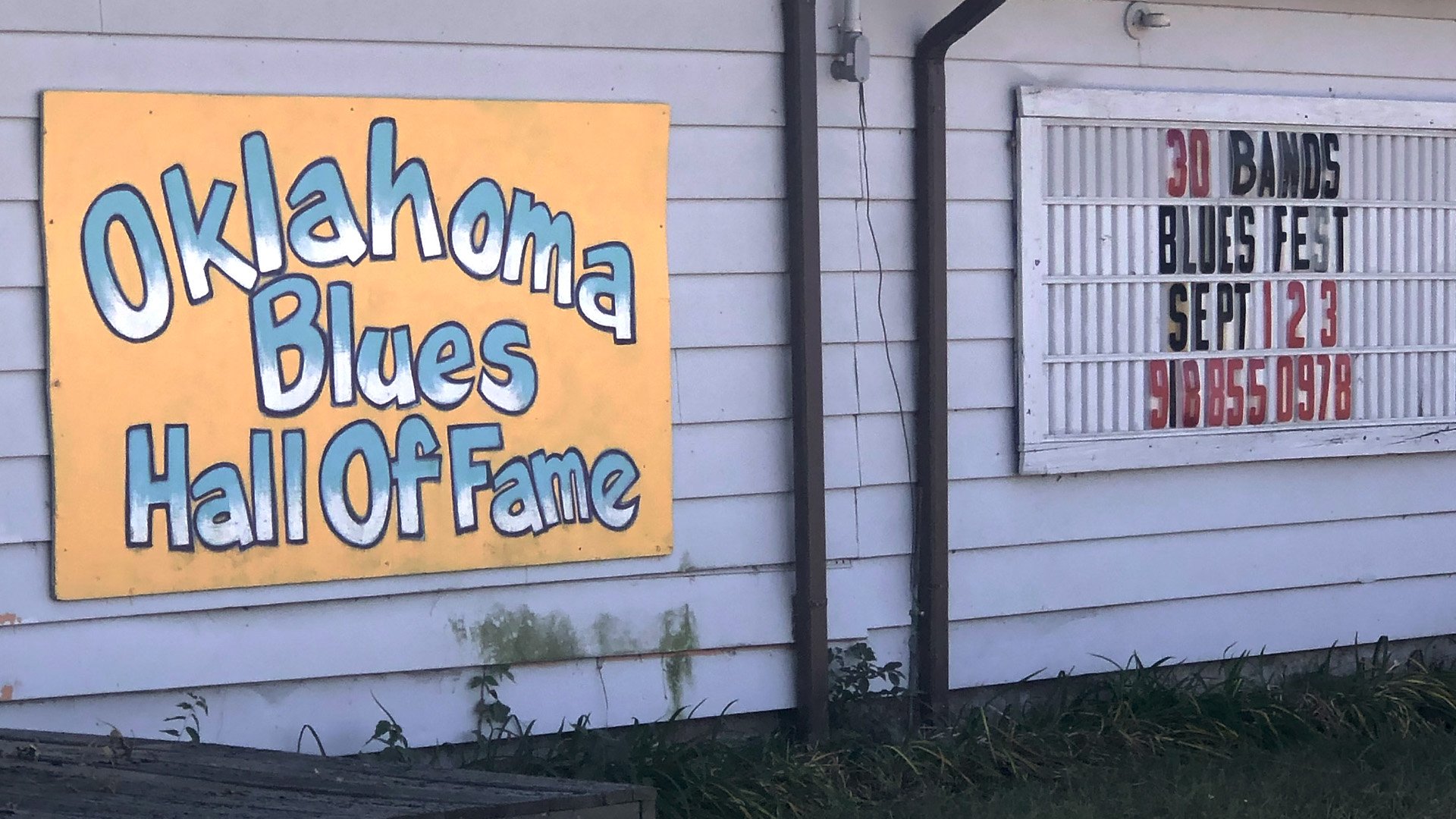
The Civil War was fought from 1861 to 1865. Dr. Hugh W. Foley, Jr. writes, “The Civil War’s presence in Indian Territory is directly related to Black pride in the area, as the Battle of Honey Springs, fought July 17, 1863, witnessed the first pitched combat by uniformed African American troops, the First Kansas Colored Volunteer Infantry Regiment, who fought alongside Anglo and American Indian troops. Fought just north of what is now Rentiesville, the battle has been called the ‘Gettysburg of the West.’”2 It was a running battle there at Honey Springs – some of it actually took place on our land where my husband D.C. Minner and I established the Down Home Blues Club (which hosts the Rentiesville Dusk ‘Til Dawn Blues Festival, the Oklahoma Blues Hall of Fame and the D.C. Minner Rentiesville Museum). Some of the soldiers from that battle went on to help found Rentiesville.
The end of the Civil War sparked big transitions for the “Twin Territories” of Indian Territory and Oklahoma Territory. Reese explains, “The government insisted on the abolition of slavery and the incorporation of the Freedmen [former slaves] into their respective tribal groups with full citizenship rights. All of the Indian nations were willing to end slavery, but citizenship rights conferred access to land and tribal monies as well as political power.”1 Despite tribal attempts to maintain control of their land and tribal monies through the U.S. courts, Freedmen were ultimately given full rights. The Dawes Act, which was the federal government’s way of breaking up commonly held tribal land into individual allotments, granted Freedmen “approximately two million acres of property, the largest transfer of land wealth to Black people in the history of the United States.”3
Reese goes on, “Freedmen from adjoining states had slipped into the territory for years, intermarrying with their Black Indian counterparts or homesteading illegally, but now the opening of Indian lands to non-Indian settlement gained momentum and brought hundreds of migrants both Black and white.”1 Oklahoma, considered the “First Stop Out of the South,” was indeed the “promised land” for about a 30-year window, offering land allotments and opportunity. It was close enough to the South to travel by wagon, folks could grow the same crops, and since it was not yet a state, there were no oppressive Jim Crow laws.

Freedmen often decided to settle together. It was at this point that the idea for all-Black towns developed. Larry O’Dell explains, “They created cohesive, prosperous farming communities that could support businesses, schools and churches, eventually forming towns. Entrepreneurs in these communities started every imaginable kind of business, including newspapers, and advertised throughout the South for settlers.”4 I’ve heard it said, the word was “tremendous opportunity, come help us do this… don’t come lazy and don’t come broke!”
The upshot of this opportunity was that more than 50 all-Black towns were established. These towns emphasized education, self-governance, strong churches and communities, and were held together by the economic security of their agricultural land. They believed that education was the key to a better future; the schools were strict and people graduated high school. My husband, Rentiesville native and bluesman D.C. Minner used to say, “If I did not get my lesson, I got a whoopin’ from the teacher. On my way home, my friend’s mom would give me a whoopin’, and when I got down here to the house Mama [his grandmother who raised him, Miss Lura] would give me a whoopin’, and she didn’t even want to know what I did wrong! If I got it from the others, she just had one coming too!”
Here’s where we can pick up on the music coming out of Oklahoma. Foley explains that the opportunities available during this time crafted the music legacy of the region; “Access to music lessons, instruments and mentors help explain why more African American musicians from Oklahoma developed the advanced musical skills necessary to evolve into jazz artists… As social and economic conditions changed for the state's African Americans by the 1920s and 1930s, more musicians born during that time period evolved into traditional, guitar-based practitioners of the blues.”5 Musicians who could read jazz charts went east and worked in almost every major jazz ensemble out of New York.
The jazz and blues players in Oklahoma were, in many ways, one community, particularly in major cities, such as Oklahoma City, Tulsa and Muskogee. In an interview with Bill Wax on Sirius XM’s B.B. King Bluesville, B.B. King said, “Jazz players say you can’t play good jazz unless you know the blues.” And D.C. said, “The R&B and blues bands here in the ‘50s and ‘60s all started their blues sets with an hour of instrumental jazz, so people could come in and get comfortable, and so the horn players could work out and do solos before they had to settle down to ‘blow parts’ – be rhythm players, essentially.” So, you see, there’s a blurred line there between jazz and blues here.
Given its history, plus the connection to Texas and the West Coast (you can drive to California without scaling the Rocky Mountains; there is a lot of work out there for musicians), I call Oklahoma – and Texas – “the cradle of the West Coast Blues.” Blues from Oklahoma is unique. Its sound includes horn sections, it’s a little smoother and the players dress – they consider themselves a little more “city” or “slicker.”
An integral part of Oklahoma’s blues sound developed with the Texas-Oklahoma “Hot Box” guitar style. Unlike the slide playing or finger picking styles from the Piedmont and Mississippi-Chicago sounds, the “Hot Box” guitar style is a single-note lead style that has a great local lineage that eventually crossed over to rock ‘n roll. Starting around 1900, players of this style include Blind Lemon Jefferson (possibly the earliest to record this style), jazz innovator Charlie Christian (the first to put electric guitar solos into jazz), T-Bone Walker, Freddie King, Stevie Ray Vaughan, B.B. King to Eric Clapton and beyond. The Hot Box single-note lead style is the style of most American rock ‘n roll to this day! B.B. King said in another Bill Wax interview, “I am from Mississippi, but my fingers are too lazy to play Mississippi style, I play Texas!”
There is no “music industry” per se in Oklahoma like there is in Nashville, Austin or Chicago; most people who play professionally work out of state. But since there are lots of juke joints in these towns – five in Rentiesville alone – there’s still a lot of music! Oklahoma has produced numerous great musicians and I’d love to tell about each and every one, but I’ll have to settle for highlighting just a few, with the help of Hugh W. Foley, Jr.’s “Blues” for the Encyclopedia of Oklahoma History and Culture.5
Hart Wand of Oklahoma City actually published “Dallas Blues,” the first 12-bar blues on sheet music, in March of 1912 – the same year W.C. Handy published “Memphis Blues,” widely considered the first blues song.
There were several territorial bands that played a circuit in the early 1900s across Oklahoma, Texas, Arkansas, Kansas, Missouri and Nebraska. The best of these bands was the Oklahoma City Blue Devils, which later became the core of the Count Basie Band out of Kansas City. Truly the bluesiest of all the touring jazz bands, I would say.
Jay McShann supplemented his passion for the blues with what he learned in the Manual Training High School band of Muskogee, OK, and went on to lead one of the great blues-based big bands of the 1930s and 1940s out of Kansas City. His "Confessin' the Blues" was one of the biggest selling records for a Black artist in the early ‘40s.5
Joe "The Honeydripper" Liggins charted a number of singles, including "The Honeydripper" and "Pink Champagne,” during the late 1940s and early 1950s with his streamlined rhythm and blues. His brother, Jimmy Liggins, led an amplified R&B group that preluded rock ‘n roll with hits like "Cadillac Boogie," "Saturday Night Boogie Man," "Drunk" and later, his now-classic blues song "I Ain't Drunk." Bandleader, drummer and songwriter Roy Milton’s “jump blues” served as a precursor to rock ‘n roll.5
Jimmy “Chank” Nolen was another of Oklahoma's important blues guitarists. Credited for inventing the "chicken scratch" guitar style, Nolen is considered the “father of funk guitar.”5 The chord on the guitar is played in such a way that is very percussive, like a drum beat. Since it makes guitar rhythms very danceable, James Brown picked Nolen up to record as primary guitarist on several major hits.
Gospel and soul-blues singer Ted Taylor experienced success with his falsetto-driven voice in the 1950s- ‘70s. Guitarist Wayne Bennett worked with Elmore James, Jimmy Reed, Otis Spann, Otis Rush and Bobby "Blue" Bland. Verbie Gene "Flash" Terry recorded the hit, "Her Name is Lou,” and later toured with T-Bone Walker, Bobby "Blue" Band, Floyd Dixon and others.5
Guitarist Jesse Ed Davis, a Native American with Comanche, Kiowa and Muscogee heritage, toured with Conway Twitty in the early ‘60s before moving to California and joining Taj Mahal. Davis’ “reputation led to sessions for Leon Russell, Jackson Browne, Eric Clapton, John Lennon, Ringo Starr and Captain Beefheart, as well as four of [his] own solo albums.”5
Larry Johnson and the New Breed (with D.C. Minner on bass) were the house band at the Bryant Center in Oklahoma City, playing several nights a week and backing up touring headliners like Chuck Berry and Bo Diddley for almost 10 years.
Lowell Fulson is probably Oklahoma’s most widely recognized blues guitar star. “By adding a horn section in the mode of swing bands to his electric blues lineup, Fulson created what is typically called the ‘uptown blues’ sound, which B. B. King made famous. Fulson's huge 1950 R&B hit, ‘Everyday I Have the Blues,’ became King's theme song”5 – surfacing the Texas-Oklahoma “Hot Box” guitar sound once again to evolve into what we know as the popular blues style!
Foley concludes, “Anglo-American blues men who emerged primarily from the Tulsa scene in the 1960s include pianist Leon Russell and guitarists J. J. Cale and Elvin Bishop.”5
I could keep going – multi-award-winning Watermelon Slim, extraordinary blues belter Dorothy “Miss Blues” Ellis, Jimmy Rushing of the Blue Devils and Count Basie's Orchestra, and so many more – but I’ll end my abridged round-up with my late husband, blues guitarist D.C. Minner.
D.C. was raised in Rentiesville by his grandmother, who owned and operated a grocery store/juke joint called the Cozy Corner in the 1940s- ‘60s. Here, he was exposed to all the music coming through. He toured, playing with Larry Johnson and the New Breed, Lowell Fulson, Chuck Berry, Freddie King, Bo Diddley, Jimmy Reed and Eddie Floyd before starting our own band, Blues on the Move. In 1988, we got tired of the road and moved from the California Bay Area back to Rentiesville, and reopened his grandmother’s old juke joint as the Down Home Blues Club.
In 1989, we established the Blues in the Schools program through the Oklahoma State Arts Council. In 1991, we started the Rentiesville Dusk 'Til Dawn Blues Festival to feature local and regional blues artists, and it has become the longest running blues festival in the state and renowned nationwide. It’s here, where I also still run our other projects – the Oklahoma Blues Hall of Fame and the D.C. Minner Rentiesville Museum.
In 1999, we received the Keeping the Blues Alive Award from The Blues Foundation for our efforts and contribution to music education and blues history. D.C. went on to being inducted into seven Halls of Fame, including the Oklahoma Jazz Hall of Fame in 1999 and the Oklahoma Music Hall of Fame in 2003.
D.C believed, “This is one of the few places where this history is still left,” and I work diligently and joyfully to keep the blues – and this rich history – preserved and alive in Oklahoma.
Blues singer-bassist Selby Minner toured for 12 years with her husband D.C. Minner and their band Blues on the Move before settling in Rentiesville, OK. She continues to perform and teach, and keeps the Oklahoma blues tradition alive through her weekly Sunday Jam Sessions, the Dusk 'Til Dawn Blues Festival, the Oklahoma Blues Hall of Fame (OBHOF), and the D.C. Minner Rentiesville Museum. For more information, visit: DCMinnerBlues.com.
References
Linda Reese, “Freedmen,” The Encyclopedia of Oklahoma History and Culture, https://www.okhistory.org/publications/enc/entry.php?entry=FR016.
Dr. Hugh W. Foley, Jr, “From Black Towns to Blues Festivals,” Funded by the Oklahoma Humanities Council and the National Endowment for the Humanities. http://dcminnerblues.com/?page_id=167.
Victor Luckerson, “The Promise of Oklahoma,” Smithsonian Magazine, https://www.smithsonianmag.com/history/unrealized-promise-oklahoma-180977174.
Larry O'Dell, “All-Black Towns,” The Encyclopedia of Oklahoma History and Culture, https://www.okhistory.org/publications/enc/entry.php?entry=AL009.
Hugh W. Foley, Jr., “Blues,” The Encyclopedia of Oklahoma History and Culture, https://www.okhistory.org/publications/enc/entry.php?entry=BL016.
MAKE SURE TO CHECK BLUES FESTIVAL MAGAZINE FOR MORE!

Exploring the Past through Ring Shout in Paule Marshall’s “Praisesong for the Widow”
Looking at black music and dance development in both the US and the Caribbean, Garcia identifies how Western cultural standards dominated discussions of culture, focusing on how racialized and sexualized bodies represented the primitive and savage through performance. Using theatrical productions, film, and performance hall recitals that “reproduced” African dance as historical “evidence,” viewers and scholars alike came to believe in Africa as a space that had not changed over the centuries, a haven for historical origins to which each member of the African diaspora could trace their roots.
BY CHELSEA ADAMS
Scholars and writers often use the idea or geography of Africa to indicate a return-to-roots journey for black people. The focus of the roots theme is a temporal shift, moving from the present to the past to discover ancestral roots, ceremonies, and cultural traditions that existed before slavery pillaged and plundered tribal lands. While recovering and remembering these people, cultures, and traditions is important work, it is often used as proof of African evolution from primitive to sophisticated cultural formations. Romanticism of the past often contributes to the idea that at its heart, black culture has a “wildness” to it, instilling Western ideas about blackness to the cultural mainstream. David F. Garcia states in his work Listening for Africa: Freedom, Modernity, and the Logic of Black Music’s African Origins, that scholarly intent to establish proof of racial equality by focusing on black bodies may have unintentionally damaged the cause of freedom.
Looking at black music and dance development in both the US and the Caribbean, Garcia identifies how Western cultural standards dominated discussions of culture, focusing on how racialized and sexualized bodies represented the primitive and savage through performance. Using theatrical productions, film, and performance hall recitals that “reproduced” African dance as historical “evidence,” viewers and scholars alike came to believe in Africa as a space that had not changed over the centuries, a haven for historical origins to which each member of the African diaspora could trace their roots. The “evolution” of culture for black people, then, could be said to come from the influence of Western European standards, as evidenced by the achievements of African Americans. Such racial categorizations were vital in maintaining racial boundaries, associating new, popular music styles with African origins to keep societal norms in place, associating blackness with the primitive and “wild,” whiteness with advancement and sophistication.
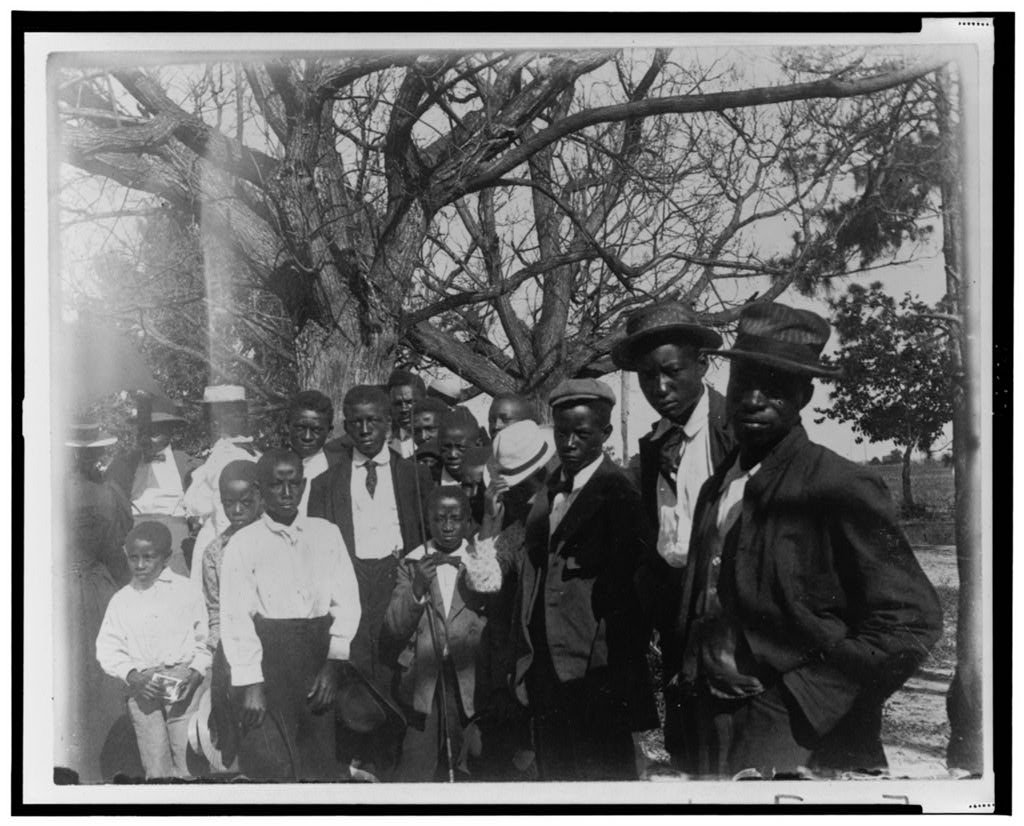
According to Garcia, perhaps the greatest danger of this scholarly and now even popular practice is “these contexts’ blockages that transform sound and movement from affective flow to, for example, African and European, black and white, or primitive and modern music and dance such that people are made temporally and spatially distant from each other” (270). While Garcia acknowledges that it may be impossible to rid discussion of historical timelines and individual motivations, he does advocate for a more complete look at art forms instead of segmenting them into categories of black and white, us and them.
Garcia’s approach is useful when reading Paule Marshall’s Praisesong for the Widow, which at first seems to fit in the category of the back-to-Africa novel, one that offers a temporal shift that takes its main character, Avey Johnson, from a US, middle class society to a Caribbean, working class society to recover her cultural origins. Avey is able to participate in a blending of cultures, traditions, and names, where “as the names transcend their original identity, they enter a space of total possibility. Their combinatory potential is now virtually infinite” (Boelhower 23). The spatial shift from the U.S. to the Caribbean, to the island nearest Africa, serves not as a complete return to ancient traditions, but as a space to view the diaspora and new cultural growth, both Avey’s own and other diasporic cultures. I suggest that what is at stake in Praisesong for the Widow is the recovery of individual identity and expression through a remembrance of family, rather than purely ancestral, traditions that bring Avey to self-fulfillment as she reorients herself to accept that culture should exist outside of the Western understanding of cultural binaries. The main recovery tools are African American art forms that come from a combination of cultural traditions in the U.S.
Avey receives cultural and spiritual renewal when she goes to the Big Drum ceremony on Carriacou. It is at the ceremonial proceedings that she reconnects with her Aunt Cuney through the ritual dance of the Ring Shout, and then her namesake, Avatara. Speaking of this event, where Avey becomes an active participant in the cultural traditions of the island, Lean’tin Bracks states, “The Beg Pardon dance is a crucial part of Avey’s island experience, for it proclaims that all are able to return to the celebration of ancestors, rituals, and traditions even after being lost” (116-7). Such a return through the Beg Pardon would not be possible for Avey, however, if it weren’t for Lebert Joseph and the elders in the group who sit in a sacred circle with “arms opened, faces lifted to the darkness, the small band of supplicants endlessly repeated the few lines that comprised the Beg Pardon, pleading and petitioning not only for themselves and for the friends and neighbors present in the yard, but for all their far-flung kin as well” (236). Without help, she would not experience the healing and renewal at the ceremony, because she does not know how to perform the ritual herself. The circle of elders holds significance for two main reasons: first, as Katrina Hazzard-Donald states, the sacred circles formed in ceremonial dances “represented a reality which connected one to the ancestors and reconfirmed a continuity through time and space” (196). The circle dance creates the opportunity for Avey to connect with her memories and her ancestral heritage to be filled with the strength and cultural knowledge. Second, as Bracks states, the intercession of the elders during the Big Drum Ceremony to offer up the Beg Pardon for their families and the world offers Avey an opportunity to see that “knowledge found in ancestral experiences is not only a function of historical memory as passed down from generation to generation, but also of current cultural practice that is available firsthand from those who are still alive. People of the diaspora can learn much from the living elders of their communities whose physical presence is a testament of their ability to survive and endure” (113). Before she attends the Big Drum Ceremony, Avey begrudges contact with the elders of black communities because they enshrined the very elements of black culture that she sought to run away from in order to fit into the middle class, white American mainstream lifestyle. At the Beg Pardon, she finally comes to understand and respect the role they play in such a sacred space, a crucial step to opening herself up to the wisdom they hold.

In fact, it is after the elders make intercession through the ritual that she can see someone who “seemed to be her great-aunt standing there beside her” (237). Like when Aunt Cuney used to take her to watch the Shouts performed in August, observing those “who still held to the old ways . . . slowly circling the room in a loose ring” (34), Avey watches the nation dances, her great-aunt spiritually with her on one side, Joseph Lebert with her on the other, explaining each dance they watch. Eventually, as is the nature of the circle dance, Avey must join in the performance. She spends time reflecting the open space they occupy begins to fill with dancers, expanding the longer the dancing goes on as more people join in the dance. The creole dances performed are a blend of many different African dance aesthetics that were shared across nations, meaning the space becomes more amenable to Avey’s participation.
When Avey finally joins the circle of older people and performs the Carriacou Tramp, she is performing a circle dance, the Ring Shout. The dances hold considerable similarities. According to Edward Thorpe, the dance “had certain affinities with the competitive Juba and consisted of a dance performed ‘with the whole body—with hands, feet, belly and hips’. The dancers formed a ring and proceeded with a step that was half shuffle, half stamp, and much pelvic swaying” (30). All the types of movement included in the dance are familiar to Avey, who has a long history of using the aesthetics of black dance as she danced to jazz music. According to Hazzard-Donald,
The shout ritual was the arena in which the motor muscle memory of African movement could be learned, sustained, relexified, and reborn eventually as secular dance forms. These forms would go on to become the famous African American dances that have circulated around the world; dances like the “Twist,” the “Black Bottom,” the “Pony” and, of course, the touch response partnering dance known as the “Lindy Hop” and all its various forms. (200)
The evolution of the dance allows for Avey to both be part of an older tradition and to be part of a new cultural tradition in the US. Even though Avey had not ever participated in a Ring Shout, she embodied the Africanist aesthetic as she performed the various dances done to jazz music, the Lindy Hop holding the greatest importance with its circular motion in partnership with another person. She holds a sense of ephebism and aesthetic of the cool as she slowly integrates herself into the dance. The elders in the circle dance, rather than try to teach her or push her out of the circle, welcome her in to work through the process and discover how her style of dancing can meld with their rhythms.

The moment offers a full realization of what it means to have African American heritage. Hazzard-Donald describes participation in the counterclockwise circle of the Ring Shout as engaging in “a ‘spirit-gate’ through which humans could connect to a higher spiritual reality” (203). That gate allows Avey access to what Hazzard-Donald calls “an intermediary religious form” which bridges the gap between traditional African religions and American religious forms (199). Barbara Frey Waxman discusses the importance of Avey’s dancing, because as
Avey carefully follows the rule of not letting her feet lose contact with the ground, a rule which metaphorically implies the principle of maintaining contact with her ancestral soil, her people, and their traditions. That is why Marshall calls this dance “the shuffle designed to stay the course of history” (250)—designed to subvert the drift of historical events that have prevented African Americans and Afro-Caribbeans from maintaining contact with their ancestral cultures. (98)
The dance she performs allows her to connect with her ancestors and reverence both her great-aunt and her namesake, Avatara; the dance allows her to finish healing from the spiritual malady caused when she cut herself off from her cultural heritage; and the dance allows her the opportunity to reclaim her past and look forward to the future opportunities she has to share her cultural knowledge with her own grandchildren. Avey is transported to Tatem and back to her childhood, where “under the cover of the darkness she was performing the dance that wasn’t supposed to be dancing, in imitation of the old folk shuffling in a loose ring inside the church. And she was singing along with them under her breath. . . . she used to long to give her great-aunt the slip and join those across the road” (248). In joining in the circle dance at the Big Drum Ceremony, she symbolically returns to Tatem to perform the Ring Shout with the church members, participating in a ritual she had longed to perform as a child but could not. The spiritual return to Tatem melds African-American and Afro-Caribbean traditions as everyone celebrates their shared African heritage.
It is this shared heritage on which Marshall ends her narrative, leaving readers to understand that the heritage Avey is to share is not purely African, but rather a rich mix of African and American heritage which make up her culture. Accepting the many influences of the diaspora is how to be self-fulfilled and a positive influence on continuation of cultural heritage. Doing so requires throwing out the linear, Western understandings of time and cultural evolution and replacing them with a circular understanding, which allows for the living and the dead to communicate shared wisdom and knowledge through generations as cultural tradition grows into new renditions and expressions of ancient values, which inspire new ways to deal with the present.
Works Cited
Boelhower, William. “Ethnographic Politics: The Uses of Memory in Ethnic Fiction.” Memory and Cultural Politics: New Approaches to American Ethnic Literatures. Northeastern UP, 1996, pp. 19-40.
Bracks, Lean’tin L. Writings on Black Women of the Diaspora: History, Language, and Identity. Garland Publishing, Inc, 1998.
Garcia, David F. Listening for Africa: Freedom, Modernity, and the Logic of Black Music’s African Origins. Duke UP, 2017.
Hazzard-Donald, Katrina. “Hoodoo Religion and American Dance Traditions: Rethinking the Ring Shout.” The Journal of Pan African Studies, vol. 4, no. 6, 2011, pp. 194-212.1.
Marshall, Paula. Praisesong for the Widow. Plume, 1983.
Thorpe, Edward. Black Dance. The Overlook Press, 1990.
Waxman, Barbara Frey. “Dancing out of Form, Dancing into Self: Genre and Metaphor in Marshall, Shange, and Walker.” MELUS, vol. 19, no. 3, 1994, pp. 91-106. www.jstor.org/stable/467874.

John Wesley Work III - composer, ethnomusicologist, educator, and choral director
In this broadcast, Todd Lawrence and I discuss the scholarship and work Of John Wesley Work III and the newly launched Award named in His honor. The AFS African American Folklore Section is proud to issue the first call for submissions for the new John Wesley Work III Award
Published By: Lamont Jack Pearley
In this broadcast, Todd Lawrence and I discuss the scholarship and work Of John Wesley Work III and the newly launched Award named in His honor. The AFS African American Folklore Section is proud to issue the first call for submissions for the new John Wesley Work III Award, which the section has launched to honor and spotlight applied folklorists, ethnographers, and ethnomusicologists who actively focus on the research, documentation, recording, and highlighting of African American culture through performance, written word, and music in their scholarly works.
Our Featured Guest is Fisk Alumni George ‘Geo’ Cooper, a pianist, composer, and music educator. While at Fisk, he was a member of the world-renowned Fisk Jubilee Singers.

Fisk Alumni George ‘Geo’ Cooper
The AFS African American Folklore Section is proud to issue the first call for submissions for the new John Wesley Work III Award, which the section has launched to honor and spotlight applied folklorists, ethnographers, and ethnomusicologists who actively focus on the research, documentation, recording, and highlighting of African American culture through performance, written word, and music in their scholarly works.
The prize is named for John Wesley Work III, a composer, ethnomusicologist, educator, and choral director devoted to documenting the progression of Black musical expression. His notable collections of traditional and emerging African American music include Negro Folk Songs and the Archive of American Folk Song in the Library of Congress/Fisk University Mississippi Delta Collection (AFC 1941/002). The Stovall Plantation recordings for the Library of Congress where the world is introduced to blues legend McKinley Morganfield, aka Muddy Waters.
In honor of Work, this award is offered to celebrate and encourage African American traditional cultural expression and galvanize folklorists, ethnographers, and ethnomusicologists of color to participate in the documentation of African American folklife.
TO SUBMIT FOR THE AWARD, PRESS THE LINK THAT WILL TAKE YOU TO THE AMERICAN FOLKLORE SOCIETY PAGE!

Celebrating the Legacy of Blues
I found my way into the modern Blues dancing world the way a lot of folks did (and still do) - through swing dancing. Often, Blues was the late-night dance for social swing dances and was occasionally referred to as swing’s “slow sexy cousin.
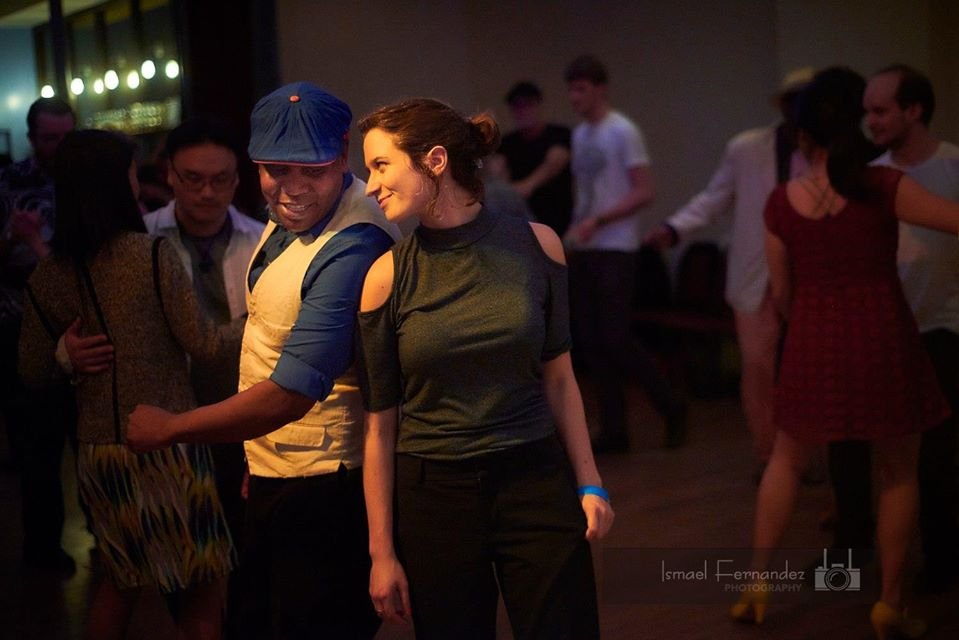
By: Virginia Jimenez
From music to dancing, to the way we talk about our feelings, the Blues has stitched itself into the heart of American culture (and many others). It’s become embedded in such a way that many Americans don’t even realize it; universities have courses about its place in music, in history, and in culture.
The Blues is so ubiquitous in American culture that I didn’t know how much I knew about it until someone pointed it out to me. I thought I first ran into the legacy of Blues when I was in college because that’s the first time I danced to Blues music. That’s not true. I really ran into it when I was 7 or 8 years old doing tap and jazz warm-ups in my grandmother’s dance studio to the music of Scott Joplin. It was there I fell in love with “Maple Leaf Rag.” I later ran into the Blues when my father played his Beatles records when my brother gave me “Songs in A Minor” by Alicia Keys when my high school friends taught me the latest hip hop moves when I expressed myself by writing new lyrics to familiar melodies. Before I was consciously aware of the Blues, I was in regular contact with its descendants and inherent values.
I found my way into the modern Blues dancing world the way a lot of folks did (and still do) - through swing dancing. Often, Blues was the late-night dance for social swing dances and was occasionally referred to as swing’s “slow sexy cousin.”I liked that I could swing out with high energy and end the night with a relaxed, sensual “Blues dance.” What I did not know at the time was that I was participating in a widespread gross misunderstanding and appropriation of the Blues.
In the early 2000s, what began as house parties in living rooms and basements and “late-night” social swing dances at universities, began to evolve into independent “Blues dance” scenes. As this style of dance became more popular, we started to rent space in dance and yoga studios, old churches, and convention centers. We hired instructors to teach the dance and its etiquette, as well as DJs to play the music. In cities like Atlanta and Chicago, we would go out to Blues bars and dance to live musicians. In many places it started to become a staple social event once a week: same time, same place. While we had created many wonderful places for people to partner dance, be social, and have a good time, there was one major problem: we were calling it something it was not.
While a handful of these early Blues dance scenes in the US were actually dancing to Blues music and incorporating Blues values into their dance and community, many of us were not. We had a lot to learn. Scene leaders, DJs, instructors, and dancers went in search of black musicians, folklorists, and historians who could educate us about the Blues and its connection to African American tradition and history. We found, and continue to find, a wealth of information about Blues music. We hire black musicians to play at our events and to lead discussions and conversations about Blues music as well as its role in American history and culture.
Researching the history and origins of Blues dance (as opposed to the music) proves more challenging, but the more we search in the right places, the more we discover. We regularly share our resources with each other - and information quickly spreads to different scenes (largely thanks to the somewhat nomadic nature of Blues dancers). We have developed a deep appreciation for the historians, folklorists, musicians, and dancers who documented the social life and movements that inform our knowledge of Blues dance. The academic, cultural, musical and historical pursuits of folks from all over the United States opened many doors to the past - a world in which Blues dancing was everything the hard physical labor of African and African-American slaves was not: relaxed, joyful, sensual, improvisational, conversational, soulful and spiritual, expressive, and most importantly, free.
In the last fifteen years, we have strived to correct our errors of appropriation and misunderstanding by making Blues values central to the way we dance, learn and share the incredible legacy of the Blues. As a member of the Blues Dance New York community, I can speak specifically to the changes in the New York City scene.

Blues Dance New York is a diverse and friendly community that aims to cultivate and spread the love of Blues music and dancing. Like many other scenes, ours evolved from house parties and after-parties to weekly dances in studios. While there are many venues with live Blues music in NYC, Cabaret Laws (recently repealed) and a shortage of highly coveted space have kept us from dancing in most Blues bars. Under passionate leadership, we have worked hard to educate our staff and patrons about the Blues. Laura Chieko, a former Education Coordinator, contributed heavily to the structure of our educational program and teaching. She developed a curriculum that focuses on the fundamental movement and aesthetics of Blues and also the basic techniques of dancing in partnership, leaving room for instructors to make each lesson their own. Our current undertaking is to provide folks with more social and cultural information about the dance.
Anyone who takes one of our lessons on a Friday night will hear a brief definition of Blues dancing. It might sound something like this: “Blues dancing is an African-American dance that originated in the southern United States during the time of slavery. Its movement and aesthetic are highly influenced by dance forms from various African countries.” In truth, Blues dance is so much more! As Blues musicians made their way across the United States, they shared music from their home regions, as well as learned the styles of Blues played in other regions. As a result, there are many different styles of Blues music, and a natural consequence of playing music in social spaces like juke joints and bars is dancing! The dances evolved with the music, so there are just as many styles of Blues dance as there are styles of Blues music. Blues dancers shuffle and tap to Piedmont Blues and Texas Blues; sway and glide in a ballroom-like fashion to Jazz Blues and New Orleans Blues; bump and shake to Chicago Blues and Delta Blues - but no matter what, Blues dancers improvise to the music they hear. Each of our instructors has their own approach to defining the dance and different elements of its rich history and cultural context they prefer to highlight, as a result, our students are exposed to a wide range of perspectives on the complexities of Blues music and Blues dance.
Once in a while we bring instructors and musicians from other cities to enhance our knowledge or shake up our music selections. We make every effort to hire instructors, DJs, and musicians of color. Our DJs make an effort to play a variety of Blues music by a variety of Blues artists, both contemporary and traditional. We hire local Blues musicians once a month, and by now we’ve established a solid relationship many of them, including Frank Mirra and Mike Smith (of Big Frank and The Healers), King Solomon Hicks, KarLea Lynne, Bobby Brown, Irving Lattin Louis, Mara Kaye, Jerry Dugger, Burgandy Williams and many others. They love to play Blues music while we dance to it!
Learning and sharing are high priorities in the Blues Dance New York community. We revel in learning from new friends and old, and we are honored to share and celebrate the legacy of the Blues. Naturally, we believe the best way to celebrate and show our appreciation is to get up and dance to Blues music that moves us. Everyone is welcome to join our celebration.

Zydeco Music
Similar in style to the Cajun music of their white Cajun counterparts of Southern Louisiana, Zydeco music shares its common origins and influences and also overlaps in style and repertoire. However, Zydeco music’s distinct sounds are rooted in its rural beginnings and reflect the social and economic conditions of its black and brown creators.

By: Nascha Joli
Zydeco Music or Zydeco Blues is a blend of creole music, blues and rhythm, and blues founded by the indigenous and black Creole peoples of southern Louisiana.
Similar in style to the Cajun music of their white Cajun counterparts of Southern Louisiana, Zydeco music shares its common origins and influences and also overlaps in style and repertoire. However, Zydeco music’s distinct sounds are rooted in its rural beginnings and reflect the social and economic conditions of its black and brown creators.
The very word “Zydeco” is believed to have origins in West Africa or from a term used by the mixed-blood descendants of the Atakapas indigenous nation and African slaves to describe the swaying dances they did to the “raucous music” they created. More likely, it is some combination of both of these theories which created a foundation for the term “zydeco.”
The music itself is most often fast tempo and is dominated by instruments that include an accordion (button or piano), variations of a washboard (also called a rub-board and a scrub-board), guitars, bass guitar, drums, Cajun fiddles, spoons, triangles, horns, and keyboards. Zydeco music is also associated with dances including variations of waltzes and line dancing specific to its music that gained popularity in the dance halls and social parties in the region.
The longstanding tradition, popularity and social acceptance of Zydeco music can be attributed directly to the Louisiana Creoles who have a distinct culture, a way of life and a social prominence within their regional society. It was these characteristics that afforded the Creoles certain rights under French rule and its “Code Noir.”
When these privileges shifted after the Louisiana Purchase in 1803 under the new rule of American Southern racist regimes, the Creoles began to fight back against this oppression and also to protest in song. Early Zydeco blues music used French and Creole lyrics to describe the pain and mistreatment of the members of their community.
Performed locally in house parties, its popularity spread throughout the Southern Louisiana region and was performed at Catholic church community centers, taverns, nightclubs, and dance halls. Its popularity spread throughout the state of Louisiana and into Texas and California with the help of the Great Migration where many black Creoles migrated to.

The first recordings of Creole and Zydeco music could be traced to Amede Andoir and his 1928 recordings, but it would be Clifton Chenier’s recordings in the mid-1950s that made Zydeco music popular nationwide. Chenier, dubbed the “King of Zydeco,” brought the music its first major success and popularity that crossed over to the mainstream. He often performed with his brother, Cleveland Chenier, a noted Zydeco musician and their family band.
Contemporary Zydeco music of the 1950s, led by Chenier himself, began to incorporate elements of rock and roll and rhythm and blues with traditional creole music. Chenier pioneered the use of the piano accordion in Zydeco music and using a full line band. He was also one of the first Zydeco musicians to use English lyrics where traditional Creole and Zydeco music used only French or Creole lyrics.
The explosion of rock and roll music in the mid-1950s caused a slowdown for many musical genres which also includes doo-wop, blues, Cajun music and also Zydeco music.
Musical artists such as Sidney Babineaux, Herbert Sam, Boozoo Chavis also contributed to the art of Zydeco music. Buckwheat Zydeco and Queen Ida are some of the more well known and celebrated Zydeco musicians. These artists helped keep the traditions of Zydeco music alive after its initial surge into popular music.
Zydeco music remained regionally popular while still being celebrated and appreciated at musical festivals around the country and also internationally at blues concerts and festivals. Because of this Zydeco music experienced a revival in the 1980s. The careers of Clifton Chenier, Buckwheat Zydeco and Queen Ida experienced a resurgence and recognition of Zydeco music increased culminating in a musical tribute at the Grammy Awards in the1980s. Clifton Chenier and Buckwheat Zydeco also received their first Grammy awards for their albums.
Zydeco music continues to flourish with each new generation, many of whom are descendants of the traditional blues artists such as CJ Chenier (son of Clifton Chenier) and Dwayne Dopsie & the Zydeco Hellraisers (son of Rockin’ Dopsie), Geno Delafose, Beau Jocque, Nathan Williams and many more.
Many of the modern-day Zydeco artists are infusing elements of rock, soul, funk and hip hop into Zydeco music. But the traditional contemporary Zydeco music that began with Clifton Chenier and the jumping rhythm of accordion and percussions and French or Creole lyrics are still called for lovers of traditional Zydeco music.
These days, Zydeco music is heavily embraced in Louisiana, Texas, Oregon, California, and parts of Europe including Scandinavia. Zydeco Festivals continue to flourish all over the world promoting this unique brand of blues music.

Book Review of ‘Clean Getaway’ - Chapter book by Nic Stone
‘Clean Getaway’ is a chapter book by Nic Stone. The story is about a boy named William “Scoob” Lamar and his G’ma traveling across America in 2018 to finish a trip G’ma tried to take when she was younger, but never finished.
Written By: Gideon Weisen‘Clean Getaway’ is a chapter book by Nic Stone. The story is about a boy named William “Scoob” Lamar and his G’ma traveling across America in 2018 to finish a trip G’ma tried to take when she was younger, but never finished. This all happened because Scoob got into trouble at school for accidentally showing someone how to edit computer scores and getting into a fight. I finished the book and I recommend it because it shows how in the past Black and White people were treated differently. Because his G’ma passes away, Scoob eventually finishes the trip with his Dad. The reader eventually learns that G’ma’s trip was never finished because her husband was arrested for crimes she committed, because he was Black and G’ma was White. Scoob makes peace with his father for the mischief he didn’t mean to cause, and is left to think about the injustices of the past.